Clear Sky Science · en
Throwers oblique rotator cuff (TORC) MRI view of the shoulder improves reader confidence for internal impingement abnormalities in overhead throwing athletes
Why Shoulder Scans Matter for Pitchers
For professional pitchers and other overhead throwing athletes, the shoulder is their livelihood. Repeated high-speed throws place extreme stress on the small tendons and cartilage that keep the joint stable. Teams increasingly rely on MRI scans to spot hidden problems before they turn into career-altering injuries. This study introduces a new way of taking shoulder MRI images—the Thrower’s Oblique Rotator Cuff (TORC) view—and asks a practical question: does this special angle help doctors see trouble spots more clearly and feel more confident in their diagnoses?
How Hard Throwing Changes the Shoulder
When a pitcher’s arm whips back into extreme external rotation, the ball-and-socket of the shoulder twists and slides in ways that normal daily activity never demands. Over years, this motion can stretch the front of the joint and tighten the back, subtly shifting how the upper arm bone sits in the socket. This new resting position increases rubbing and shear forces on the rotator cuff tendons and the ring of cartilage called the labrum. Even in athletes who feel fine, small areas of wear, fraying, or partial tears are extremely common, making it difficult to tell what is truly worrisome and what is simply the price of pitching at a high level.
Limits of Standard Shoulder MRI
Teams often obtain baseline MRIs of pitchers each spring, and there are well-established methods to enhance these scans, such as injecting contrast dye or positioning the arm in a stretched, rotated posture. While these techniques can highlight subtle labral and tendon damage, they take extra time and can be uncomfortable, especially for athletes who need to keep throwing. Standard MRI slices are taken in three main directions, but those planes are not perfectly aligned with the back part of the rotator cuff where internal impingement problems often develop. As a result, important problem areas may appear blurred or hard to measure, even for experienced readers.
A New Angle on the Throwing Shoulder
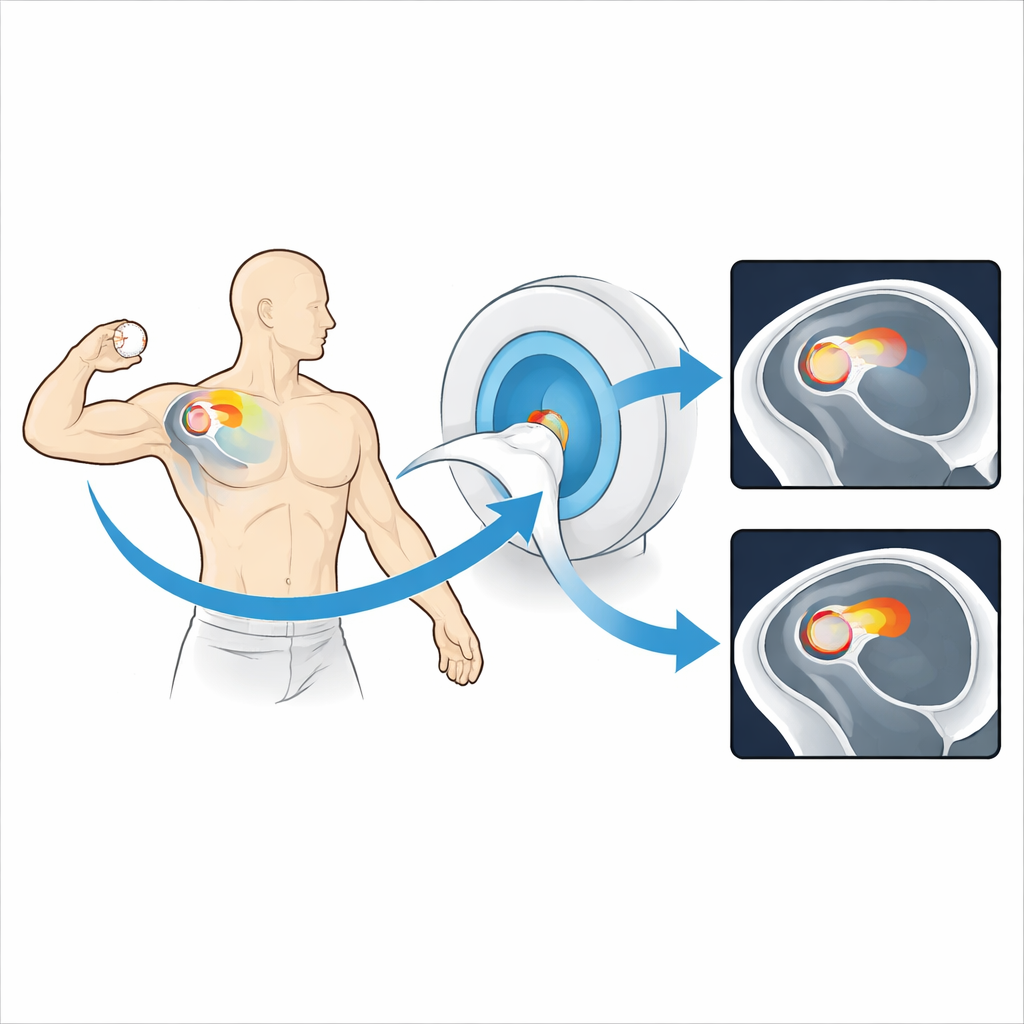
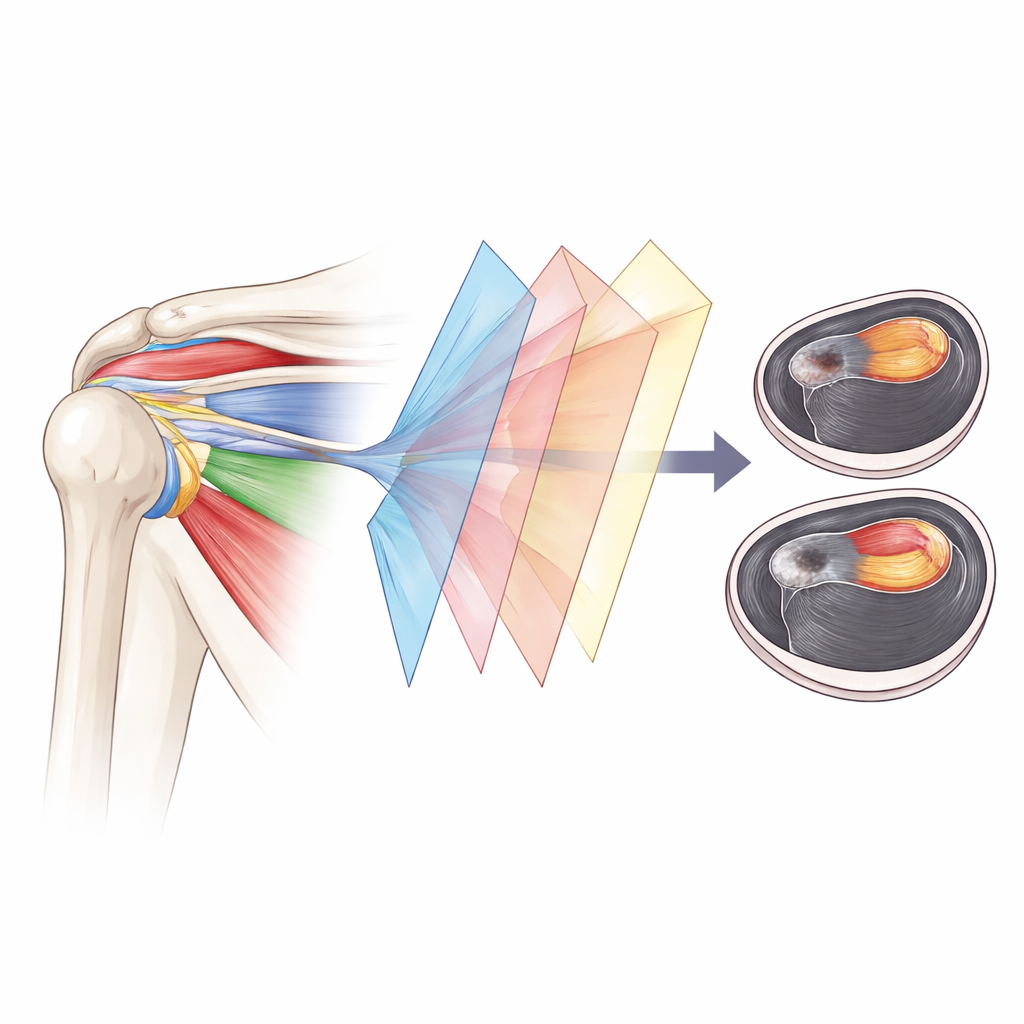
The TORC view was designed specifically for throwers by tilting the MRI slice about 40 to 45 degrees so that it runs directly along the fibers of the key rotator cuff tendons and across the front-lower labrum. In this study, researchers reviewed 35 shoulder MRIs from Major League Baseball pitchers, each containing both the usual sequences and this added TORC sequence. A musculoskeletal radiologist and two shoulder surgeons first read the standard images alone, then re-read the studies with the TORC slices added. For each exam, they recorded whether the tendons appeared normal, worn, or torn; whether the labrum looked abnormal; how large any suspicious signal was; and how confident they felt in their overall assessment on a five-point scale.
What the New View Changed—and Didn’t Change
Adding the TORC view did not dramatically change how often readers labeled a tendon as normal, worn, or torn, nor did it meaningfully alter how often labral problems were reported. Across all three readers, there were only small shifts in these broad categories, although slightly more rotator cuff tears were noted when the TORC images were available. The more striking differences appeared in how consistently the readers measured abnormal areas and how sure they felt about their judgments. With the TORC view, measurements of suspicious signal within the rotator cuff became more similar from reader to reader, moving from moderate to good agreement. Two of the three readers also reported a clear jump in overall confidence, typically by one full point on the five-point scale, when they could use the TORC slices in addition to the standard views.
What This Means for Players and Teams
In simple terms, the TORC MRI view gives doctors a clearer, more shoulder-specific angle on the parts of the joint that matter most to pitchers, without extra scan time, uncomfortable arm positions, or contrast injections. It does not radically change which injuries are found, but it helps specialists agree more closely on how big those problem areas are and how certain they are in their reading. For athletes, that improved clarity may translate into more consistent decisions about rest, rehab, or surgery. For teams, incorporating the TORC view into routine shoulder MRI protocols could refine how they monitor valuable arms over time. Future work will need to show whether this sharper imaging perspective ultimately leads to better outcomes and smarter use of medical resources.
Citation: McDaniel, L.E., Patel, M., Buerba, R.A. et al. Throwers oblique rotator cuff (TORC) MRI view of the shoulder improves reader confidence for internal impingement abnormalities in overhead throwing athletes. Sci Rep 16, 12607 (2026). https://doi.org/10.1038/s41598-026-40870-3
Keywords: baseball pitchers, shoulder MRI, rotator cuff, sports medicine imaging, overhead athletes