Clear Sky Science · en
Multifunctional lactic acid bacteria from sugarcane juice with probiotic properties for gut adaptation, health benefits, food preservation and quality enhancement
Friendly Microbes in a Sweet Drink
Fresh sugarcane juice is a popular street-side refreshment in many tropical countries, but this study shows it may hold more than just quick energy. Scientists explored whether the naturally occurring bacteria in this sugary drink could act as "good" microbes that support our gut, protect against harmful germs, and help keep foods fresh without synthetic chemicals. Their work points to a future where a common drink becomes a source of new probiotic strains useful for both human health and cleaner food preservation. 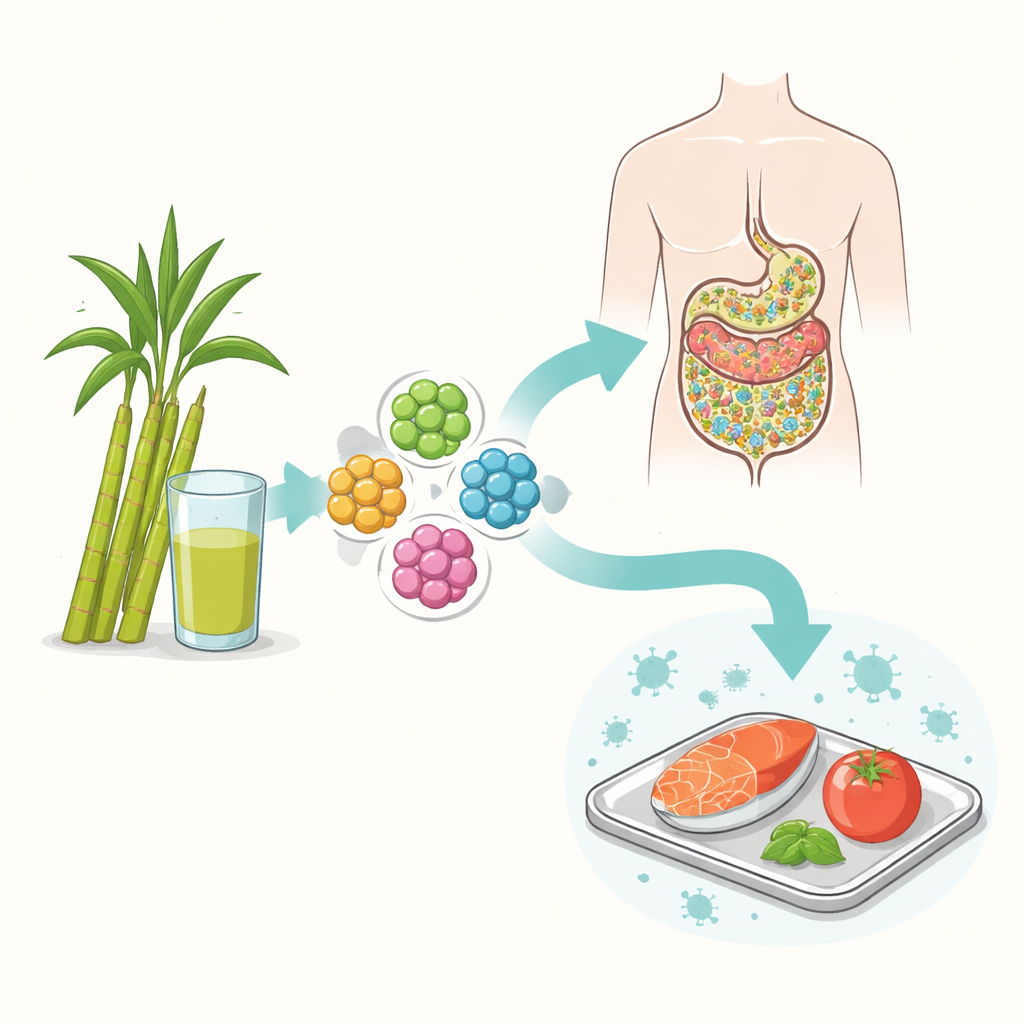
Discovering Helpful Bacteria in Sugarcane Juice
The researchers collected sugarcane juice from vendors and freshly pressed stalks in Bangladesh, then isolated bacteria that thrive in this sweet, nutrient-rich liquid. From dozens of initial candidates, they focused on four lactic acid bacteria strains—a group already well known from yogurt and other fermented foods. These four strains came from two related species, but each showed its own personality in the lab. The team did not look at just one or two traits: instead, they built an integrated picture from safety checks, gut-survival tests, health-related activities, and behavior in real food samples, mimicking how these microbes might perform from "farm to gut to fridge."
Surviving the Journey Through the Body
To act as probiotics, bacteria must survive the harsh trip through the stomach and small intestine. The scientists tested each strain in acidic conditions, in the presence of bile, and in contact with phenol-like compounds that can arise from diet and digestion. Two strains, labeled SCJ28 and SCJ29, were especially good at enduring these stresses, suggesting they could reach the intestine alive. The team also measured how well the bacteria clumped together, stuck to each other, and interacted with common gut pathogens. Strong clumping and surface stickiness, especially in strains SCJ26 and SCJ29, are signs that these microbes could latch onto the gut lining and compete with unwanted invaders instead of just passing through.
Fighting Germs, Films, and Free Radicals
The sugarcane bacteria showed several health-relevant abilities beyond survival. Some strains produced strong zones of inhibition around dangerous microbes such as Escherichia coli and Staphylococcus aureus, meaning their secretions could hold these pathogens in check. Three of the four strains also slowed the growth of the yeast Candida albicans. The bacteria were able to disrupt stubborn microbial films—slimy layers that make infections and food contamination hard to treat—with different strains best at different targets. One strain, SCJ29, excelled at weakening E. coli films, while SCJ27 was most effective against S. aureus films. The same strains also displayed notable antioxidant activity, neutralizing free radicals in a standard chemical test, hinting that they might contribute to reducing oxidative stress when used in foods or supplements. 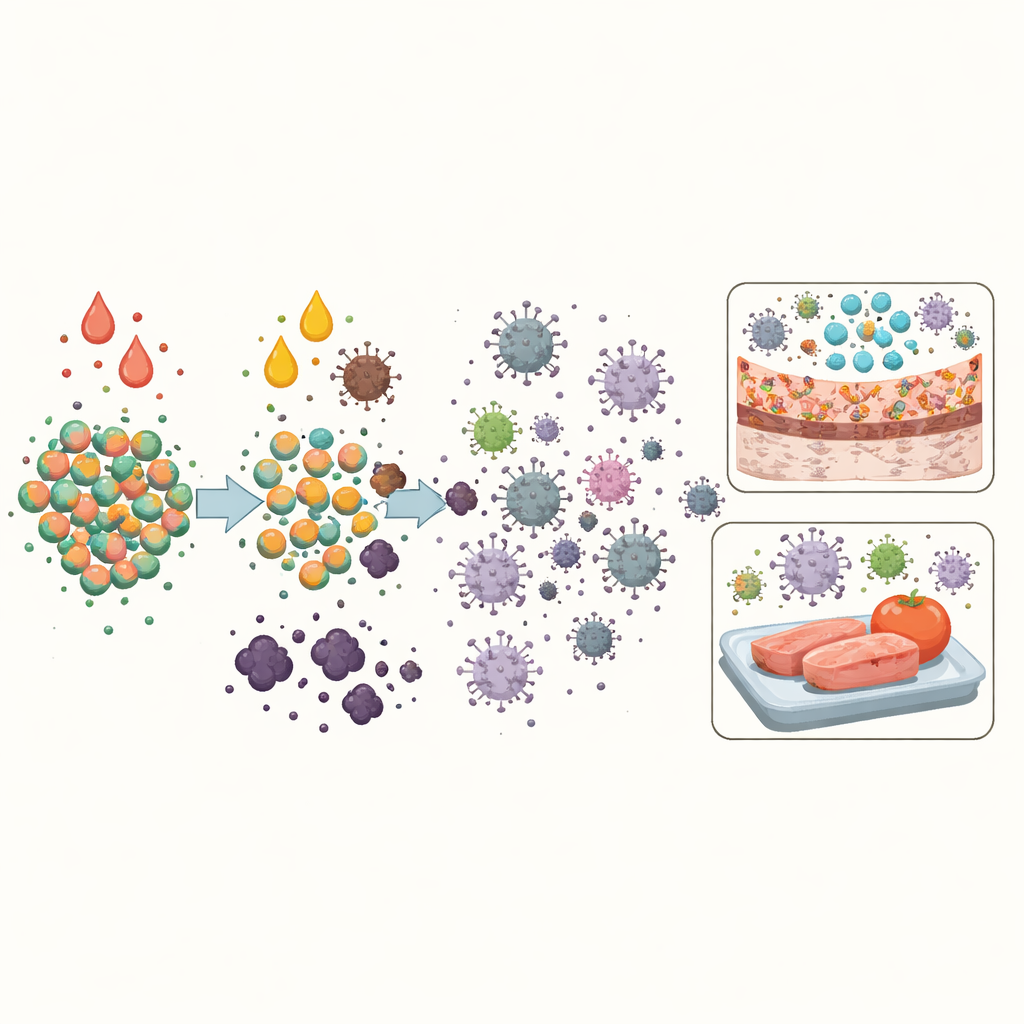
Making Foods Thicker, Tastier, and Safer
Beyond personal health, the study asked whether these microbes could improve food quality. All four strains could clot milk, a basic requirement in making products like yogurt and some cheeses, with SCJ27 and SCJ29 working fastest. Several strains produced sticky sugar-based substances that can improve the thickness, smoothness, and stability of fermented foods. To test real-world preservation, the team sprayed filtered liquids from the bacterial cultures onto fish fillets and tomato slices. After three days at room temperature, treated samples had far fewer microbes than untreated ones—up to nearly 4 thousand-fold reductions—suggesting that the bacterial secretions can act as natural preservatives. Importantly, none of the strains damaged blood cells or broke down DNA in standard safety tests, and they were sensitive to many common antibiotics, although the authors stress that follow-up genetic checks are still needed.
What This Means for Everyday Life
In simple terms, this work shows that the humble glass of sugarcane juice can harbor a cast of friendly bacteria that not only tolerate the rigors of the gut but also help push back against harmful germs and slow food spoilage. While more detailed genetic and long-term safety studies are needed before these strains reach store shelves, they already look like promising candidates for next-generation probiotic products and cleaner, more natural ways to keep fish, fruits, and dairy fresh. The study highlights how everyday foods can be mined for useful microbes that support both human health and safer, less chemical-dependent diets.
Citation: Islam, S., Hossain, T.J., Afrin, S. et al. Multifunctional lactic acid bacteria from sugarcane juice with probiotic properties for gut adaptation, health benefits, food preservation and quality enhancement. Sci Rep 16, 9994 (2026). https://doi.org/10.1038/s41598-026-40844-5
Keywords: probiotics, lactic acid bacteria, sugarcane juice, natural food preservation, gut health