Clear Sky Science · en
Biochemical response of maize plants to water deficit and Bacillus simplex inoculation
Why thirsty corn plants matter to us
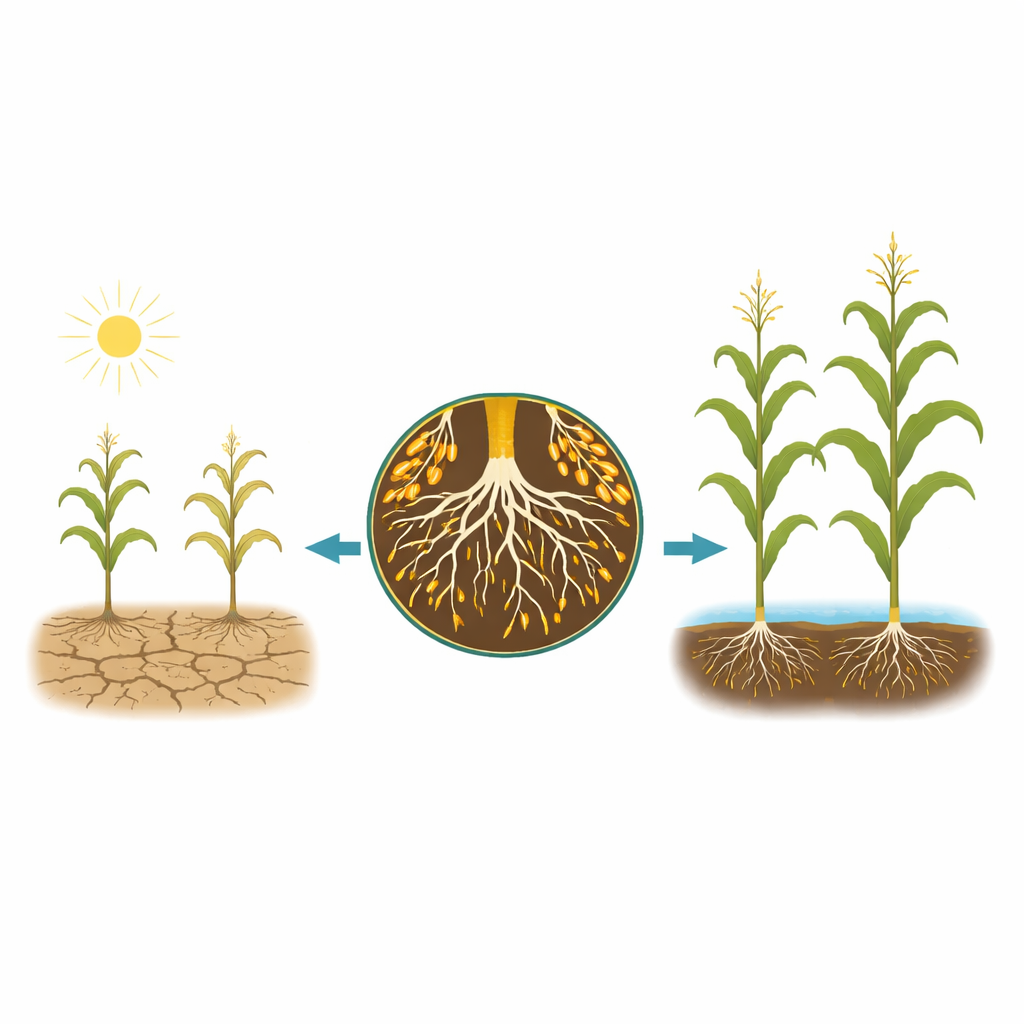
As climate change makes droughts more frequent and severe, crops like maize (corn) increasingly have to grow with less water. This threatens food supplies and farmer incomes worldwide. The study summarized here asks a practical question: can helpful soil bacteria act like tiny partners that help maize cope with dry conditions by strengthening its internal chemistry and defenses?
Testing corn under different watering plans
The researchers grew maize plants in pots inside a glasshouse, where they could carefully control watering. They created four watering regimes that mimicked field conditions ranging from ample water to strong drought: full watering, and about three‑quarters, half, or one‑quarter of that amount. At the same time, they compared maize grown from seeds coated with a beneficial bacterium, Bacillus simplex, to maize grown without this bacterial partner. After two months, they measured how well the plants’ leaf cells held together and how badly they were damaged, along with a suite of chemical signals and protective molecules inside the leaves.
How corn fights back when water runs short
When water was scarce, maize plants did not simply wilt and give up. Under the strongest drought, the leaves showed the highest levels of several groups of protective substances. These included phenolics and flavonoids, which are plant-made compounds known for mopping up harmful reactive oxygen molecules, as well as overall “antiradical” capacity, which reflects the plant’s ability to neutralize these damaging by-products. Levels of proline, a small molecule that helps cells retain water and stabilize proteins, also rose under drought. At the same time, key antioxidant enzymes such as catalase and peroxidase dismutase became more active, helping to break down harmful oxygen compounds before they could injure cells.
What helpful bacteria change inside the plant
Adding Bacillus simplex did not always increase these chemical defenses; in many cases, untreated plants under drought actually showed slightly higher levels of stress compounds and enzyme activity. But this turned out to be a sign that the untreated plants were under more strain, not that they were better protected. Plants grown with the bacteria generally suffered less relative damage to their cell membranes and maintained higher soluble protein levels under stress, a sign of healthier cell machinery. Statistical analyses showed that catalase activity was strongly linked to other stress markers and damage, while soluble protein tended to fall when stress defenses were working hardest. Together, these patterns suggest that bacterial partners help maize manage drought so effectively that the plant does not need to push its emergency defenses to extreme levels.
Patterns behind many measurements
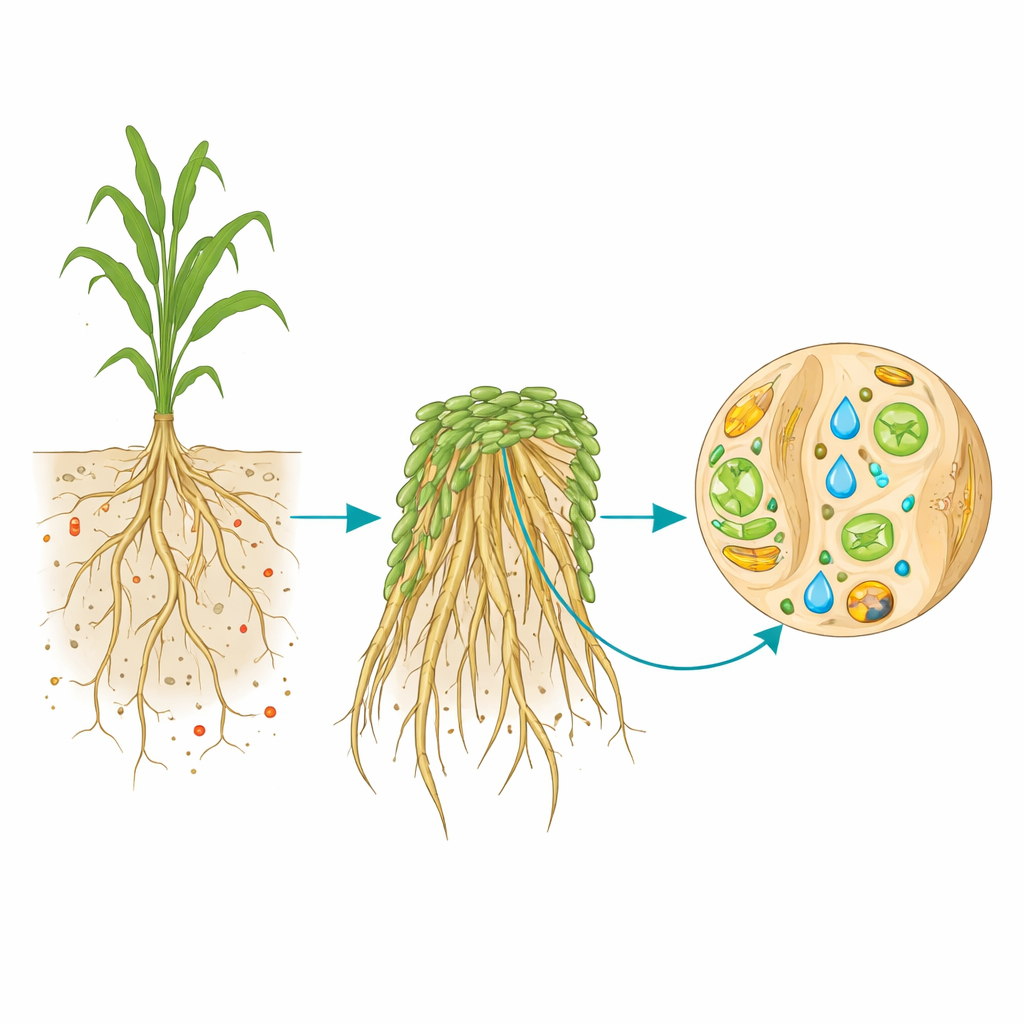
To make sense of all the measurements at once, the authors used correlation analysis and principal component analysis, tools that reveal which traits rise and fall together. The strongest patterns showed that drought pushed maize to boost both non‑enzymatic chemicals like flavonoids and enzymatic defenses like catalase and peroxidase. These traits clustered with higher cell damage under the driest treatments, especially in plants without bacteria. Inoculated plants, by contrast, combined better growth and biomass reported in related work with more moderate biochemical responses, indicating a more balanced, less desperate mode of coping with water shortage.
What this means for future harvests
In everyday terms, the study shows that severe and moderate drought force maize to switch on an internal “shield” of protective chemicals and enzymes, but this comes with cellular wear and tear. Coating seeds with Bacillus simplex helps maize hold up better across all water levels, reducing damage even when soil is very dry. That means the plants can stay healthier without having to run their defense machinery at full throttle. As drought becomes more common, pairing crops with such beneficial microbes offers a promising, low‑input way to keep harvests more stable while using water more efficiently.
Citation: Nawaz, H., Türkay, C., Karaman, R. et al. Biochemical response of maize plants to water deficit and Bacillus simplex inoculation. Sci Rep 16, 11016 (2026). https://doi.org/10.1038/s41598-026-40822-x
Keywords: maize drought stress, beneficial soil bacteria, Bacillus inoculation, plant antioxidants, water-saving agriculture