Clear Sky Science · en
Seasonal and spatial shifts in the volatile chemical profile of Cymodocea nodosa across marine and lagoon ecosystems
Why sniffing seagrass scents matters
Along many Mediterranean coasts, underwater meadows of seagrass quietly buffer storms, lock away carbon, and shelter young fish. Yet these plants also release invisible plumes of airborne chemicals, much like forests do on land. This study explores how one common species, Cymodocea nodosa, changes its blend of volatile chemicals over the year and between open coasts and sheltered lagoons. Understanding these chemical “scents” can reveal how seagrasses cope with heat and salt stress in a rapidly warming sea, and how they may influence coastal air quality and climate.
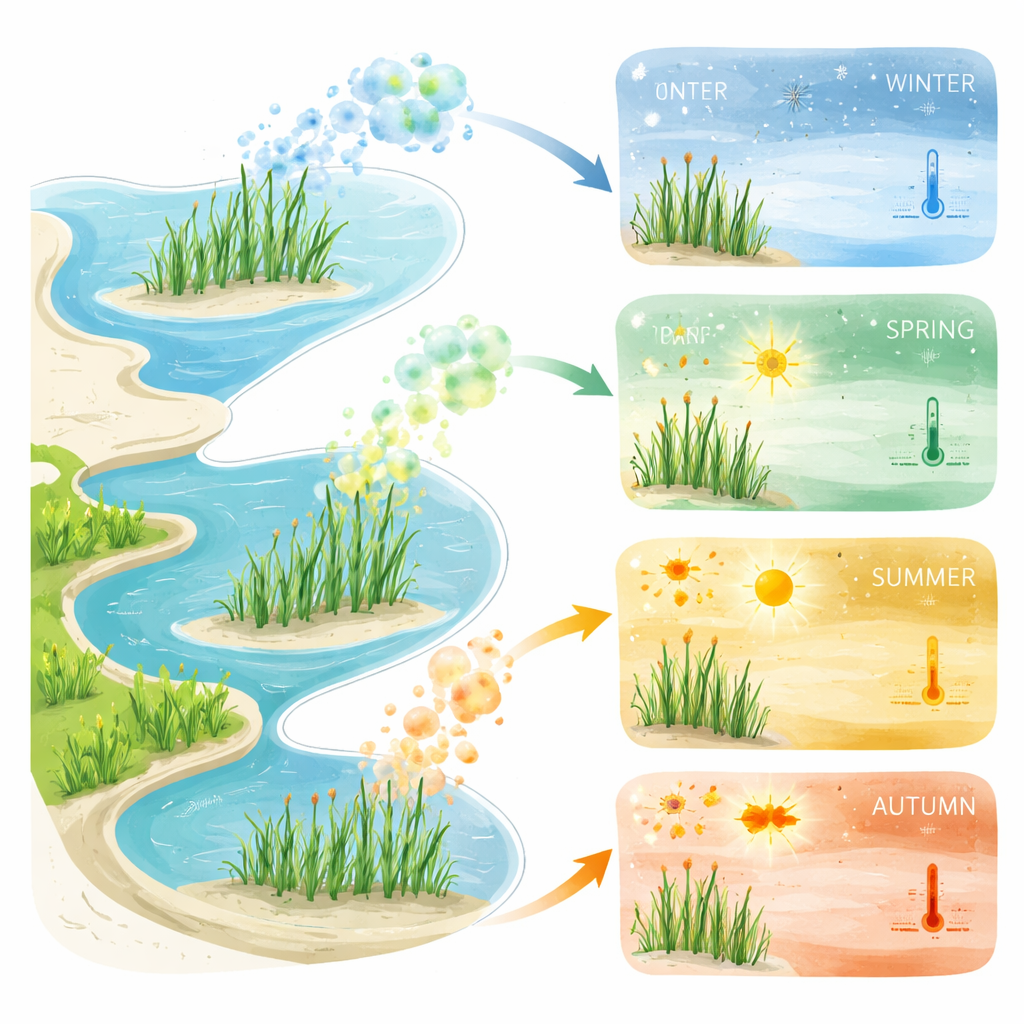
Hidden fragrances of an underwater lawn
Volatile organic compounds are tiny, easily evaporated molecules that drift from plants into the air. On land, they help trees resist heat and drought, signal to other organisms, and even contribute to haze and cloud formation. In the ocean, scientists know that algae and microbes emit a rich variety of such gases, but seagrasses have received far less attention. Cymodocea nodosa, a warm-loving seagrass that carpets both open bays and coastal lagoons in the Mediterranean, is especially interesting because it survives in places where temperatures and salt levels swing widely, hinting at strong stress‑coping abilities.
Tracking seasonal chemical fingerprints
The researchers sampled C. nodosa from six sites—three along open coasts and three inside lagoons—during winter, spring, summer, and autumn. In the lab, they captured the gases released from the leaves and identified them using sensitive chromatography and mass spectrometry. Across all seasons and sites, they detected 171 different compounds. Summer stood out: plants released the greatest number and highest diversity of chemicals, including 31 that appeared only in this season. Many of these were terpenes and related molecules known from land plants and algae to help counteract heat and intense sunlight, while winter and spring showed leaner, simpler chemical profiles.
Heat, salt, and light as chemical drivers
To see how environment shaped these scents, the team focused on two well‑monitored lagoons, Thau and Urbino, where temperature, light, and salinity were recorded continuously. They found strong links between these conditions and several key compounds. In both lagoons, warmer water and brighter light were tied to higher emissions of certain terpenes and breakdown products of plant pigments, as well as dimethyl sulfide, a sulfur gas known to act as an antioxidant in marine organisms. At the same time, some fatty‑acid‑derived compounds linked to membrane damage tended to decline as heat and salinity rose, suggesting a shift toward protective chemistry rather than simple breakdown.
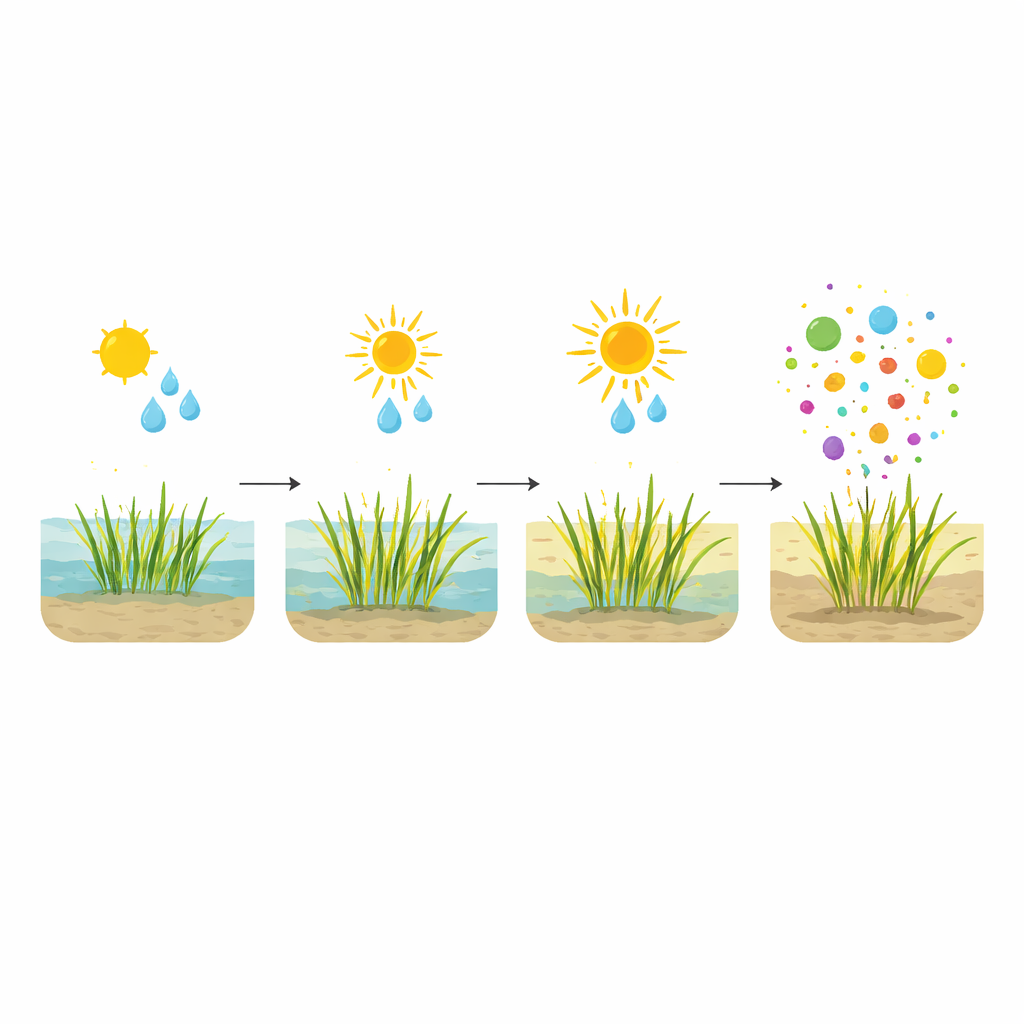
Lagoon locals with distinct chemical personalities
Where the plants lived mattered almost as much as when. While the broad category of habitat—open coast versus lagoon—explained only a small portion of the variation, individual sites showed strong, site‑specific chemical signatures. Urbino lagoon, the warmest and saltiest site, hosted seagrass with the richest and most abundant volatile blend. These plants produced more pigment‑derived protective molecules, more dimethyl sulfide, and additional chlorine‑ and nitrogen‑containing compounds not seen elsewhere. Network analyses of molecular structures confirmed that Urbino plants formed a more complex web of related chemicals than those from the cooler, less salty Thau lagoon.
What the changing scents are telling us
Taken together, the results suggest that Cymodocea nodosa responds to seasonal heat, light, and salt stress by ramping up a suite of protective volatiles, especially in hot summers and in harsh lagoons. These chemical fingerprints differ from place to place, hinting at local “ecotypes” or even distinct chemical types shaped by long‑term environmental pressures and genetics. For a lay observer, this means that as the Mediterranean warms and marine heatwaves intensify, seagrass meadows are not passive victims: they actively adjust their internal chemistry, releasing clouds of invisible compounds that may help them endure—and that may, in turn, subtly influence the coastal atmosphere. Future work combining genetics and broader chemical surveys could reveal how these underwater lawns evolve and adapt in a changing climate.
Citation: Coquin, S., Ormeno, E., Ouisse, V. et al. Seasonal and spatial shifts in the volatile chemical profile of Cymodocea nodosa across marine and lagoon ecosystems. Sci Rep 16, 9917 (2026). https://doi.org/10.1038/s41598-026-40760-8
Keywords: seagrass, Mediterranean Sea, plant volatiles, climate stress, coastal lagoons