Clear Sky Science · en
Quantitative analysis of the effects of air pollution and urbanization on the rate of allergy and chronic obstructive pulmonary disease (COPD)
Why city living and breathing problems matter to you
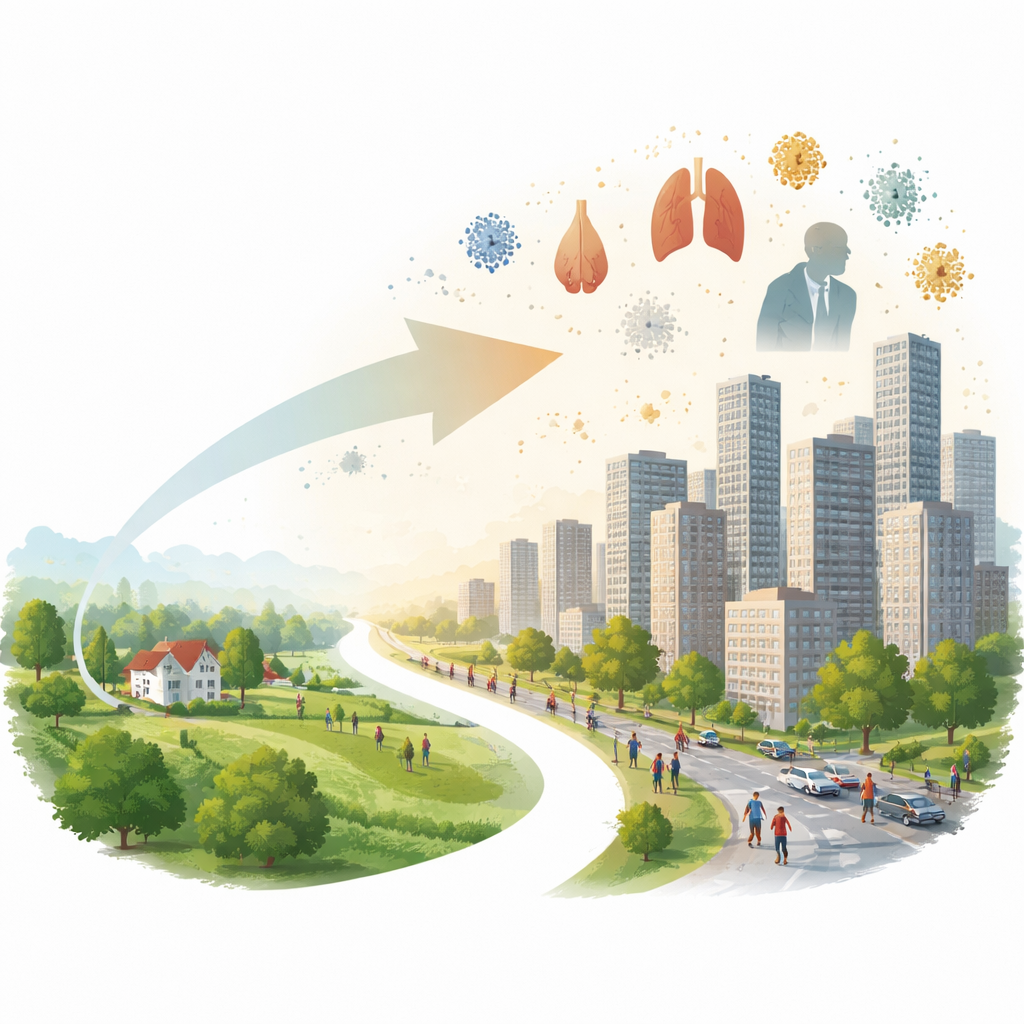
As more people move into cities, many notice that sneezing fits, stuffy noses, and breathing troubles seem to follow. This study looks at how two common breathing problems—everyday allergies and a long‑term lung disease called COPD—have changed in Turkey over 15 years, and how those changes line up with growing city life and dirty air. The findings suggest that it is not just what we breathe, but how we live in ever‑denser urban environments, that may be shaping our respiratory health.
What the researchers set out to explore
The authors wanted to understand how the rise of city living and changes in air quality relate to allergy and COPD rates across the whole country, not just in small clinical samples. They gathered official figures from Turkey’s Ministry of Health on how many adults were treated for allergic rhinitis (a common form of nasal allergy) and COPD each year from 2008 to 2022. They then matched these numbers with World Bank data on fine particle air pollution (PM2.5), the share of people living in urban areas, and how much of the national budget went to health services. Using standard statistical tools, they tested whether years with more urban living or dirtier air tended to be the same years with more allergy and COPD.
How allergy, COPD, and city growth changed over time
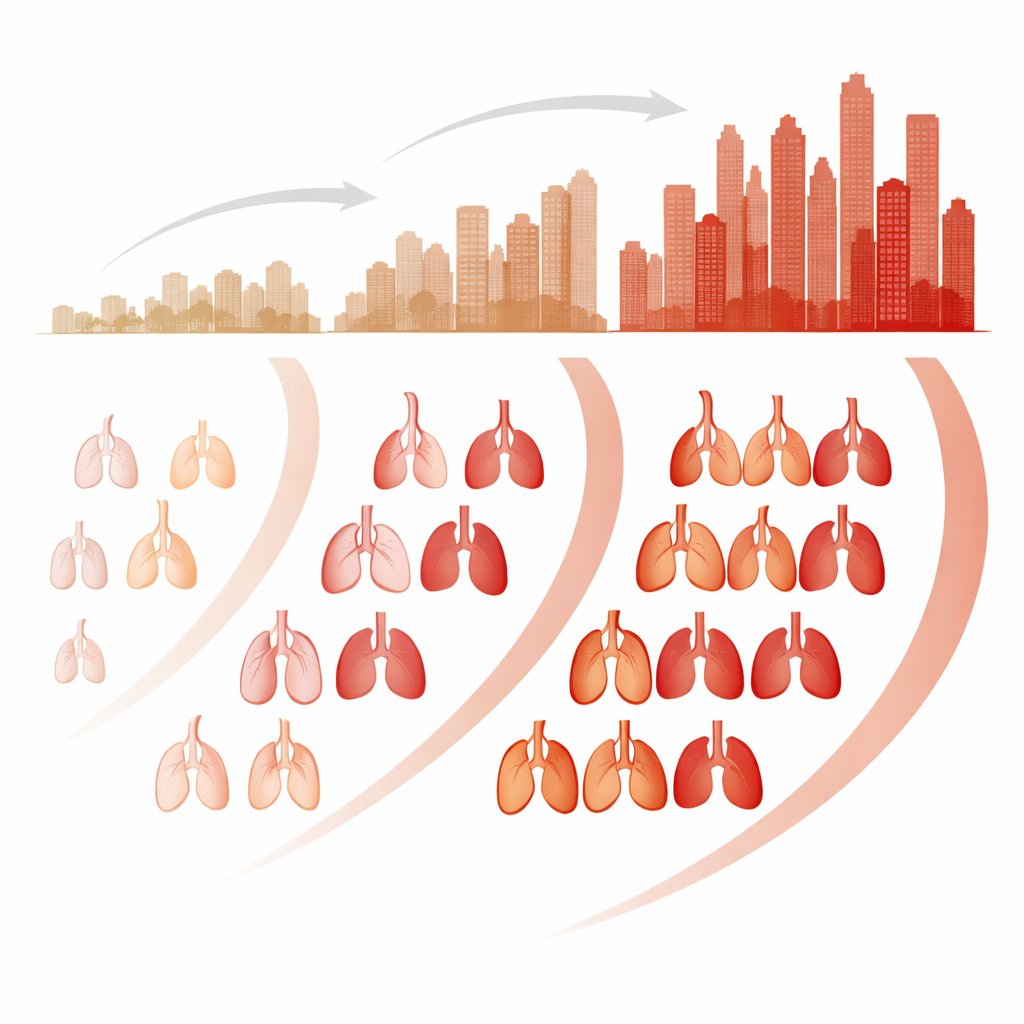
Over this 15‑year period, allergy rates in Turkey stayed fairly steady, hovering around 9–10 percent of adults, with some bumps up and down. COPD rates, in contrast, rose more sharply—from just over 2 percent in 2008 to around 6–7 percent in the early 2020s. During the same years, the share of the population living in cities climbed from about seven in ten people to more than three in four, while health spending slowly increased. Surprisingly, measured fine particle pollution changed only a little and stayed above the World Health Organization’s recommended limits in every year, meaning that the air was consistently more polluted than is considered safe.
What the numbers say about city life and breathing problems
When the researchers compared these trends, they found that years with a higher share of urban population tended to be the same years with higher allergy and COPD rates. In their models, urbanization showed a clear positive link with both conditions, and this held even when they took health spending into account. In contrast, the level of fine particle pollution did not show a strong direct statistical relationship with either allergy or COPD in these national‑level averages. This does not mean air pollution is unimportant—other studies firmly link dirty air to lung damage—but in this particular dataset, living in more urban settings seemed more closely tied to changes in disease rates than small year‑to‑year shifts in measured pollution.
Why this link is not simple cause and effect
The authors are careful to stress that a link in the numbers does not prove that city growth by itself causes more allergies or COPD. Because both urbanization and disease rates rose over the same years, simple comparisons may partly reflect the passage of time rather than a direct cause. Important factors such as smoking habits, aging of the population, exposure to indoor fuels, and the disruptions of the COVID‑19 era were not included, and there were only 15 yearly data points, limiting the strength of any conclusion. The study is best seen as a broad‑brush picture: as Turkey has urbanized, breathing problems have become more common, but many overlapping reasons may lie behind that pattern.
What this means for everyday life and future research
For the general public and for doctors, the main takeaway is that where and how people live may matter for breathing health beyond the usual focus on outdoor air pollution. Stressful, crowded, and less green urban environments, combined with lifestyle changes such as less physical activity and more time indoors, may interact with pollution and other risks to worsen allergies and long‑term lung disease. The authors call for more detailed follow‑up studies using finer‑grained local data, modern analysis tools, and better tracking of smoking, age, and other influences. Such work could help city planners, health officials, and clinicians design neighborhoods and health policies that make it easier to breathe—no matter how large the city grows.
Citation: Akduman, S., Yilmaz, K. Quantitative analysis of the effects of air pollution and urbanization on the rate of allergy and chronic obstructive pulmonary disease (COPD). Sci Rep 16, 13471 (2026). https://doi.org/10.1038/s41598-026-40708-y
Keywords: urbanization, air pollution, allergy, COPD, respiratory health