Clear Sky Science · en
The association between anthropometric indices with non-alcoholic fatty liver in the Azar cohort population
Why body shape and liver health matter
Non-alcoholic fatty liver disease (NAFLD) is quietly becoming one of the most common liver problems worldwide, often developing without obvious symptoms until serious damage is done. Because the most accurate diagnostic tests are invasive or expensive, doctors need simple ways to flag people at higher risk. This study from the Azar cohort in Iran asks a practical question with big public-health implications: can simple body measurements, like waist size or body shape, reliably warn us about fatty liver risk, and are newer, more complex body indexes any better than the old standbys?
Looking at a community in everyday life
The researchers analyzed data from nearly 15,000 adults aged 35 to 70 living in the Shabestar region of East Azerbaijan, Iran, who are part of a long-term health study. Participants answered health questionnaires and underwent detailed body measurements, including height, weight, waist, hip, and wrist circumference. They also provided information on smoking, activity level, and existing conditions such as diabetes and high blood pressure. NAFLD status was based on participants reporting that a doctor had diagnosed them with the disease, reflecting how liver problems are often recognized in routine clinical practice rather than through research-grade imaging or biopsy.
Old measures versus new body indexes
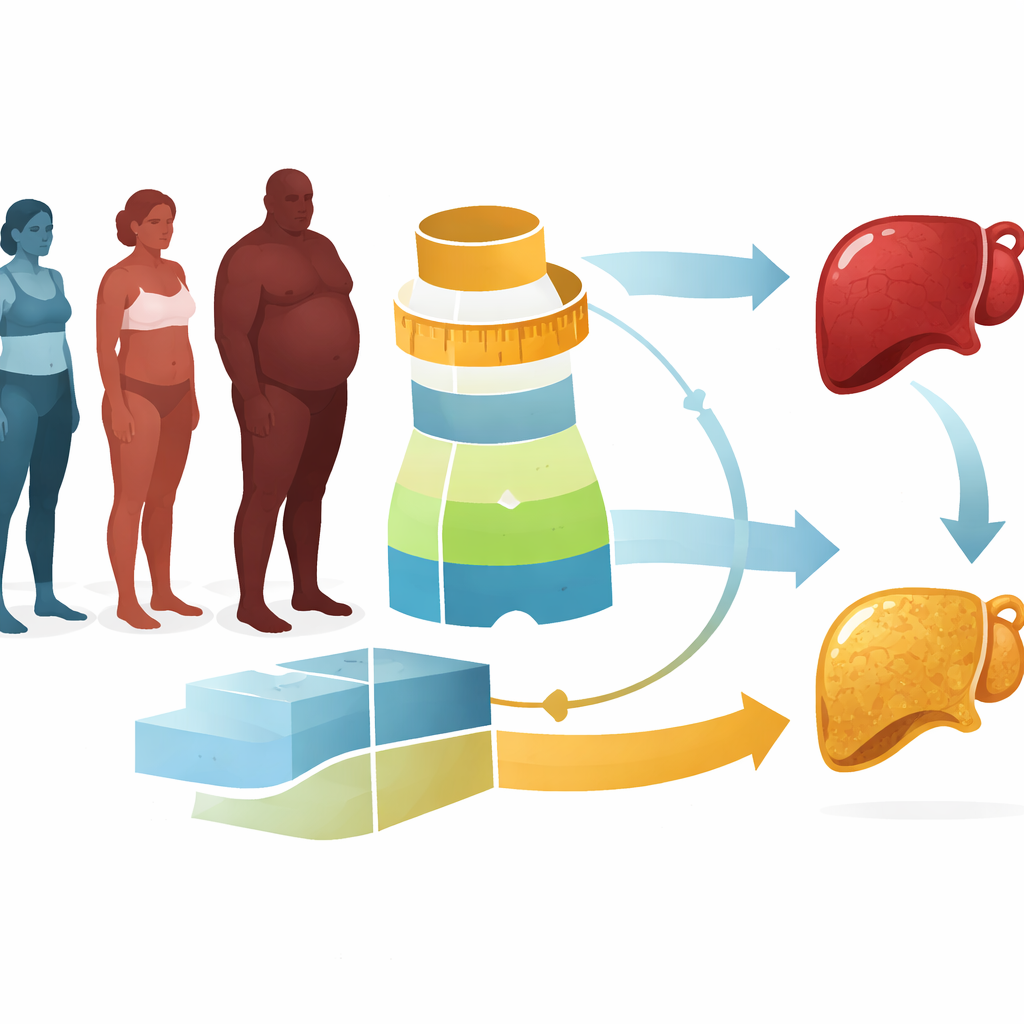
To see which body markers best signaled fatty liver, the team compared traditional measures—body mass index (BMI), waist and hip size, and ratios of waist to hip and waist to height—with several newer, more elaborate indexes. These newer scores combine waist size, body weight, blood fats, and cholesterol into single numbers that are thought to better capture deep belly fat and its metabolic effects. In the Azar cohort, every traditional and novel index showed a significant link with NAFLD: people with larger waists, higher BMI, or higher composite scores were more likely to report fatty liver. A simple waist-to-height ratio of at least 0.5 and having a BMI of 25 or more were especially strong warning signs.
Finding the best early warning signals
The researchers then asked which single measures, and which combinations, did the best job of separating those with fatty liver from those without. Waist circumference had the strongest performance among traditional measures when considered alone, but combining several traditional indexes together further improved prediction. Among the newer measures, two stood out: the abdominal volume index and the body roundness index showed the highest ability to discriminate NAFLD cases, with suggested cut-off values that captured about 80% of people with fatty liver. When all the novel indexes were combined, their performance slightly exceeded that of the traditional group alone.
Mixing simple and advanced measures
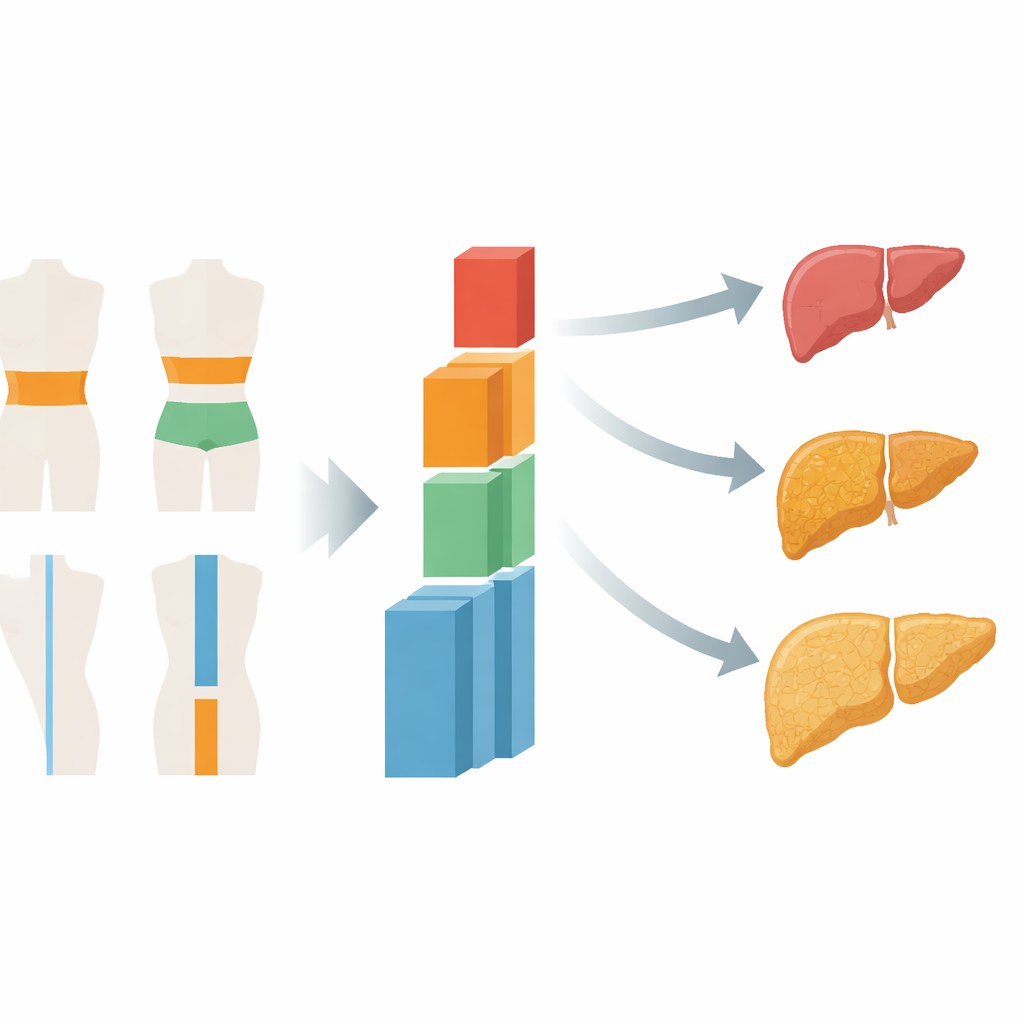
To mimic how a clinician might choose a compact set of tools, the team used stepwise statistical models to pick the most informative combination. The best-performing mix included both classic and newer indicators: BMI, waist circumference, waist-to-hip ratio, abdominal volume index, body roundness index, and visceral adiposity index. Together, these provided better discrimination than any single measure, though none was perfect. The results suggest that straightforward tape-measure assessments can be meaningfully enhanced by a small number of more complex body-shape scores derived from routine measurements and standard blood tests.
What this means for everyday health
For non-specialists, the key message is that how and where we carry body fat matters for liver health, and that simple measurements taken in a clinic can offer powerful clues. In this Iranian community, people with thicker waists, higher BMI, and rounder abdominal shape were substantially more likely to have fatty liver, and combining these indicators sharpened the picture. While the study is limited by its reliance on self-reported diagnosis and its focus on adults over 35, it supports using both traditional and newer body-shape indexes as practical, low-cost screening tools. In plain terms, a growing waistline is not just a cosmetic concern—it is a warning signal that the liver may be under strain, and paying attention to these simple measurements could help identify at-risk adults earlier, before severe liver damage develops.
Citation: Karimi, E., Hemami, R.M., Somi, M.h. et al. The association between anthropometric indices with non-alcoholic fatty liver in the Azar cohort population. Sci Rep 16, 13178 (2026). https://doi.org/10.1038/s41598-026-40671-8
Keywords: non-alcoholic fatty liver disease, body mass index, waist circumference, abdominal obesity, visceral fat