Clear Sky Science · en
Integrated life cycle assessment and multicriteria decision making framework for evaluating renewable energy technologies at Istanbul Airport
Airports as Hidden Energy Giants
Every time a plane takes off, it leaves behind more than contrails in the sky. Inside the terminal, lights, air conditioning, baggage systems, and ground vehicles quietly consume enormous amounts of energy around the clock. This paper asks a simple but urgent question: if airports are going to keep growing, how can they power all this activity in a way that is cleaner, smarter, and still practical? Focusing on Istanbul Airport as a test case, the authors design a decision-making framework to sort through competing green technologies and identify which ones deliver the biggest sustainability gains in the real world.
Looking at the Whole Picture, Not Just the Power Bill
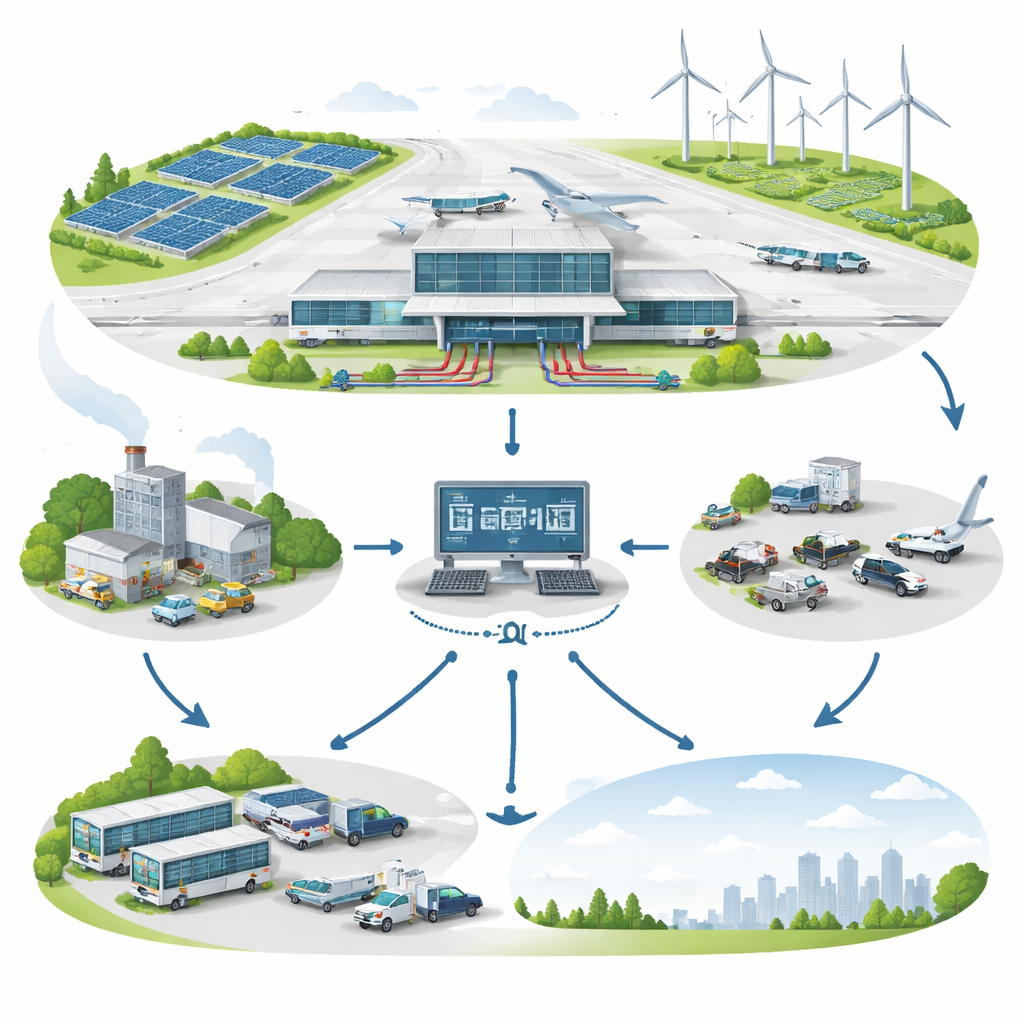
Measuring airport sustainability is not as easy as checking how much electricity is used. Different technologies can shift pollution upstream to factories, increase water use, or strain local communities. To avoid such blind spots, the authors combine two approaches. First, they use life cycle assessment, which tracks energy use, climate impacts, air pollution, water use, and waste created during the operational phase of each option. Then they bring in expert judgement to score economic aspects, passenger comfort, worker safety, and social effects. A mathematical method blends these pieces into a single, comparable score, so decision-makers can see trade-offs clearly instead of relying on gut feeling or single metrics.
Seven Ways to Power a Busy Airport
The study compares seven options that either generate cleaner energy or use it more wisely. On the supply side are solar panels on roofs and facades, wind turbines, geothermal heat pumps, biomass plants that turn food and cabin waste into energy, and combined heat-and-power units that produce electricity, heating, and cooling together. On the demand side are smart building systems that fine-tune heating, cooling, and lighting using digital control, and a package of sustainable aviation fuels plus electric ground vehicles that replace diesel-powered tugs, buses, and service trucks. All are sized and evaluated using Istanbul Airport’s actual passenger numbers and terminal area, making the results relevant to major hubs rather than small pilot projects.
What the Numbers Say About Emissions and Resources
When the authors tally climate-warming emissions, smog-forming gases, tiny particles in the air, water use, and solid waste, a clear pattern emerges. Technologies that cut demand or electrify existing activities tend to perform better than those that simply add new power plants. Smart building management and the shift to electric service vehicles with cleaner fuels show extremely low emissions per passenger, because they reduce energy needs outright and avoid burning large amounts of fuel on site. Geothermal systems also do well by using the steady temperature of the ground to trim heating and cooling loads. In contrast, solar, wind, biomass, and combined heat-and-power involve more intensive supply chains and, in the case of thermal plants, extra water use and ash, so their overall environmental footprint per unit of useful energy is higher in the operational phase.
Balancing Green Gains with Cost, Comfort, and Feasibility
Purely environmental scores are not enough; airports must also keep passengers comfortable, stay within budget, and respect surrounding communities. A panel of three specialists—an academic, an energy policy advisor, and an airport operations manager—evaluate how each technology affects investment and running costs, economic benefits, indoor air quality, passenger experience, and wider social impacts. They judge social factors such as noise, worker safety, and local acceptance to be nearly as important as emissions, reflecting growing pressure on airports to prove they are good neighbors as well as efficient transport hubs. The combined analysis shows that some highly visible options, like large solar fields or biomass plants, may offer symbolic appeal but rank lower once comfort, practicality, and hidden impacts are counted.
The Clear Winners: Efficiency and Electrification
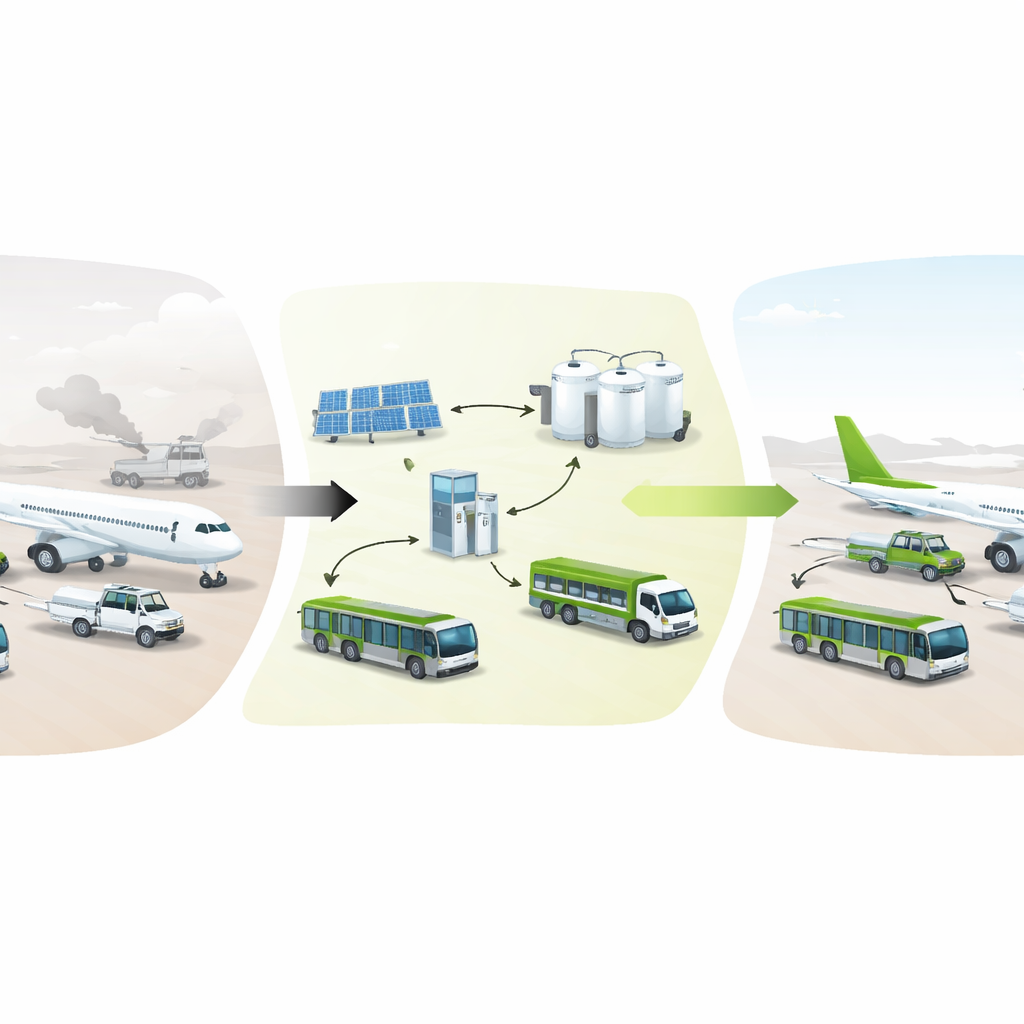
When all criteria are merged in the final ranking, two approaches rise to the top. First is the pairing of sustainable aviation fuels with a full shift to electric ground support vehicles, which slashes local air pollution and climate emissions from apron operations while improving working conditions on the tarmac. Second is combined heat-and-power, which squeezes more useful energy from each unit of fuel and reliably serves large heating and cooling loads. Solar, wind, geothermal, and biomass still play important roles, but mainly as part of a broader mix rather than stand-alone solutions. For lay readers, the take-home message is straightforward: for big airports, the fastest and most robust path to sustainability is not just to bolt on more green generators, but to cut waste, electrify what moves, and then layer in renewables where they make the most real-world sense.
Citation: Zenginoğlu, A., Yüksel, F.Ş. Integrated life cycle assessment and multicriteria decision making framework for evaluating renewable energy technologies at Istanbul Airport. Sci Rep 16, 9822 (2026). https://doi.org/10.1038/s41598-026-40657-6
Keywords: sustainable airports, renewable energy planning, life cycle assessment, electrified ground support, airport energy efficiency