Clear Sky Science · en
Comparative biology and morphometrics of pink bollworm, Pectinophora gossypiella (Saunders) on Bt cotton and alternate malvaceous hosts
Why tiny cotton pests matter
For most of us, cotton is just the soft fabric in our clothes, but for farmers it is a high‑stakes crop constantly under attack from insects. One of the most destructive is the pink bollworm, a small moth whose caterpillars burrow into cotton bolls and ruin the fibers inside. Modern “Bt cotton” varieties were engineered to poison such pests, yet in India pink bollworm has increasingly learned to live with this defense. This study asks a deceptively simple question with big implications: how does the pink bollworm grow and survive on Bt cotton compared with weedy relatives of cotton that grow around the fields?
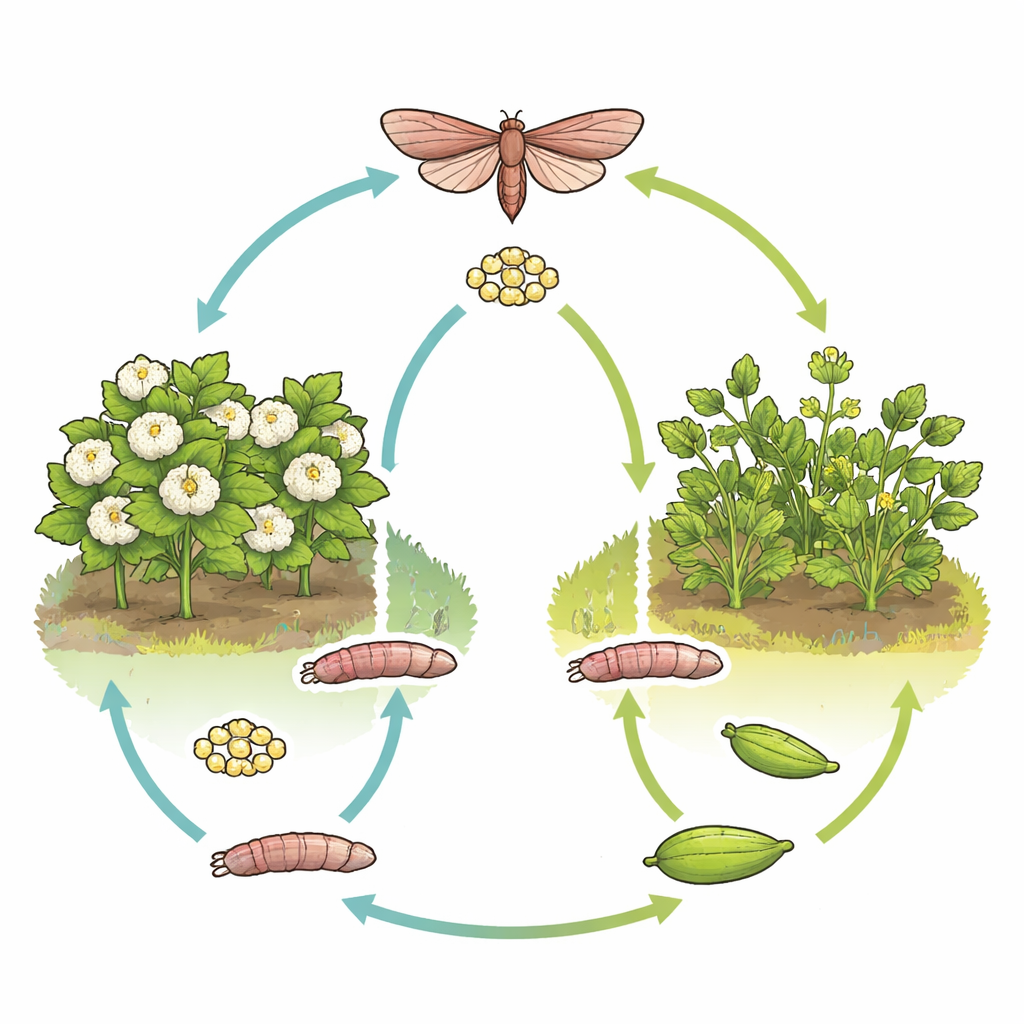
Following the insect from egg to moth
The researchers raised pink bollworms collected from Bt cotton fields under controlled laboratory conditions. They compared insects feeding on Bt cotton bolls with those feeding on the seed pods of three wild or weedy plants in the mallow family (the same plant family as cotton). For each host, they tracked the insect’s full life story: how long eggs took to hatch, how quickly caterpillars passed through four larval stages, how long they stayed as pupae, how many adults successfully emerged, how long those adults lived, and how many eggs females laid. They also weighed the insects and carefully measured body size, head width, and wing span using a high‑precision microscope system.
Slow growth on cotton, fast growth on weeds
Across the board, caterpillars feeding on Bt cotton developed more slowly than those on the alternate plants. Larval and pupal stages lasted longer, and the entire life cycle from egg to adult stretched to about 42 days on Bt cotton, versus roughly 37 days on the other hosts. Yet the early egg stage itself was similar on all plants, taking about three to four days to hatch. This pattern suggests that once the larvae begin to feed, something about Bt cotton—most likely the insect‑killing toxins it produces—slows them down. In contrast, larvae on the wild mallow plants raced through their growth more quickly, completing their life cycles several days sooner.
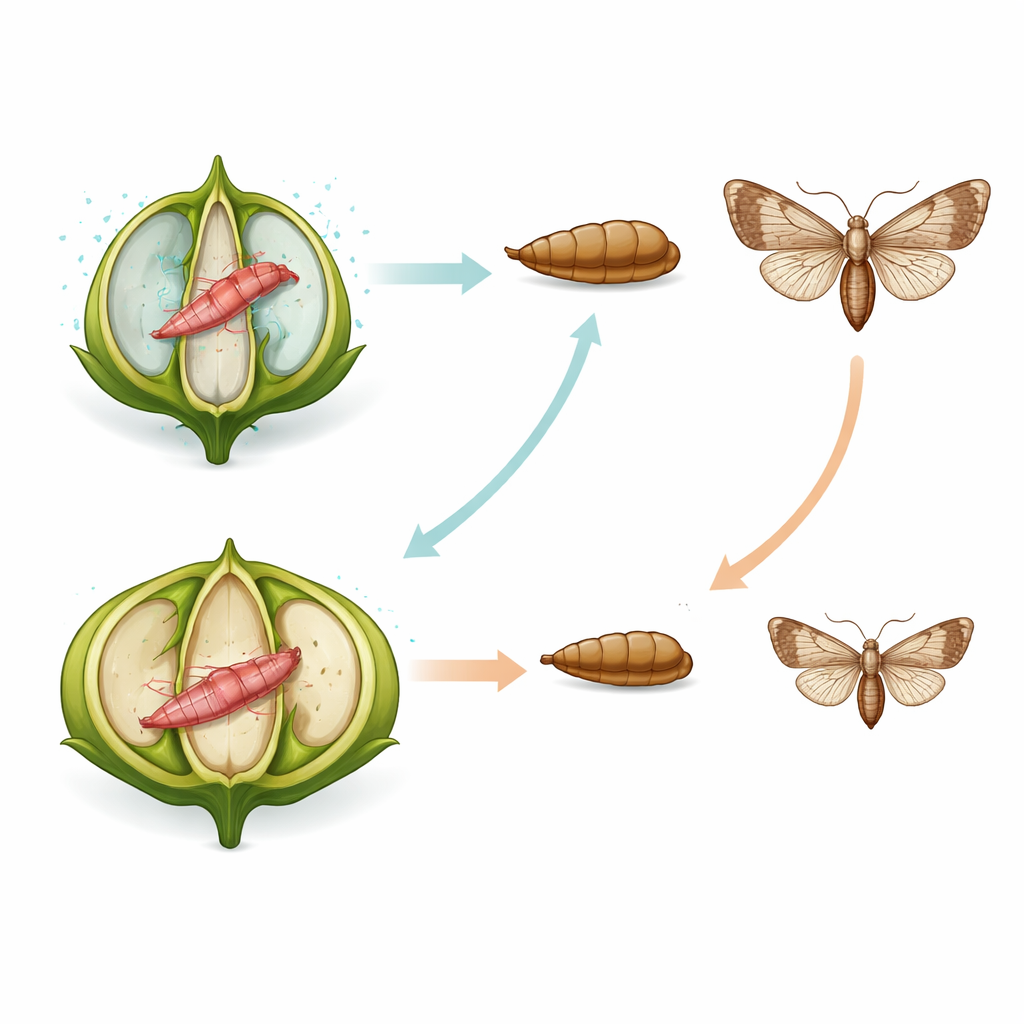
Heavier, sturdier insects from Bt cotton
Despite the slowdown, pink bollworms reared on Bt cotton ended up bigger and heavier at every stage. Their caterpillars weighed more in all four larval stages, their pupae were heavier, and the final adult moths had longer bodies and broader wings than those raised on the alternate plants. Adults from Bt cotton also lived longer, and females laid more eggs with higher hatching success. In other words, larvae on Bt cotton appeared to endure more stress and take longer to mature, but compensated by feeding longer and ultimately becoming larger, more robust moths. On the alternate plants, development was quicker but produced smaller adults with fewer, less successful offspring.
Hidden shelters between cotton seasons
Because pink bollworm can complete its entire life cycle on these non‑cotton mallow plants, they likely act as quiet refuges when cotton is not being grown. The insects can survive and breed on these weeds and wild relatives during the off‑season, then move back into cotton fields when the new crop is planted. This continuous bridge between crop and non‑crop hosts is especially worrying where pink bollworm has already evolved tolerance to Bt toxins, because it helps resistant insects persist year‑round and then reinvade fields.
What this means for farmers and fabrics
For a layperson, the main takeaway is that Bt cotton does not simply kill off pink bollworm; in tolerant populations it slows them down while still allowing them to grow larger and live longer. At the same time, related weedy plants around the farm can quietly keep the pest population going between cotton seasons, even if they produce smaller moths. Together, these findings show why relying on a single genetic defense is risky. Managing pink bollworm will require a mix of tactics: removing or managing alternate host weeds, preserving carefully planned non‑Bt “refuge” areas, and rotating different control tools. Such strategies can help keep this tiny moth from undermining both farmers’ livelihoods and the cotton products we depend on.
Citation: Rakhesh, S., Hanchinal, S.G., Bheemanna, M. et al. Comparative biology and morphometrics of pink bollworm, Pectinophora gossypiella (Saunders) on Bt cotton and alternate malvaceous hosts. Sci Rep 16, 12496 (2026). https://doi.org/10.1038/s41598-026-40601-8
Keywords: pink bollworm, Bt cotton, insect resistance, alternate host plants, integrated pest management