Clear Sky Science · en
Analysis of the condition of thin-walled composite structures based on the results of experiments conducted at variable temperature by acoustic emission
Why listening to materials matters
Modern airplanes, cars, and wind turbines rely on lightweight composite parts that must stay safe while facing freezing high-altitude cold and scorching ground heat. This study asks a simple but vital question: can we "listen" to these thin, shell‑like pieces as they work, and hear the very first signs that they are about to fail? By combining sound-based sensing with precise optical measurements, the authors show how engineers might detect dangerous damage in advance—without cutting anything open.
Light but fragile building blocks
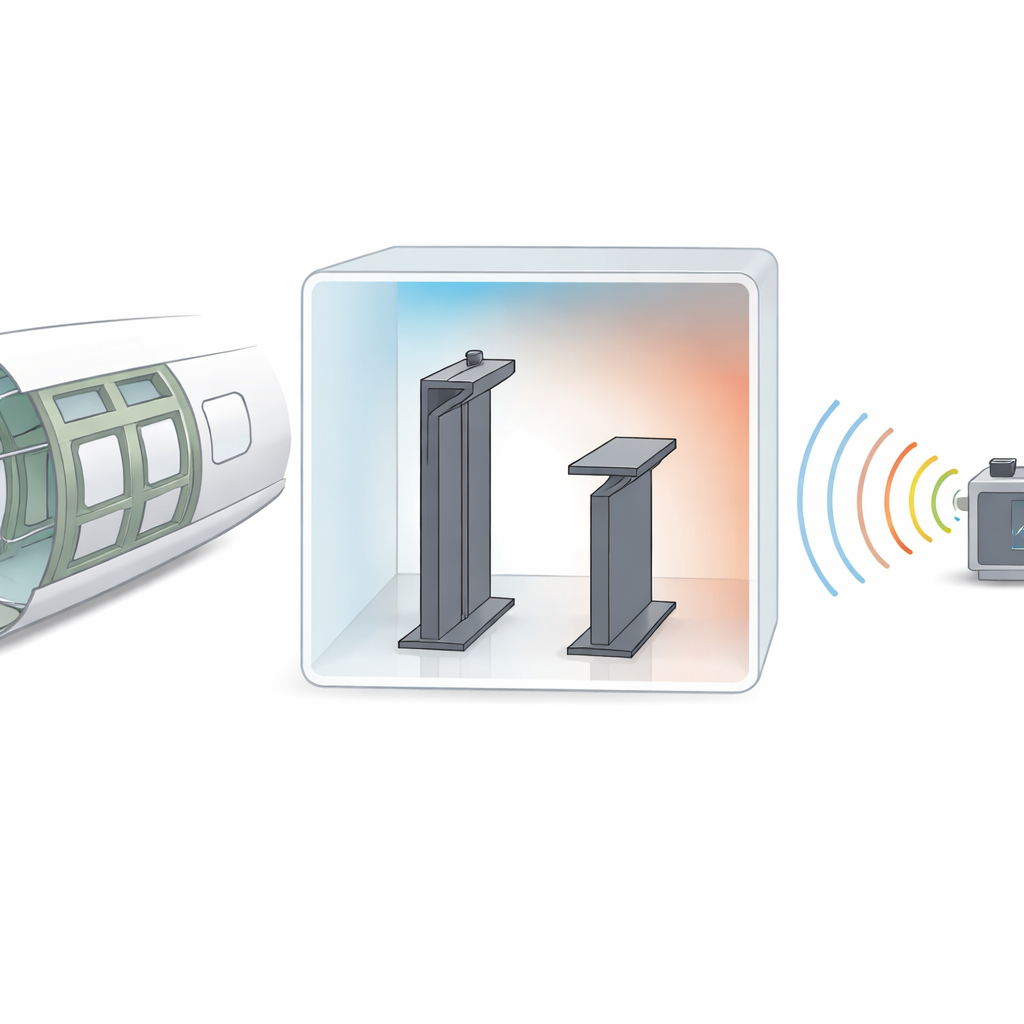
The research focuses on thin-walled carbon‑epoxy profiles, similar to stiffeners used as internal ribs and stringers in aircraft fuselages and wings. These pieces are strong along their length but can suddenly bend or buckle when pressed, especially if their walls are very slender. The team tested two common cross-section shapes: an omega-like section and a Z-shaped section, both built from ten thin layers of carbon fiber, each layer oriented at a different angle. This layered design reflects how real aerospace components are made to balance strength, stiffness, and weight.
Extreme temperatures in the lab
To mimic real service conditions, the samples were compressed in a test machine inside a temperature-controlled chamber ranging from −20 °C up to +80 °C. Three independent tools watched what happened. First, the machine recorded how much load the samples carried as they shortened—so‑called equilibrium paths that trace their journey from straight to buckled and finally to failure. Second, a digital image correlation (DIC) camera system tracked tiny surface motions and strains, mapping how the walls bent into waves as stability was lost. Third, an acoustic emission sensor attached to each specimen picked up high-frequency “pings” created inside the material whenever cracks or layer separations formed.
Hearing the first crack
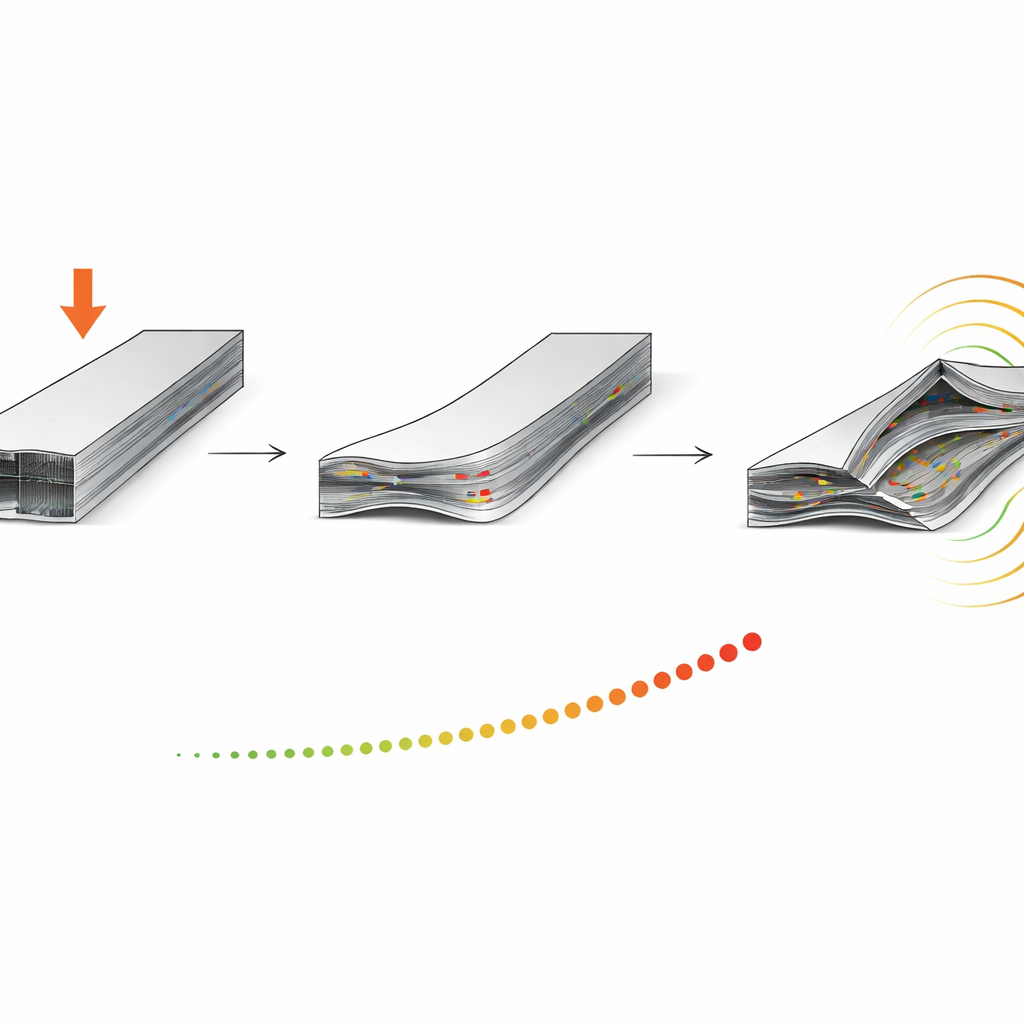
By lining up these three streams of data, the researchers found clear links between what the eye sees, what the machine feels, and what the sensor hears. In both profile types, early loading produced almost no acoustic activity, suggesting the structure remained intact even as the walls began to buckle elastically. Near the peak load, however, the acoustic signal suddenly changed: energy spikes and sharp jumps in the cumulative “count” of detected hits coincided with the onset of delamination—the layers beginning to peel or crack inside. These acoustic jumps often appeared just before the specimen lost its ability to carry more load, effectively announcing that failure was imminent. The exact pattern depended on temperature and profile shape; for instance, the Z-shaped samples tended to degrade more gradually, producing smaller sound bursts than the stiffer omega-shaped ones.
Simple warning rules from complex data
Because engineers cannot easily watch aircraft parts buckle in flight, the team condensed their findings into two simple indicators based on shortening—the amount a component has been squeezed. One compares the shortening at the first noticeable rise in acoustic energy with the shortening at final failure. The other uses the first clear change in the slope of the cumulative hit count. Expressed as ratios, these indicators show how far a structure has progressed from healthy to broken. Across most temperatures, both indicators gave consistent warning that serious damage was starting, even when visual buckling alone did not yet signal danger.
What this means for real structures
The study concludes that carefully interpreted acoustic emission, supported by knowledge of how a component buckles, can serve as a powerful early-warning system for thin-walled composite parts. By tracking when either of the two indicators drops below a chosen threshold, engineers could define a “safe operating range” and schedule further checks before catastrophic failure occurs. While more tests on different layups and temperatures are needed, this work moves us closer to aircraft and other composite-rich structures that can quietly report their own health long before a crack reaches the surface.
Citation: Kopecki, T., Swiech, L., Rozylo, P. et al. Analysis of the condition of thin-walled composite structures based on the results of experiments conducted at variable temperature by acoustic emission. Sci Rep 16, 10168 (2026). https://doi.org/10.1038/s41598-026-40593-5
Keywords: acoustic emission, composite structures, buckling, temperature effects, structural health monitoring