Clear Sky Science · en
Metatranscriptomic insights into host-microbiome interactions underlying asymptomatic COVID-19 cases
Why Some Infections Stay Silent
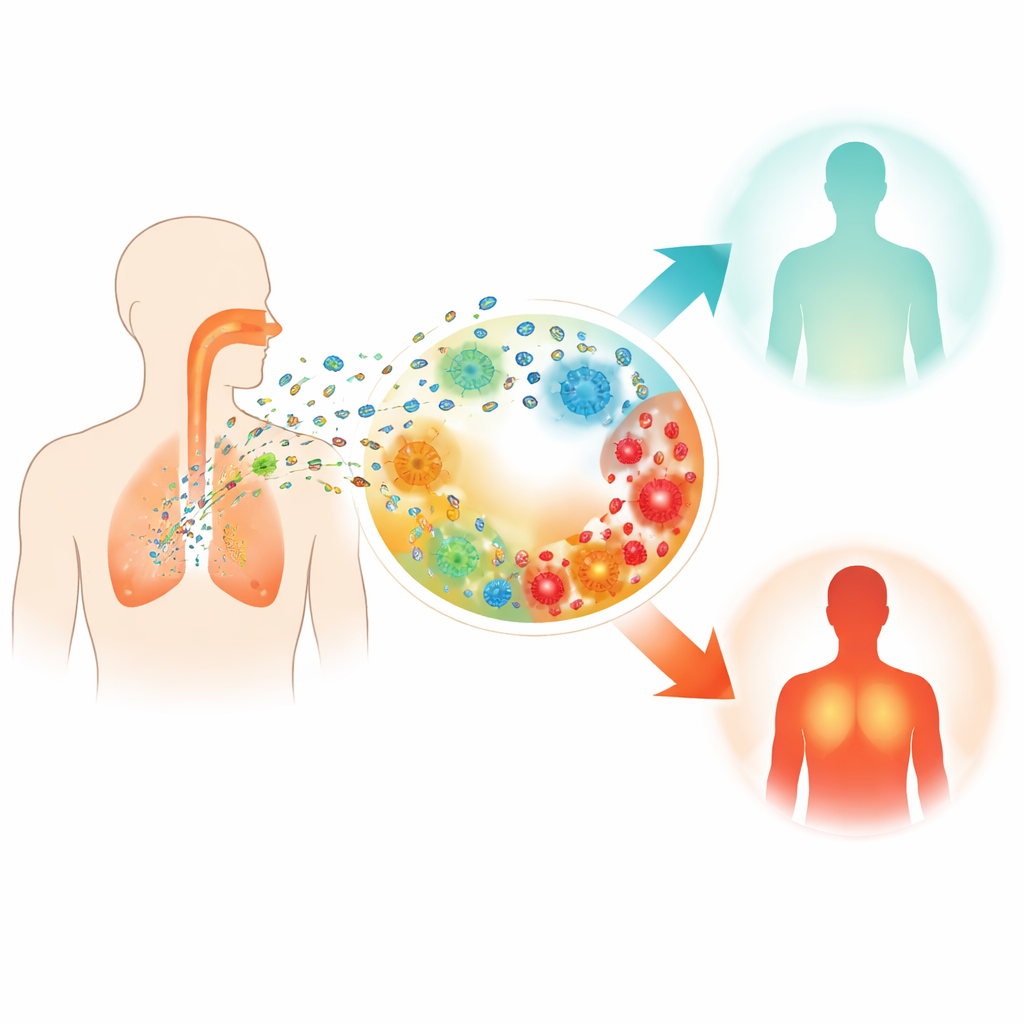
Many people infected with the virus that causes COVID-19 never feel sick, while others end up fighting for their lives. This study asks a simple but important question: what makes the difference? By looking closely at both the germs living in the nose and throat and the body’s own gene activity, the researchers explore how our resident microbes and immune system might shape whether COVID-19 becomes severe or passes quietly, without symptoms.
The Hidden World in the Airways
Our upper airways are home to a bustling community of bacteria and fungi. The team collected nose and throat swabs from forty people in Bangladesh, grouped as COVID-negative, asymptomatic positive, mildly ill, and severely ill patients. Using a technique that reads out active RNA molecules, they could see not just which microbes were present, but which ones were busy and what they were doing. They also analyzed human RNA from the same samples, revealing which host genes were switched on or off in each group.
Different Microbes, Different Outcomes
The microbial communities looked noticeably different across the groups. People with COVID-19, regardless of how sick they were, tended to have more potentially harmful and drug-resistant bacteria in their airways than those who tested negative. Fungal species were particularly varied in severe cases, consistent with concerns about fungal complications in very ill patients. At the same time, asymptomatic individuals formed a distinct cluster when the authors compared overall community patterns. Their microbial world was unique, marked by active gene expression related to basic cell functions and a rich collection of antimicrobial resistance genes, suggesting a well-armed, metabolically busy microbiome.
Signals from the Body’s Defense System
On the human side, the gene activity patterns reflected how strongly the immune system was reacting. Compared with COVID-negative people, infected patients showed higher expression of genes involved in antiviral defense and inflammatory signaling, including molecules linked to the notorious “cytokine storm” seen in severe disease. Yet asymptomatic carriers stood out again: key early-warning sensors of infection, especially a receptor called TLR4 that helps launch strong inflammatory responses, were less active in this group than in negative controls. In other words, people without symptoms appeared to keep this particular alarm bell muted, even though they carried the virus.
Microbes, Genes, and a Delicate Balance
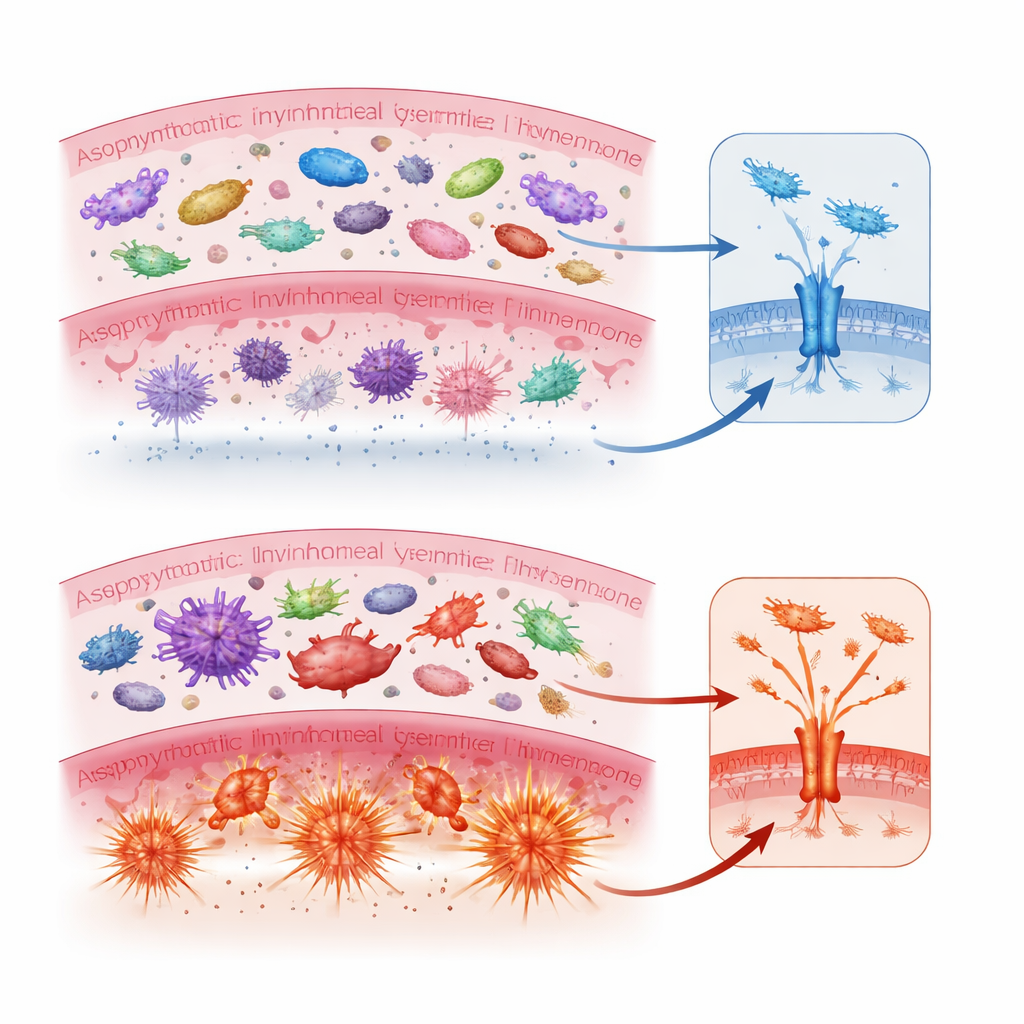
The study also connected specific bacteria to specific human genes. Certain strains of Pseudomonas, known opportunistic pathogens, were positively linked to host genes involved in cell survival and basic regulation, while another microbe, Moraxella osloensis, showed the opposite pattern with a membrane-related gene. These ties hint that microbes and host cells may influence each other in ways that push the immune response toward calm control or damaging overreaction. The distinctive pattern in asymptomatic people—busy microbes, abundant resistance genes, and dialed-down inflammatory signaling—suggests their airway ecosystem may help hold the virus in check without provoking full-blown illness.
What This Means for Everyday Health
Put simply, this work suggests that whether COVID-19 makes you sick may depend not only on the virus, but also on the community of microbes in your airways and how your immune system chooses to respond. Asymptomatic individuals seem to host a unique microbial mix and a more restrained inflammatory response, especially through lower TLR4 activity, which may prevent symptoms while still controlling infection. Although the study is modest in size and focused on one population, it points toward a future where doctors might assess both the microbiome and immune gene activity to predict disease risk, guide treatments, and better understand why some infections remain silent.
Citation: Chowdhury, S.F., Sarkar, M.H., Al Sium, S.M. et al. Metatranscriptomic insights into host-microbiome interactions underlying asymptomatic COVID-19 cases. Sci Rep 16, 11916 (2026). https://doi.org/10.1038/s41598-026-40563-x
Keywords: COVID-19, microbiome, asymptomatic infection, immune response, antibiotic resistance