Clear Sky Science · en
Genome Insight and factorial design to elucidate the regulation of the tryptophan-mediated IAA biosynthetic pathway in an endophyte
Why tiny plant partners matter
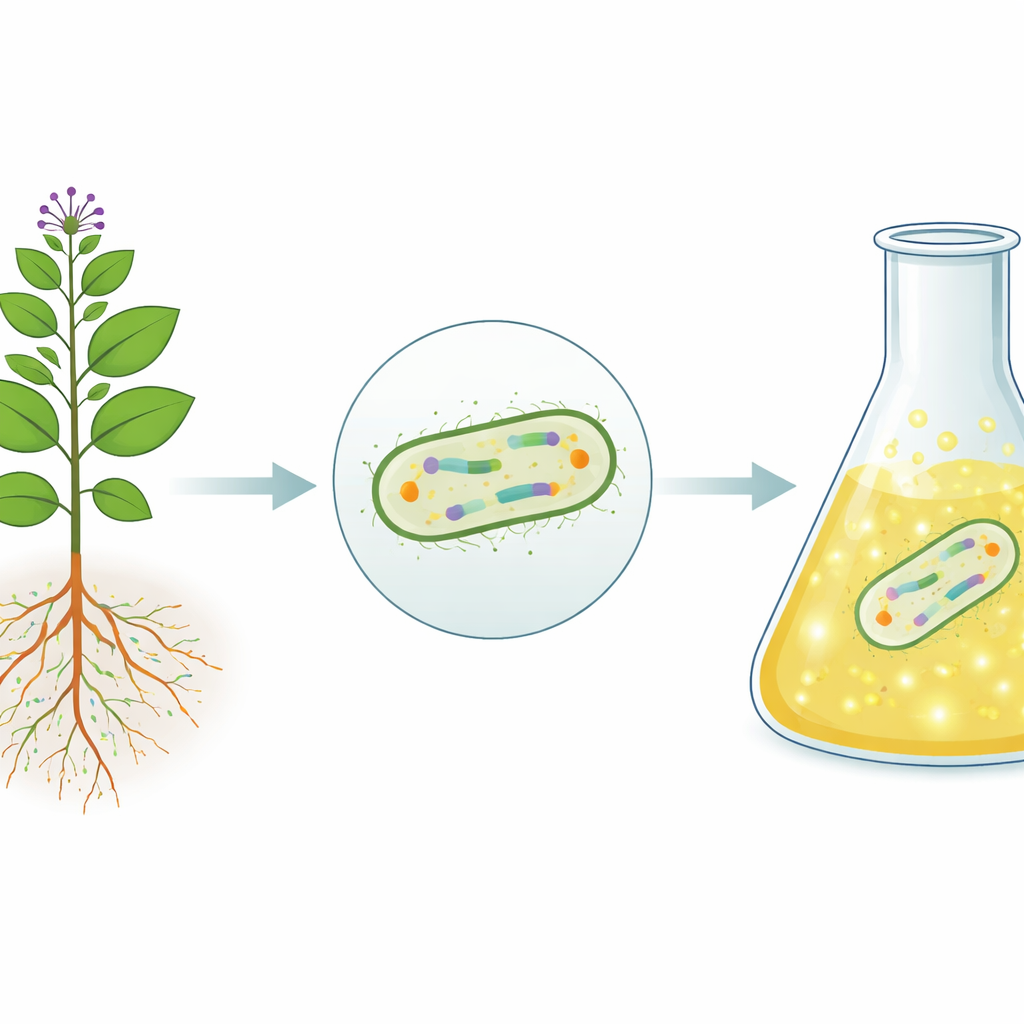
Many useful natural chemicals are made in such small amounts by plants that harvesting them is costly and inefficient. One of these is indole-3-acetic acid (IAA), a major plant growth hormone with rising demand in agriculture and even medicine. This study explores how a bacterium that quietly lives inside plant tissues can be turned into a miniature factory for making IAA in a sustainable, scalable way.
Hidden helpers inside medicinal plants
Certain bacteria, called endophytes, live inside healthy plants without causing disease. They often boost their host’s growth and stress tolerance by making helpful compounds, including plant hormones. The authors focused on an endophytic strain of Bacillus cereus, named SKAM2, isolated from the medicinal plant hops (Humulus lupulus). Instead of relying on the plant itself to supply IAA, they asked whether this resident microbe could produce the hormone more efficiently, opening the door to greener agricultural inputs and potential therapeutic uses.
Reading the bacterium’s instruction manual
To understand what SKAM2 can do, the team sequenced its entire genome, revealing a circular DNA molecule of about 5.6 million base pairs with over 5,800 protein-coding genes. Comparisons with other known Bacillus cereus strains showed very high genetic similarity, confirming its identity. Using specialized software, the researchers scanned the genome for clusters of genes that build complex molecules. They found several such clusters, some matching known compounds like iron-grabbing siderophores and antimicrobial peptides, hinting that SKAM2 may also help plants by defending roots and improving nutrient uptake.
Unraveling the hormone-making routes
The central question was how SKAM2 makes IAA. By mapping its genes onto known metabolic routes, the authors identified a full set of genes that convert the amino acid tryptophan into IAA. These included a key step in the so‑called IPyA route, as well as a series of genes that build and recycle tryptophan itself. They also detected a gene that can turn tryptophan into tryptamine, a building block of another IAA route. Together, these findings show that SKAM2 has multiple, overlapping ways to funnel tryptophan into IAA, and may even use additional tryptophan‑independent routes that remain to be fully mapped.
Tuning culture conditions for maximum output
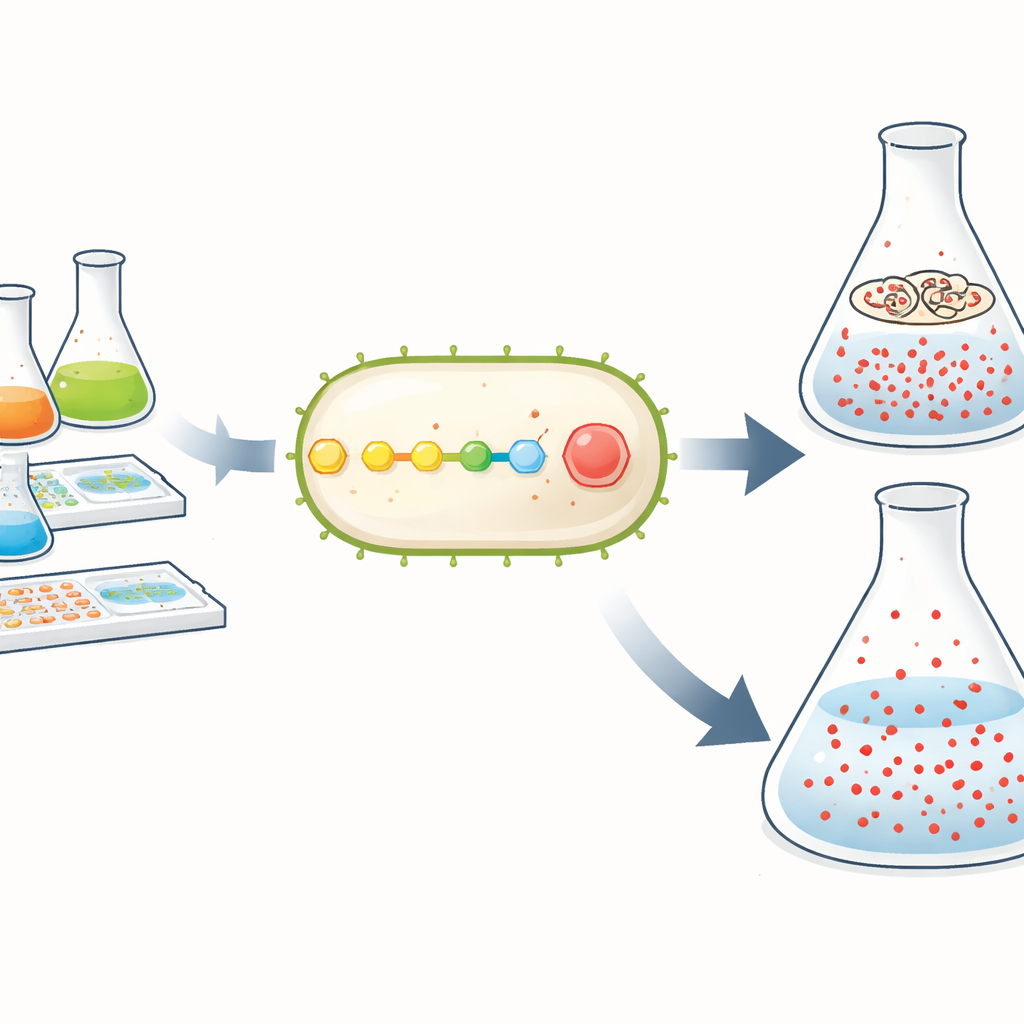
Armed with this genetic insight, the researchers set out to tune the bacterium’s environment to boost IAA output. They used a structured “design of experiments” approach, systematically varying four factors: how fast cultures were shaken, how long they grew, and the amounts of tryptophan and glucose supplied. Rather than testing one factor at a time, they explored all combinations, then used statistical models to see how each factor and their interactions affected IAA levels inside the cells and released into the surrounding liquid. The analysis showed that tryptophan availability was by far the most important driver of IAA production, with glucose also helping, while too much agitation tended to reduce yields.
More hormone outside the cell than inside
One striking outcome was that SKAM2 secreted much more IAA into the culture medium than it retained internally. Under optimized conditions, the extracellular fraction reached about 3.8 times the intracellular yield. Follow‑up experiments confirmed that the mathematical model’s predictions were very close to the measured values, with only a small deviation. This preference for exporting IAA is advantageous: hormone in the growth liquid is easier to harvest for industrial use, and in soil it can act directly on nearby plant roots, strengthening the partnership between microbe and host.
What this means for farms and beyond
In everyday terms, the study shows that a bacterium living quietly inside a plant can be repurposed as a clean, efficient factory for a key growth hormone, provided it is given the right food and conditions. By decoding SKAM2’s genetic blueprint and then using smart experimental design to fine‑tune culture settings, the researchers achieved a strong boost in usable IAA, especially in the surrounding medium. This dual focus on genome insight and process optimization lays groundwork for affordable bio‑based plant growth boosters and may support future medical applications where IAA or related compounds are useful.
Citation: Khan, S., Mathur, A. Genome Insight and factorial design to elucidate the regulation of the tryptophan-mediated IAA biosynthetic pathway in an endophyte. Sci Rep 16, 10376 (2026). https://doi.org/10.1038/s41598-026-40546-y
Keywords: plant growth hormone, endophytic bacteria, Bacillus cereus, indole-3-acetic acid, bioprocess optimization