Clear Sky Science · en
Quality of life in adults with celiac disease in Spain over a decade
Living well with a lifelong food condition
Celiac disease forces people to avoid gluten every day, often for the rest of their lives. Many hope that better food options and greater awareness will make life easier over time. This study asked a simple but important question for adults with celiac disease in Spain: has everyday quality of life actually improved over the last ten years, or does the burden of the condition still weigh heavily on daily living?

What the researchers set out to learn
The team compared two large nationwide surveys of adults in Spain who had a medical diagnosis of celiac disease, one carried out in 2014 and another in 2024. More than 2200 people took part. All answered a questionnaire designed specifically for celiac disease that measures how the condition affects emotions, daily activities, worries about health, and feelings about treatment. Scores range from very poor to good quality of life, with higher scores meaning people feel they are coping better.
How the study was done
Participants were 18 or older, lived in Spain, and followed a gluten free diet recommended by their doctors. They were asked about age, sex, how long ago they had been diagnosed, and how many years they had been on a gluten free diet. The survey then captured how limited they felt in social life, how often they experienced sadness or anxiety linked to the disease, how much they worried about long term health problems, and how satisfied they were with having a gluten free diet as their only treatment. The researchers used statistical methods to compare the two time points while taking these personal factors into account.
What stayed the same and what changed
Despite rising awareness of celiac disease and a boom in gluten free products on store shelves and in restaurants, the overall picture was strikingly stable. Average quality of life scores in 2014 and 2024 were very similar and fell in the middle range, below the level considered “good.” The emotional side of life, such as mood and frustration, tended to score highest, suggesting that many people eventually learn to handle their feelings about the disease. In contrast, the area related to treatment scored lowest in both years, showing that many adults still view a strict gluten free diet as difficult, costly, or unreliable in real world settings.
Who seems to cope better
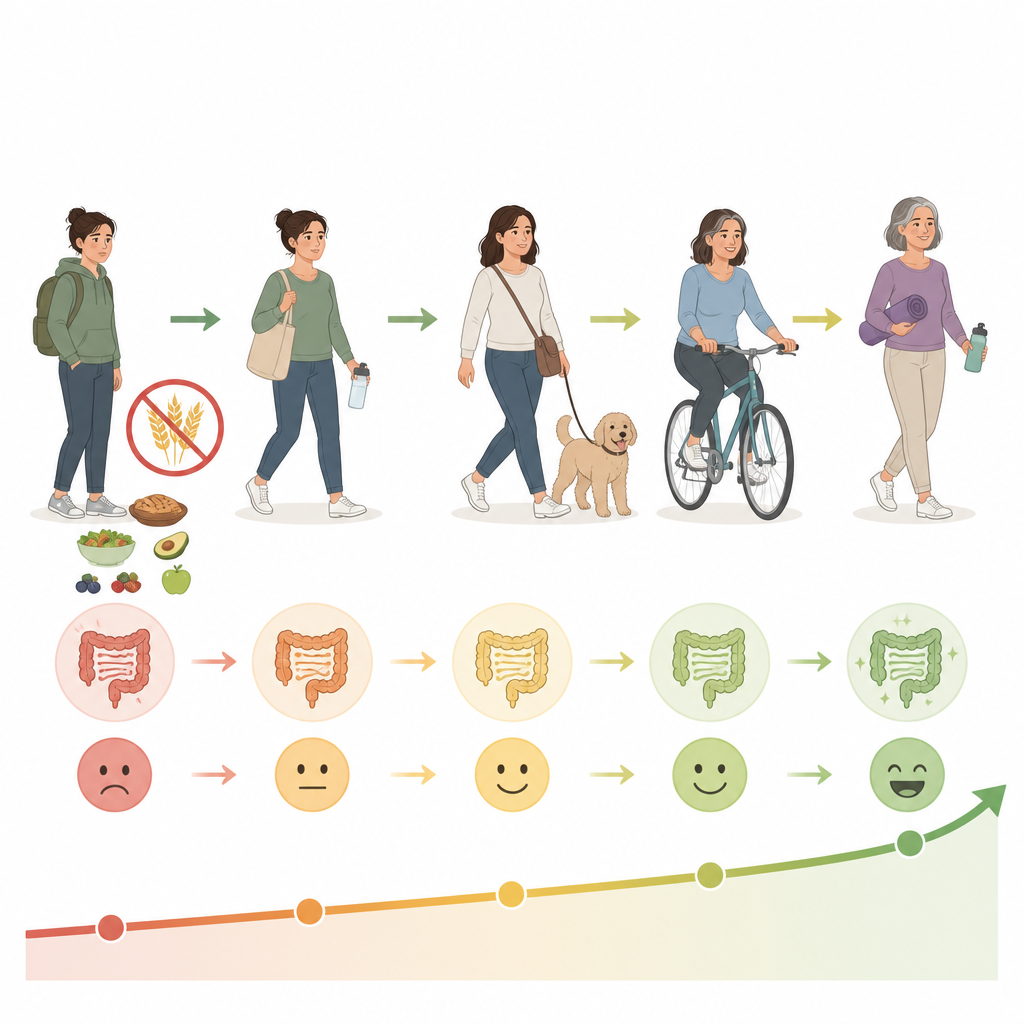
The study found that time is an important ally. People who had lived longer with their diagnosis and had more years of practice with a gluten free diet generally reported better well being, with fewer limits on daily activities and fewer worries about their health. Older adults also tended to report higher scores than younger ones, perhaps because they have had more time to adapt their routines at home and in social situations. Women often reported more concern about health problems, but also described slightly better handling of treatment demands, which may reflect differences in how they manage food choices and health care.
Why diet alone is not enough
One clear message is that making gluten free food more available, while helpful, has not been enough to lift quality of life into the “good” range for most adults. Many still face stress when eating out, fear of cross contact, social awkwardness, and ongoing symptoms. The authors suggest that early diagnosis, regular medical follow up, and access to psychological and practical support are needed alongside dietary advice. Programs that help people stick to the diet, navigate social life, and cope with worries could ease the emotional and social load that does not disappear simply because gluten free products are on the menu.
What this means for people with celiac disease
For someone living with celiac disease, this study shows that daily life can gradually become easier, especially after many years on a gluten free diet, but there is still plenty of room for improvement. Quality of life has not improved on its own over the last decade in Spain, even as gluten free choices have expanded. Helping people feel well will likely require more than telling them what not to eat; it will also mean earlier diagnosis, long term guidance, and support that addresses emotions, social life, and practical hurdles beyond the plate.
Citation: Suárez-Bárcena González, L., Rodríguez-Almagro, J., Bermejo-Cantarero, A. et al. Quality of life in adults with celiac disease in Spain over a decade. Sci Rep 16, 14959 (2026). https://doi.org/10.1038/s41598-026-40300-4
Keywords: celiac disease, quality of life, gluten free diet, chronic illness, Spain