Clear Sky Science · en
The matricellular protein CCN5 (WISP2) inhibits cellular senescence in cardiac myoblasts and fibroblasts
Why Keeping Heart Cells Young Matters
As people live longer, more of us develop heart problems that stem not just from clogged arteries, but from the gradual "aging" of the heart’s own cells. When heart cells grow old before their time, they stop dividing, become dysfunctional, and release harmful signals that damage nearby tissue. This study explores a naturally occurring protein, called CCN5, that appears to keep heart cells from entering this harmful aged state and may even help clear out damaged cells—hinting at a new way to protect the heart from long-term decline after stress or injury.
How Heart Cells Grow Old Before Their Time
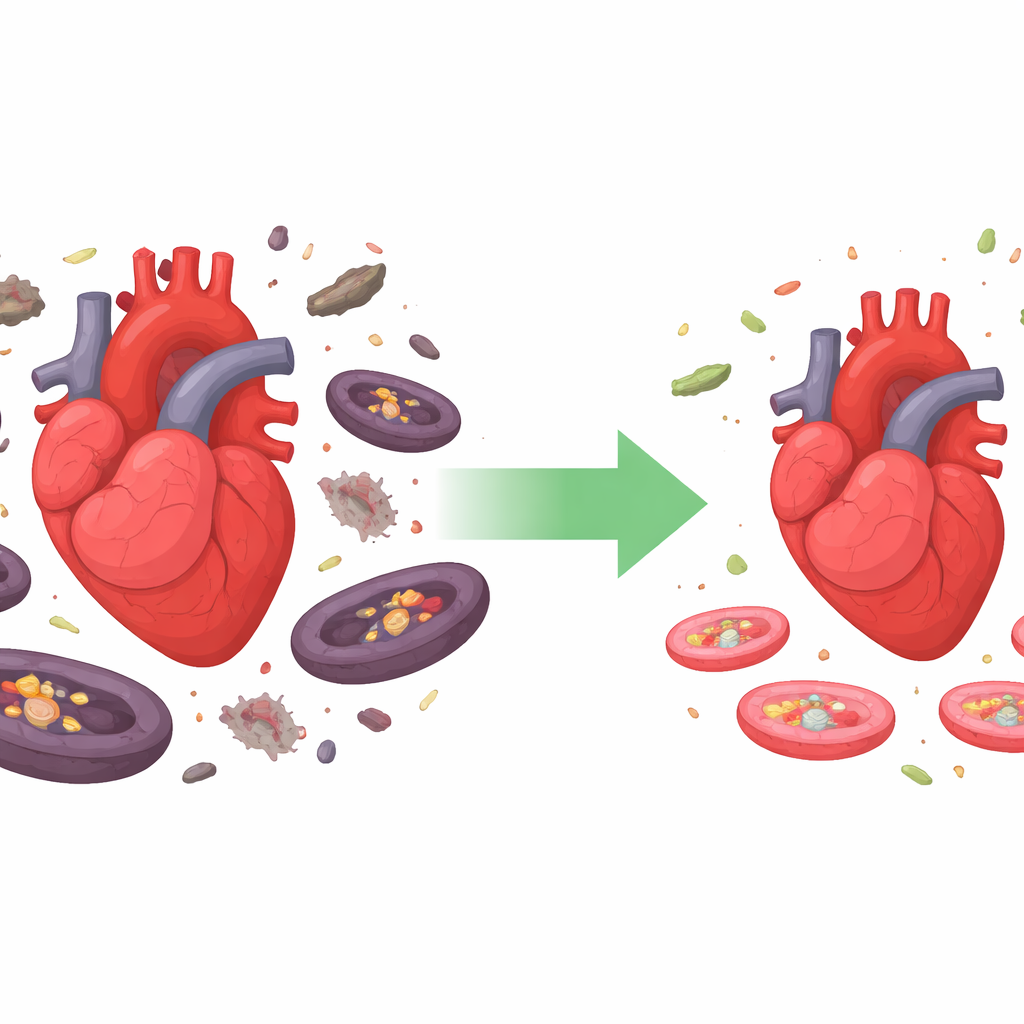
Cells in the heart, like those elsewhere in the body, can enter a state known as cellular senescence when they are exposed to stress, such as DNA damage or toxic drugs. Senescent cells no longer divide, change shape, resist normal cell death, and release a cocktail of inflammatory molecules and enzymes. Together, these changes stiffen heart tissue, fuel chronic inflammation, and impair contraction. In conditions such as heart failure, chemotherapy exposure, or heart attacks, senescent heart muscle cells and supporting fibroblasts accumulate, amplifying damage and limiting the heart’s ability to recover.
A Protective Protein Steps Into the Spotlight
The researchers focused on CCN5, a matricellular protein previously shown to reduce scarring in the heart. They asked whether CCN5 could also restrain or reverse the senescent state in two key heart cell types: cardiac myoblasts (precursors to heart muscle cells) and fibroblasts (cells that produce the supporting tissue matrix). To simulate stress, they exposed these cells to doxorubicin, a chemotherapy drug well known for harming the heart. The team measured senescence using several standard signals: increased levels of cell cycle regulators (p53 and p21), staining for an enzyme associated with senescent cells, and the appearance of DNA damage spots in the nucleus.
Blocking Stress Signals Between Neighboring Cells
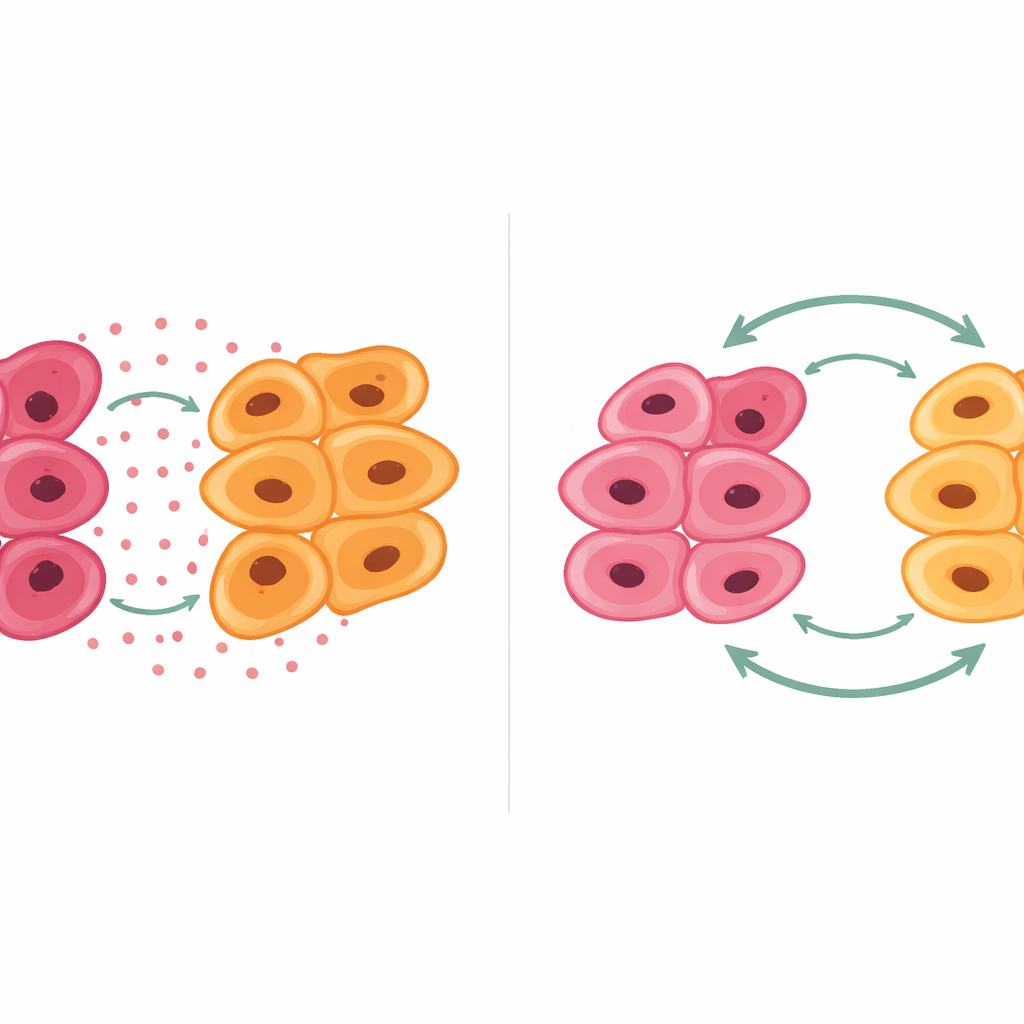
Doxorubicin treatment drove both myoblasts and fibroblasts into a senescent state, raising senescence markers, boosting oxidative stress, and increasing the harmful secretions that make up the so-called senescence-associated secretory phenotype, or SASP. When the researchers added purified CCN5 protein after doxorubicin exposure, these changes were markedly blunted: senescence markers fell, fewer cells stained positive for the aging-associated enzyme, DNA damage spots decreased, and reactive oxygen species levels dropped. The team then mimicked how senescent cells influence neighbors by using conditioned media rich in SASP factors from previously stressed cells. This SASP-containing medium was sufficient to push healthy heart cells toward senescence—but again, CCN5 treatment sharply reduced this secondary, signal-driven aging in both directions between myoblasts and fibroblasts.
Helping Damaged Cells Die and Protecting Hearts After Injury
Senescent cells are problematic not only because they are dysfunctional, but also because they stubbornly resist the normal process of programmed cell death. The investigators therefore tested whether CCN5 could restore these cells’ sensitivity to an apoptosis-inducing stimulus. After doxorubicin treatment, senescent myoblasts and fibroblasts no longer responded to a pro-death signal, but when CCN5 was applied, they regained the ability to undergo apoptosis, as shown by activation of key death-related proteins and an increase in DNA fragmentation. To see if this protective pattern holds in living animals, the team used a mouse model of heart attack. Mice received a single injection of modified mRNA encoding CCN5 directly into the heart at the time of the induced heart attack. A week later, hearts treated with CCN5 showed lower levels of senescence markers, fewer senescence-associated enzyme–positive areas, and reduced DNA damage compared with untreated hearts.
What This Could Mean for Future Heart Treatments
Taken together, these results suggest that CCN5 can act in two beneficial ways: it dampens the onset of stress-induced cellular aging and, at the same time, restores the ability of already aged cells to be cleared through normal cell death. By limiting both the accumulation of senescent cells and the spread of their harmful secretions, CCN5 emerges as a promising candidate for future therapies aimed at slowing or reversing age-related damage in the heart. Although more work is needed—especially in human heart cells and clinical settings—this protein may one day help keep hearts younger, more resilient, and better able to recover from injury.
Citation: Jo, Y., Lee, M., Kim, S.B. et al. The matricellular protein CCN5 (WISP2) inhibits cellular senescence in cardiac myoblasts and fibroblasts. Sci Rep 16, 10015 (2026). https://doi.org/10.1038/s41598-026-40206-1
Keywords: cellular senescence, heart aging, cardiac fibrosis, CCN5 protein, myocardial infarction