Clear Sky Science · en
Intranasal insulin ameliorates prenatal LPS-induced learning and memory impairments in adolescent male rats: A behavioral, electrophysiological, and molecular study
Why this research matters for future brain health
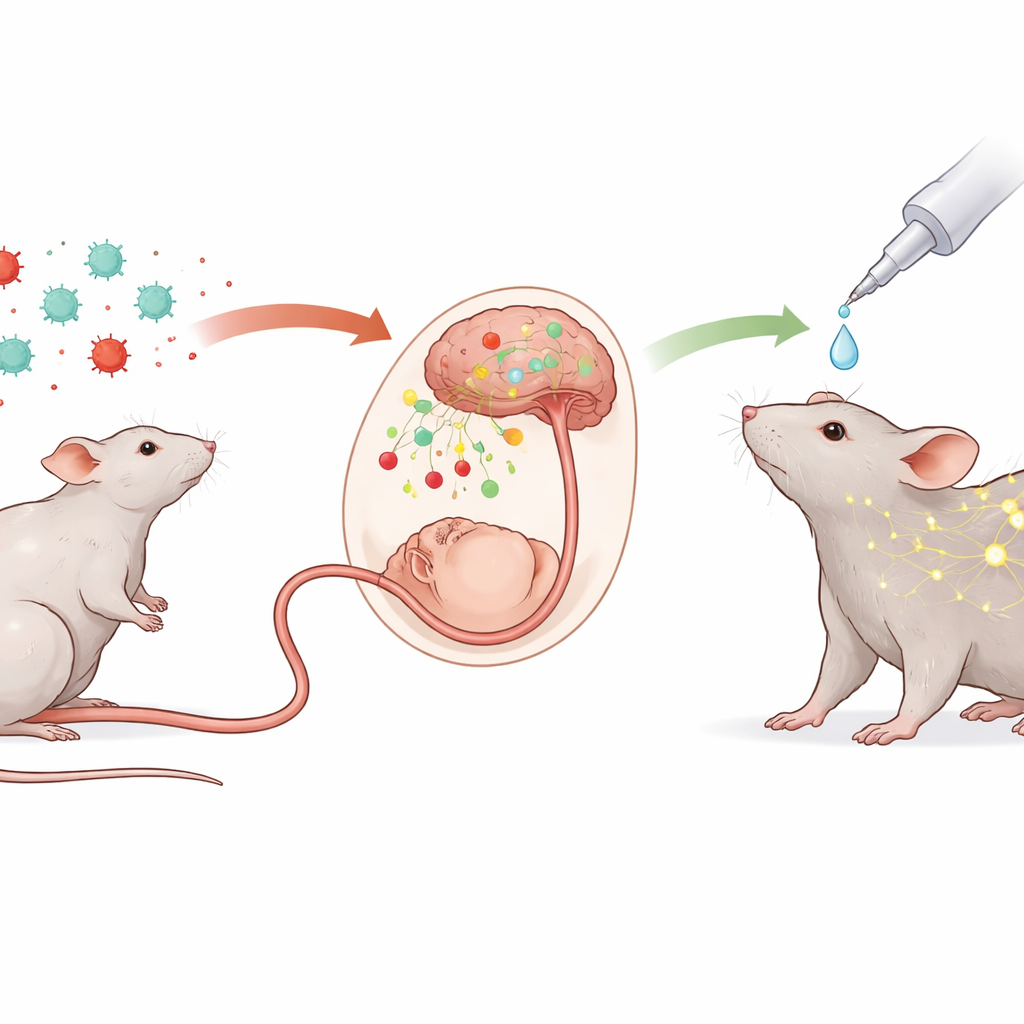
Scientists have long suspected that infections during pregnancy can leave a lasting mark on a child’s brain, raising the risk of learning problems and conditions like autism and schizophrenia. At the same time, an everyday hormone—insulin—is emerging as a surprising helper for memory when delivered through the nose. This study brings those two stories together, asking whether a simple intranasal insulin treatment in adolescence can rescue learning and memory problems caused by prenatal immune challenges, at least in a rat model.
When a mother’s infection echoes in the child’s brain
To mimic a significant infection during pregnancy, the researchers injected pregnant rats with a bacterial component called LPS at mid-gestation. This triggers the mother’s immune system in a way that resembles a strong illness. Earlier work has shown that such maternal immune activation can disrupt how the fetal brain develops, leading to long-term changes in behavior and thinking. In this study, the male offspring were followed into adolescence, a time when higher-order thinking and memory are still maturing. The team focused on the hippocampus, a deep brain structure that acts as a hub for forming spatial and long-term memories.
Testing memory in a water maze
Once the young rats reached late adolescence, their spatial learning and memory were tested using the Morris Water Maze, a classic task in which animals must learn the hidden location of a small platform in a pool of opaque water. The offspring of LPS-treated mothers struggled: they swam farther and took longer to find the hidden platform during training, and later spent less time searching in the correct area when the platform was removed. These changes suggested that a single immune challenge during pregnancy was enough to impair both learning and memory in the adolescent males. Interestingly, the affected rats swam faster overall, hinting at a hyperactive pattern rather than simple lethargy.
Peering into the brain’s electrical signals
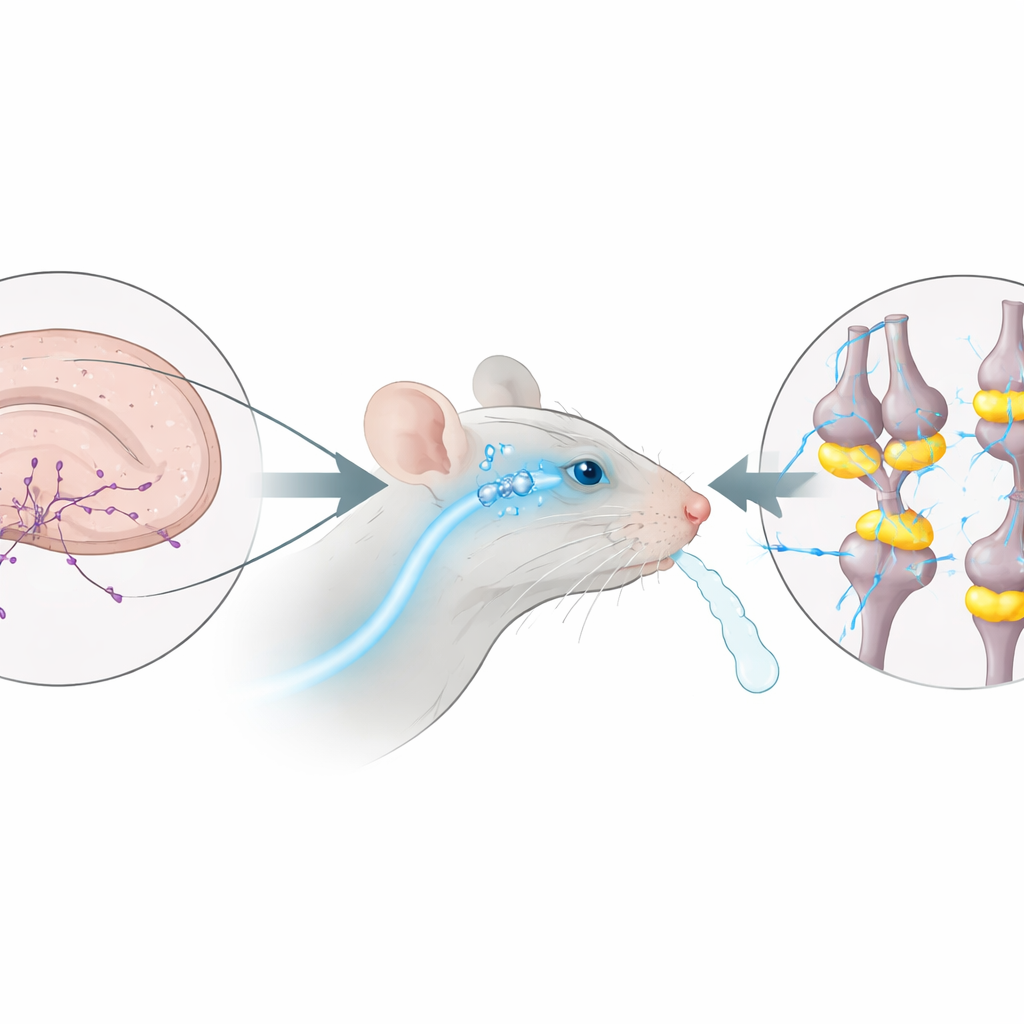
Behavioral tests tell only part of the story, so the scientists also recorded electrical activity directly from the hippocampus. They measured a phenomenon called long-term potentiation, or LTP, which reflects how strongly nerve cells in this region can strengthen their connections after repeated use. In healthy brains, LTP is thought to be a basic building block of memory. In rats exposed to prenatal immune activation, these synaptic responses were noticeably weaker and faded more quickly, mirroring the learning problems seen in the water maze. Crucially, basic signal transmission before the high-frequency stimulation looked similar between groups, suggesting that the main issue lay in the capacity to strengthen connections, not in simple signal failure.
Intranasal insulin as a brain booster
The central question was whether intranasal insulin—delivered as tiny drops to the skin around the nostrils every other day during adolescence—could offset these prenatal harms. In the water maze, LPS-exposed rats that received insulin performed almost as well as control animals: their path lengths and escape times dropped over training, and they searched more in the correct quadrant during the memory test. In the electrophysiology recordings, intranasal insulin partially restored LTP strength and its maintenance over time in the hippocampus. Although not completely indistinguishable from unexposed rats, the insulin-treated group showed clear recovery compared with their LPS-exposed peers given saline. These improvements suggest that adolescent treatment can revive some of the brain’s flexibility, even when early development was disturbed.
Clues from molecules that support synapses
To explore how these changes might arise, the team measured the activity of two genes in the hippocampus that help maintain healthy synapses: BDNF, a growth-supporting protein, and PSD-95, a structural protein that anchors receptors at the junction between nerve cells. Surprisingly, the prenatal immune challenge alone did not significantly alter the messenger RNA levels for either gene in adolescent males. However, intranasal insulin increased PSD-95 expression in the LPS-exposed offspring, hinting that the treatment may bolster the physical architecture of synapses. BDNF expression remained unchanged, suggesting that insulin’s benefits in this model may rely on pathways that do not require boosting this particular growth factor, or may act in other brain regions not examined here.
What this could mean for people
In everyday terms, this work shows that an infection during pregnancy can leave adolescent offspring with weaker learning and memory and less adaptable brain circuits, at least in rats. Importantly, it also suggests that these problems are not fixed: a non-invasive intranasal insulin treatment during a later developmental window improved behavior, strengthened key brain signals, and nudged synaptic support molecules in a favorable direction. While far more research is needed before translating these findings to humans—including studies of safety, timing, and long-term effects—the results raise the possibility that relatively simple interventions might one day help children whose brain development was disrupted before birth.
Citation: Kariminejad-Farsangi, H., Kariminejad-Farsangi, H., Rajizadeh, M.A. et al. Intranasal insulin ameliorates prenatal LPS-induced learning and memory impairments in adolescent male rats: A behavioral, electrophysiological, and molecular study. Sci Rep 16, 10088 (2026). https://doi.org/10.1038/s41598-026-40163-9
Keywords: prenatal infection, intranasal insulin, learning and memory, synaptic plasticity, maternal immune activation