Clear Sky Science · en
Zinc dynamics in the pluripotent stem cells during maintenance of pluripotency and pancreatic differentiation
Why tiny amounts of zinc matter for future diabetes therapies
Scientists are learning how to turn stem cells into insulin-producing pancreatic cells that could one day treat diabetes. This study looks at an unexpected player in that process: zinc. Although we usually think of zinc as a dietary mineral, inside cells it helps control how genes work and how cells grow. The researchers asked a simple but important question: how do stem cells handle zinc as they remain in a youthful state or mature into pancreatic beta cells, the cells that release insulin?
Tracing zinc as it flows into living stem cells
To follow zinc in real time, the team used a clever approach borrowed from chemistry. Natural zinc comes in several versions, or isotopes, that differ slightly in weight. The researchers prepared cell-culture media enriched with a heavier, harmless form called 67Zn. By switching human induced pluripotent stem cells (iPSCs) into this special medium, then measuring the mix of zinc isotopes with a sensitive mass spectrometer, they could see how quickly new zinc entered the cells and replaced the original zinc inside.
Stem cells are zinc-hungry; differentiation slows intake
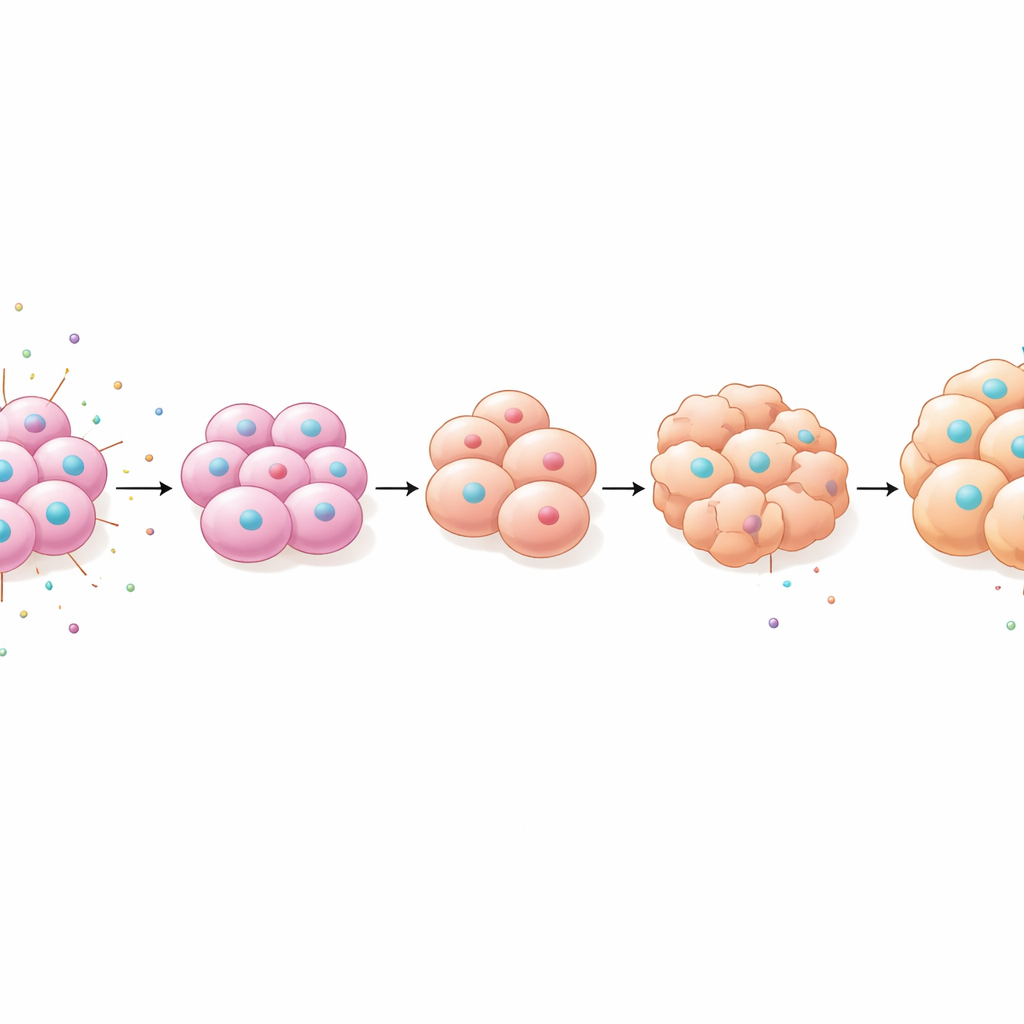
Undifferentiated iPSCs turned out to be remarkably zinc-hungry. Within just a few hours in the 67Zn-rich medium, the proportion of this heavy zinc inside the cells rose sharply, and after several days it nearly matched the medium itself. Only a small fraction of the zinc in the dish was actually taken up, which means each cell was actively pulling in zinc despite its abundance outside. When the same cells were grown as three-dimensional spheres instead of flat layers, zinc entry was noticeably slower, showing that culture format alone can change how cells access nutrients.
Following zinc through the journey to pancreatic beta cells
The researchers then guided iPSCs step by step toward becoming pancreatic beta-like cells, passing through early gut-like and endocrine stages. At several key points, they briefly exposed the cells to the 67Zn-rich medium to see how readily they took up zinc at each stage. They also measured total zinc levels inside cells and in the surrounding fluid. The results revealed a clear pattern: zinc intake was highest in undifferentiated stem cells and steadily declined as the cells advanced toward mature beta-like cells. By the time cells reached late endocrine stages, the fraction of new zinc taken up during a short exposure was roughly half or less of that seen in stem cells, even when the outside zinc concentration was similar.
Changing zinc transporters as cells specialize
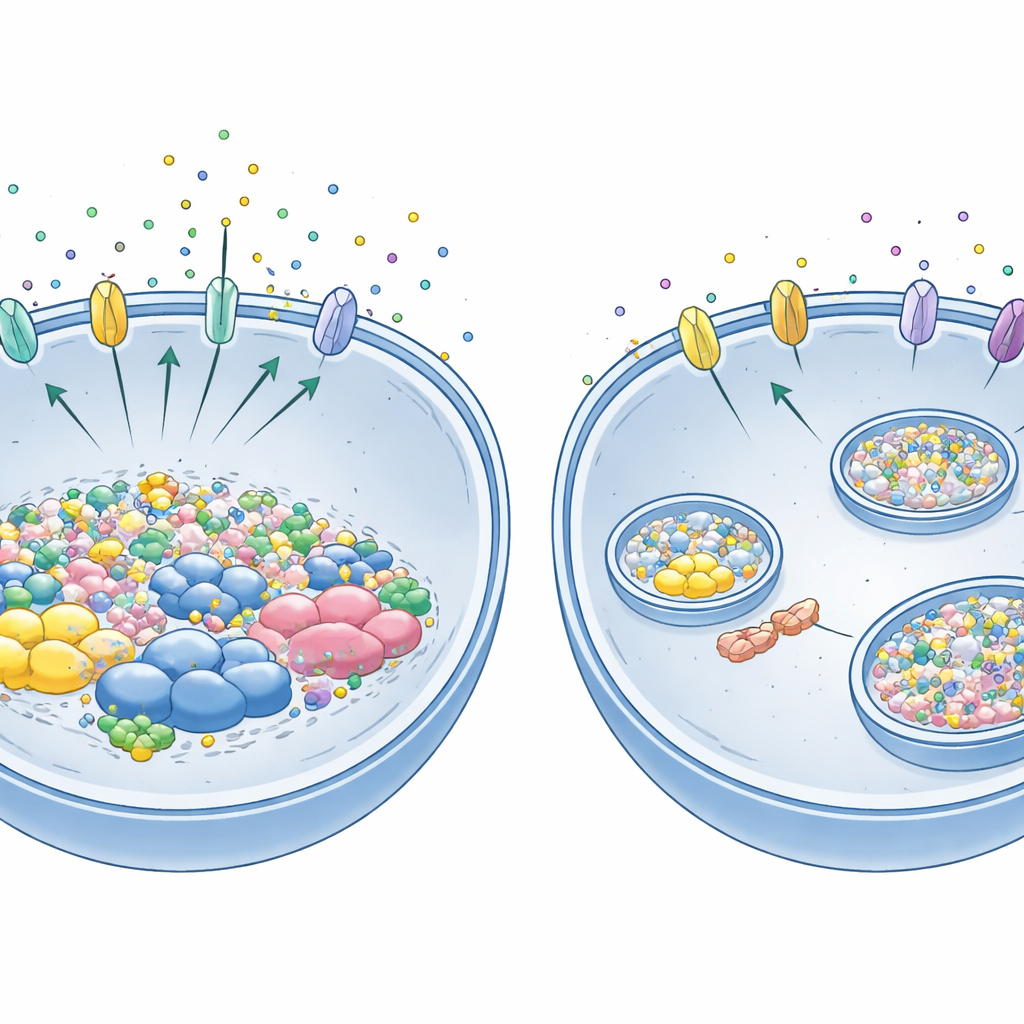
To understand why zinc behavior shifts, the team examined the proteins embedded in cell membranes, focusing on known zinc transporters that either import zinc into the cell (ZIP family) or move it into internal compartments or back out of the cell (ZnT family). Using proteomics, they found that different transporters dominate at different stages. Some ZIP transporters were more abundant in stem cells and early differentiation, while several ZnT transporters, including those linked to insulin storage, rose later as beta-like cells formed. This stage-specific transporter “program” suggests that cells deliberately rewire how they handle zinc as they specialize.
What this means for stem cell therapies and basic biology
For a non-specialist, the key message is that zinc inside cells is not just a passive nutrient; it is tightly managed and changes as cells decide whether to keep dividing or settle into a final identity. The authors show that pluripotent stem cells use zinc rapidly, likely to support many zinc-dependent enzymes that help maintain their youthful, flexible state. As cells commit to becoming pancreatic beta cells, they slow their zinc intake and redistribute it through a new set of transporters, matching the needs of mature hormone-secreting cells. Understanding these zinc dynamics could help researchers fine-tune culture conditions to make more reliable, better-functioning beta cells for diabetes research and potential cell therapies.
Citation: Shiraki, N., Kadokura, T., Hashiguchi, R. et al. Zinc dynamics in the pluripotent stem cells during maintenance of pluripotency and pancreatic differentiation. Sci Rep 16, 10098 (2026). https://doi.org/10.1038/s41598-026-40146-w
Keywords: zinc metabolism, pluripotent stem cells, pancreatic beta cells, cell differentiation, diabetes research