Clear Sky Science · en
Nonalcoholic fatty liver disease assessed by multiple tools are correlated to periodontal conditions
Why your gums might matter to your liver
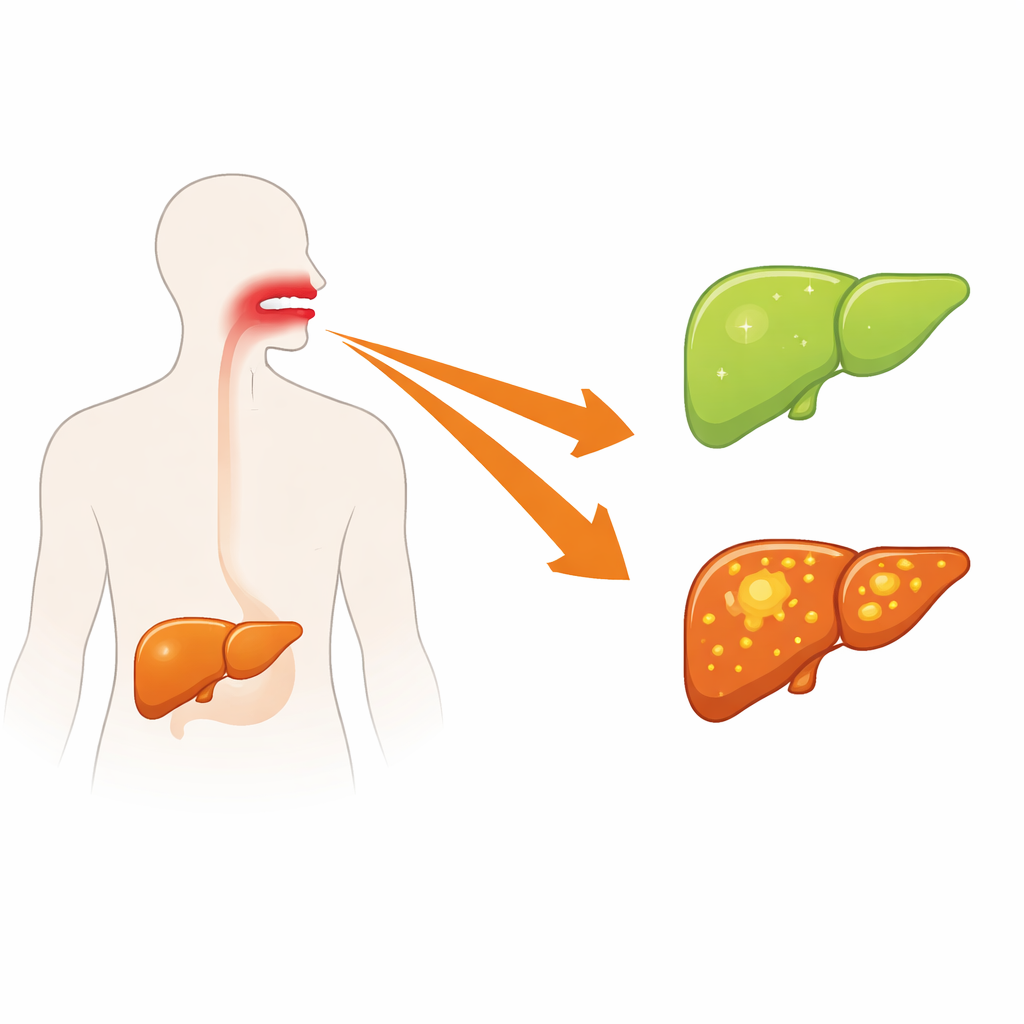
Most people think of cavities and bad breath as the main problems that start in the mouth. This study suggests something more surprising: ongoing gum problems may be linked to a common liver condition called non‑alcoholic fatty liver disease, or NAFLD. Because NAFLD is becoming widespread worldwide and severe cases can lead to serious illness, understanding that everyday oral health might play a role is important for anyone who wants to protect their long‑term health.
Looking at mouths and livers together
Researchers in Japan examined health data from 2,453 adults who visited a university hospital for combined medical and dental checkups over nearly a decade. None of these people had diabetes, which can strongly affect both gum and liver health, so it was excluded to avoid confusion. Dentists carefully checked each person’s gums using a standard method that measures how deep the spaces are between the tooth and gum and whether the gums bleed when gently probed. These features tell how advanced gum disease is and whether it is currently inflamed.
Different ways to measure fatty liver
Instead of relying on liver biopsies or scans, the team used three widely accepted calculation tools that estimate NAFLD and liver scarring from simple measures like age, blood tests, body weight, and waist size. One, called the fatty liver index, focuses strongly on body fat and blood fats. The other two, known as FIB‑4 and the NAFLD fibrosis score, are designed to estimate how much scarring has developed in the liver. By comparing several tools side by side, the scientists could see whether any particular type of liver change was most closely linked to gum disease.
What deeper gum pockets revealed
People with gum disease tended to be older, more often male, heavier, and more likely to drink alcohol or smoke than those with healthier gums. They also had higher levels of certain blood fats and liver‑related enzymes. When the researchers focused on deep gum pockets of 6 millimeters or more—signs of advanced disease—they found these were strongly tied to worse scores on the fatty liver index and the NAFLD fibrosis score, even after taking age, sex, smoking, drinking, and other factors into account. In other words, the worse the gum breakdown, the more likely a person was to show signs of fatty liver problems.
Inflamed gums as a key signal
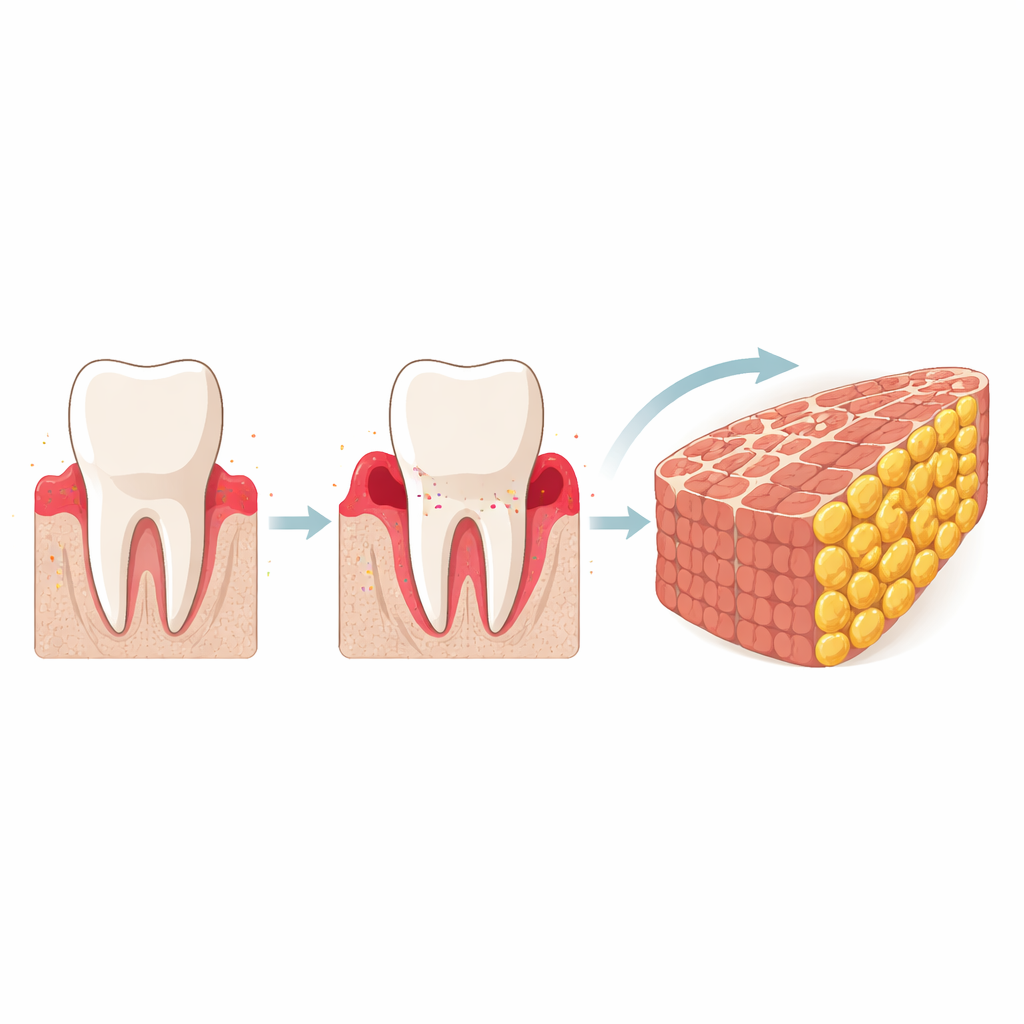
The team then asked whether active inflammation made a difference by looking at bleeding on probing. Among people whose gums bled during the exam, deeper pockets were clearly linked with higher fatty liver index scores. Among those whose gums did not bleed, that link disappeared. This pattern suggests that it is not just past damage to the gums that matters, but current inflammation—ongoing bleeding and swelling—that may be associated with unhealthy fat buildup in the liver.
How the mouth might talk to the liver
The authors discuss several possible reasons for this connection. Long‑lasting gum infections create a steady stream of inflammatory molecules and oral bacteria that can enter the digestive tract and bloodstream. Earlier work has shown that key gum‑disease germs can worsen fatty changes and scarring in animal livers, and that more severe gum disease often goes along with higher blood‑fat levels. Because the fatty liver index is heavily influenced by body weight, waist size, and triglycerides, it may be especially sensitive to these whole‑body effects of gum inflammation, explaining why it showed the strongest link in this study.
What this means for everyday health
This research cannot prove that gum disease directly causes fatty liver disease, and it has some limits, such as a relatively health‑conscious study group and small numbers of people with very advanced liver scarring. Still, the findings point to an important message: inflamed, bleeding gums may be more than a local problem. They could signal or contribute to unhealthy changes in the liver, at least as detected by the fatty liver index. For the general reader, the takeaway is simple—regular brushing, flossing, and dental visits may not only protect your smile, but could also be one part of looking after your liver and overall metabolic health.
Citation: Hiroshimaya, T., Iwai, K., Marutani, M. et al. Nonalcoholic fatty liver disease assessed by multiple tools are correlated to periodontal conditions. Sci Rep 16, 11589 (2026). https://doi.org/10.1038/s41598-026-40128-y
Keywords: gum disease, fatty liver, oral health, liver inflammation, metabolic health