Clear Sky Science · en
Comparison of cancer-specific survival between total thyroidectomy and lobectomy in tall cell variant of papillary thyroid carcinoma
Why this thyroid cancer study matters
Papillary thyroid cancer is often described as a “good cancer” because many people live long lives after treatment. But one less common form, called the tall cell variant, tends to behave more aggressively and carries a higher risk of death from the disease. Surgeons can remove either the whole thyroid gland or just one lobe, and there has been real uncertainty about which option is safer for these higher‑risk patients. This study taps into a large U.S. cancer registry to ask a simple but important question: when tall cell papillary thyroid cancer is found, does taking out the entire thyroid actually help people live longer than removing only half?
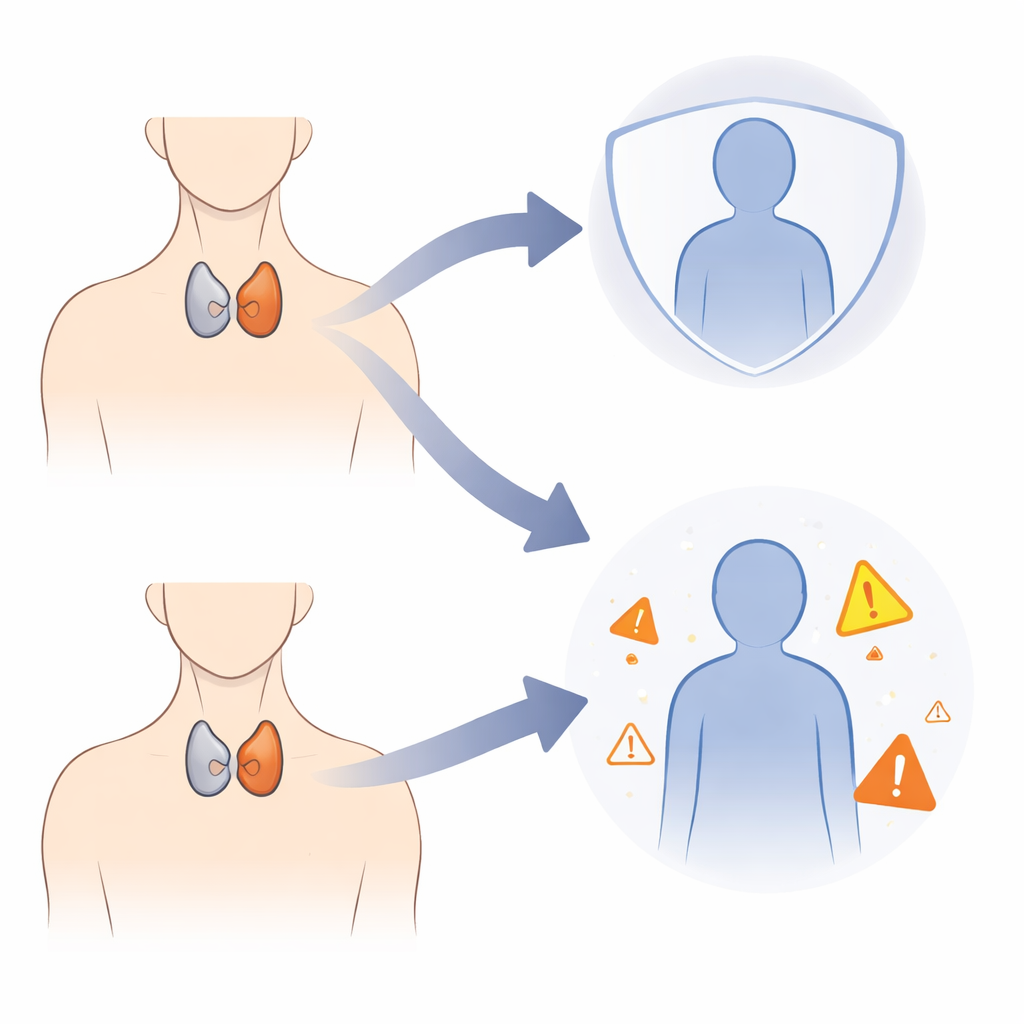
Two different ways to remove the thyroid
The thyroid is a small, butterfly‑shaped gland in the neck that helps regulate energy, weight, and temperature. In standard care for papillary thyroid cancer, surgeons may remove just one wing of the butterfly (a lobectomy) or the entire gland (a total thyroidectomy). A total thyroidectomy allows doctors to use follow‑up tests and radioactive iodine treatment more effectively, but it also increases the risk of complications, such as damage to the nearby vocal cord nerves or tiny glands that control calcium. Because the tall cell variant is more invasive than classic thyroid cancer, many guidelines label it as higher risk—but they have been vague about whether that always means the entire thyroid must go.
Digging into real‑world data
The researchers used the U.S. Surveillance, Epidemiology, and End Results (SEER) database, which collects information on cancer diagnoses and deaths from many regions. They identified 1,463 people diagnosed with tall cell papillary thyroid cancer between 2005 and 2017 who had surgery: 1,369 had their whole thyroid removed and 94 had only one lobe removed. To make the groups more comparable, the team used a matching method that pairs patients with similar age, tumor size, spread to lymph nodes, and other features. This helps mimic some of the fairness of a randomized trial using observational data.
Who lived longer after surgery
Over a median follow‑up of nearly seven years, the researchers focused on cancer‑specific survival—that is, the chance of being alive without dying from thyroid cancer itself. In the matched group of patients, those who had a total thyroidectomy had clearly better survival than those who had a lobectomy. At five years, about 98% of people with total thyroidectomy were still alive without dying from thyroid cancer, compared with about 91% after lobectomy; at ten years, the gap persisted, about 95% versus 89%. When the authors adjusted for other risk factors, having only a lobectomy roughly doubled the risk of death from thyroid cancer compared with total thyroidectomy.
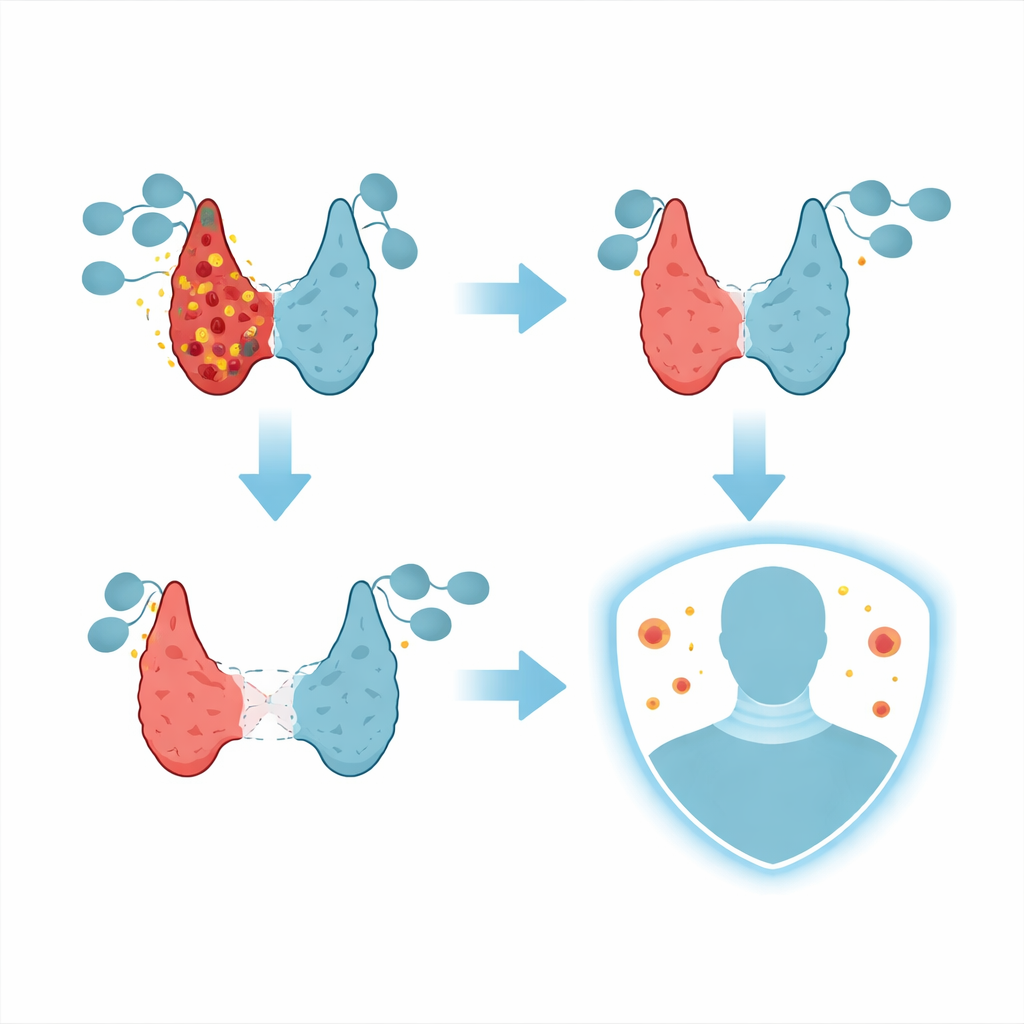
Beyond add‑on radioactive treatment
Many thyroid cancer patients receive radioactive iodine after surgery to destroy any remaining thyroid cells, but tall cell tumors are often less sensitive to this treatment. The study tested whether the survival edge of total thyroidectomy was simply due to patients being more likely to get radioactive iodine. Even when the researchers split patients into those who did and did not receive radioactive iodine, the benefit of removing the entire thyroid remained. Larger tumors (over 4 centimeters), spread beyond the thyroid into nearby tissues, and involvement of lymph nodes were all linked with a higher risk of dying from the cancer, and in these higher‑risk situations the advantage of a more extensive operation appeared especially relevant.
What this means for patients and doctors
For people diagnosed with the tall cell variant of papillary thyroid cancer, this large study suggests that removing the whole thyroid offers better protection against cancer‑related death than removing just one lobe, even when modern add‑on treatments are used. While a total thyroidectomy does carry a higher chance of surgical side effects and requires lifelong thyroid hormone pills, its survival benefits seem to outweigh these concerns in this aggressive subtype, particularly for patients with larger tumors or spread to lymph nodes or surrounding tissues. The findings support a more cautious approach to choosing lobectomy alone in tall cell cases and indicate that patients who first have a lobectomy and are later found to have this variant may benefit from returning to surgery to complete removal of the thyroid.
Citation: Sun, Y., Jia, Y. & Zhang, H. Comparison of cancer-specific survival between total thyroidectomy and lobectomy in tall cell variant of papillary thyroid carcinoma. Sci Rep 16, 12785 (2026). https://doi.org/10.1038/s41598-026-40070-z
Keywords: papillary thyroid cancer, tall cell variant, thyroid surgery, total thyroidectomy, cancer survival