Clear Sky Science · en
Study on sealing performance of spring energy storage seal used for ultra high pressure throttle nozzle
Keeping Energy Underground and Equipment Safe
As oil and gas companies drill deeper and move offshore, the pipes and valves at the wellhead must hold back fluids at pressures far beyond those in a car engine or household plumbing. If the seals inside these valves fail, valuable gas can escape and dangerous leaks can occur. This study explores a new type of spring‑energized sealing ring that can reliably contain natural gas at extremely high pressures and in temperatures ranging from bitter Arctic cold to scorching heat, making deep and ultra‑deep wells safer and more efficient.
Why These Tiny Rings Matter
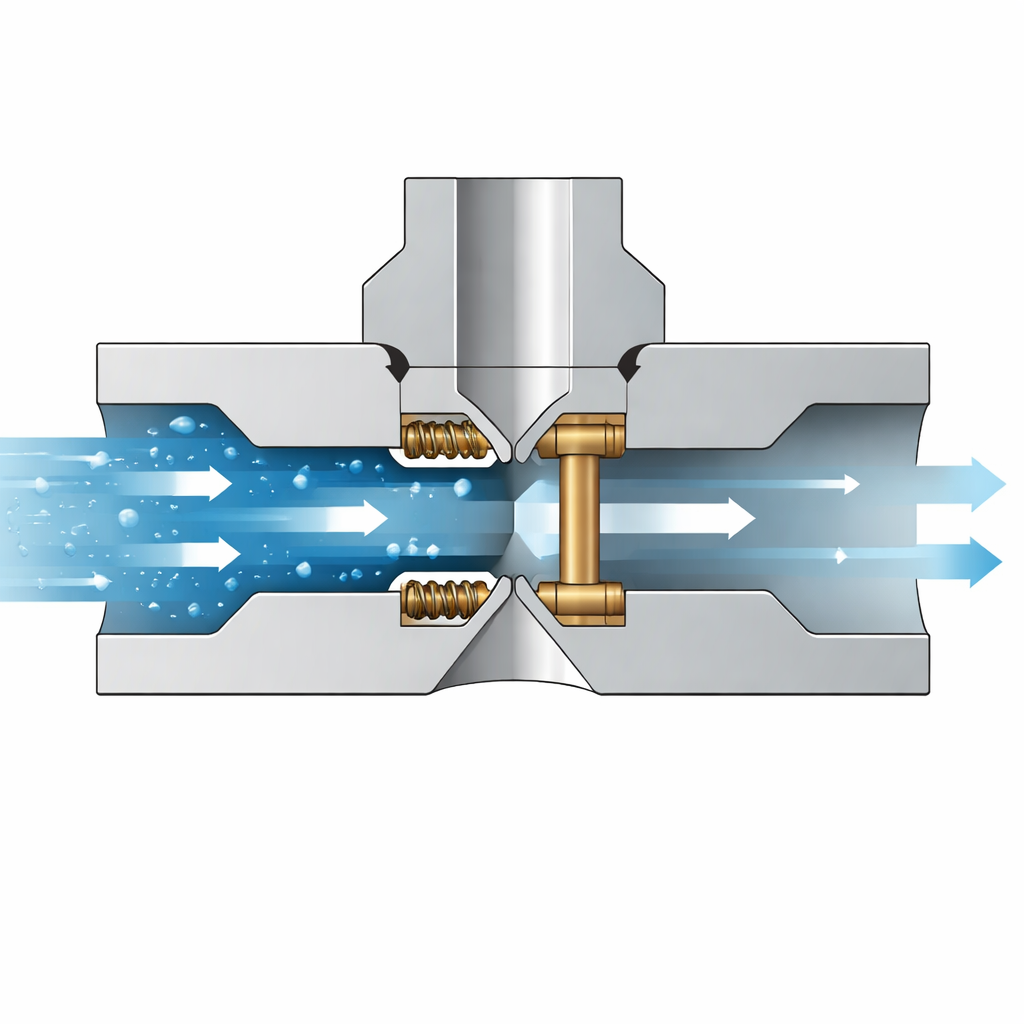
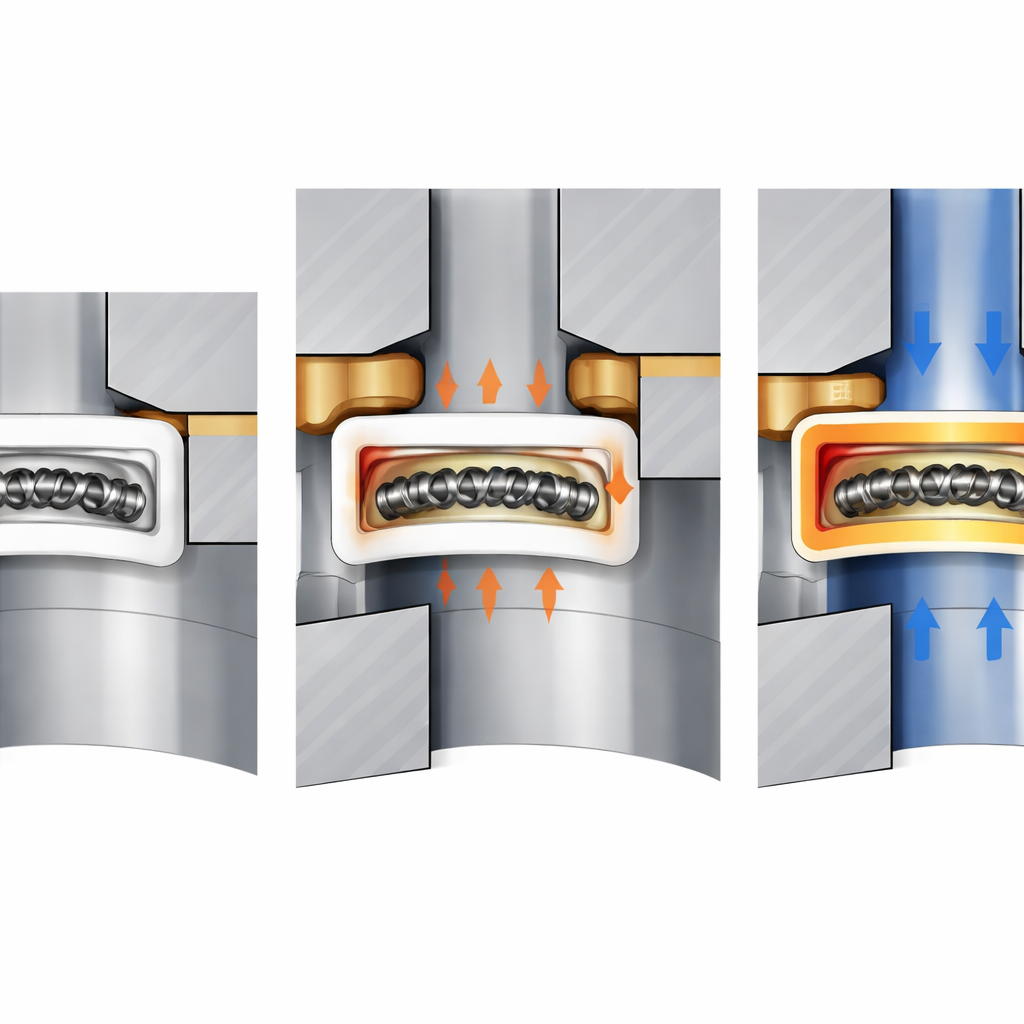
In modern wells, a throttle valve controls how fast high‑pressure gas leaves the underground reservoir. Conventional rubber O‑rings struggle in these harsh conditions: they can squash permanently, creep out of place, or crack with age and temperature swings. The researchers turned instead to a spring‑energized ring: a hard outer shell made of polytetrafluoroethylene (PTFE, a plastic related to Teflon) wrapped around a metal spring. The spring keeps the ring pressed against the valve body, while the plastic shell forms the barrier that stops gas from leaking through small gaps.
Building a Better Seal Material
On its own, PTFE is slippery but relatively soft, so the team tested several improved versions by mixing in carbon fibers and glass fibers in different amounts. They squeezed small blocks of each material at three temperatures—minus 46 °C, room temperature, and 180 °C—and measured how they deformed and recovered. From these tests they built mathematical descriptions of how each mixture behaves under load. This information fed into computer models that could predict whether the ring would stay elastic, begin to yield, or crack when exposed to pressures up to 175 megapascals, more than 1,700 times typical atmospheric pressure.
Shaping the Ring to Fight Leaks
Material choice was only part of the story; the geometry of the ring mattered just as much. Using finite‑element simulations, the researchers varied three key features: the angle of a hard PEEK plastic support ring behind the seal, the amount by which the inner and outer lips of the seal are squeezed when installed (called interference), and the back angles of those lips. Together, these details determine the contact pressure between the seal and the metal surfaces and how wide the actual sealing band is. Too little squeeze or too shallow a lip angle, and gas can slip through; too much, and the material yields or wears quickly. The simulations showed that a PTFE mix with 10% carbon fiber offered the best balance of strength and flexibility, and that a support‑ring angle of about 40 degrees kept stresses within safe limits while maintaining strong contact with the valve.
Finding the Sweet Spot for Contact
By scanning through many combinations, the team identified dimensions that produced contact pressures just above the 175‑megapascal working pressure without pushing the material past its safe stress level. They found that an inner lip interference of 0.25 millimeters and an outer lip interference of 0.20 millimeters, combined with inner and outer lip back angles of 9 and 11 degrees, created a broad, robust sealing band at all three test temperatures. Under these conditions, the ring’s lips deformed enough to grip the metal tightly, but not so much that large plastic deformation—or early damage—was likely. These optimized values were then used to manufacture full‑scale seal rings for testing in real hardware.
Putting the Design to the Test
The finished spring‑energized rings were first placed in a special water‑filled test fixture and pressurized twice to more than 175 megapascals. In both runs, pressure drops remained well within accepted limits and no visible leakage occurred. Next, the seals were installed in actual throttle nozzles and tested with gas at minus 46 °C, 20 °C, and 180 °C. Over one‑hour holds at each condition, the pressure loss was only 0.4 megapascals at room temperature, 0.7 megapascals at high temperature, and 1.1 megapascals at low temperature—again meeting strict industrial standards. These results confirm that the optimized material and geometry can keep ultra‑high‑pressure gas safely contained across an unusually wide temperature range.
What This Means for Future Wells
For non‑specialists, the bottom line is that the authors have turned a detailed combination of laboratory testing, computer modeling, and field‑like trials into a practical recipe for safer seals in some of the most demanding energy applications. Their spring‑energized ring, made from PTFE strengthened with carbon fibers and precisely shaped lips, can survive extreme pressure and temperature swings without losing its grip. This kind of robust sealing technology helps ensure that deep‑well equipment can operate longer and more reliably, reducing maintenance costs, limiting leaks, and making the extraction of oil and natural gas safer for workers and the environment.
Citation: Feng, S., Ren, Y., Zhou, X. et al. Study on sealing performance of spring energy storage seal used for ultra high pressure throttle nozzle. Sci Rep 16, 9906 (2026). https://doi.org/10.1038/s41598-026-40049-w
Keywords: ultra high pressure sealing, spring energized seals, PTFE composites, throttle valves, wellhead equipment