Clear Sky Science · en
Dietary astragalus stems polysaccharides improve antioxidant capacity and lactation performance in dairy goats through integrated metabolomic and mechanistic analyses
Turning Farm Waste into a Useful Feed Ingredient
Goat milk is growing in popularity for its rich taste and easier digestibility, but farmers face pressure to boost milk production without relying on antibiotics. This study explores whether a little‑used farm byproduct—the stems of the traditional herb astragalus—can be turned into a natural supplement that helps dairy goats stay healthier, handle oxidative stress better, and produce more and higher‑quality milk.
From Herb Stems to Active Extract
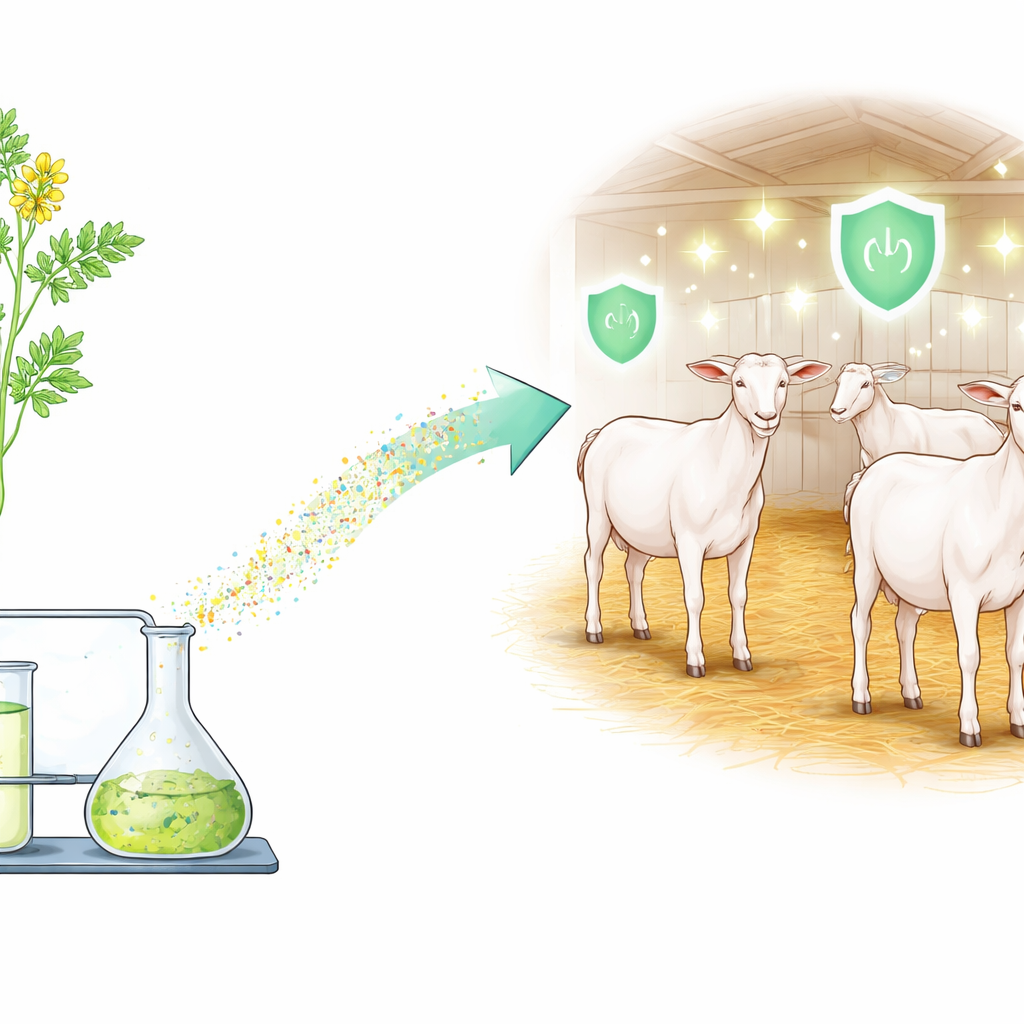
Astragalus is well known in traditional medicine, but farmers usually discard the stems, focusing instead on the roots. The researchers set out to rescue this “waste” material by carefully extracting long sugar chains, known broadly as polysaccharides, from the stems using hot water. By testing different water‑to‑plant ratios, heating times, and temperatures, they found a simple, low‑cost recipe—moderate heating for two hours in plenty of water—that pulled out the most of these beneficial compounds. The resulting extract was rich in complex plant sugars, with small amounts of proteins and plant antioxidants like polyphenols and flavonoids, suggesting a mix of ingredients that could influence animal health.
Testing the Supplement in Real Dairy Goats
To see how this extract performs on a working farm, the team fed mid‑lactation Saanen goats either a standard diet or the same diet plus a small daily dose of astragalus stem polysaccharides. The goats lived under normal barn conditions, with the only difference being the added supplement. For the first 20 days, milk production looked similar between groups. But by days 40 and 60, the supplemented goats consistently produced more milk, and their milk contained more protein, with a tendency toward higher fat content as well. Importantly, these gains did not come from simply eating more feed, pointing instead to better use of nutrients and improved internal physiology.
Health Markers, Immunity, and Antioxidant Protection
Blood tests provided clues about what was happening inside the animals. Goats receiving the astragalus extract had lower levels of blood urea nitrogen, a marker linked to how efficiently the body handles dietary protein, and showed a trend toward lower alkaline phosphatase, which can reflect liver strain. Their immune systems also appeared more prepared: levels of immunoglobulin A, a front‑line antibody that protects mucosal surfaces such as the gut and udder, rose significantly, with immunoglobulin M showing a similar upward trend. At the same time, overall antioxidant capacity and the activity of the key enzyme catalase increased, while malondialdehyde—a byproduct of fat damage caused by free radicals—fell. Together, these shifts suggest that the supplement helped goats better neutralize oxidative stress and maintain tissue health during the demanding mid‑lactation period.
Peeking Inside the Metabolic Machinery
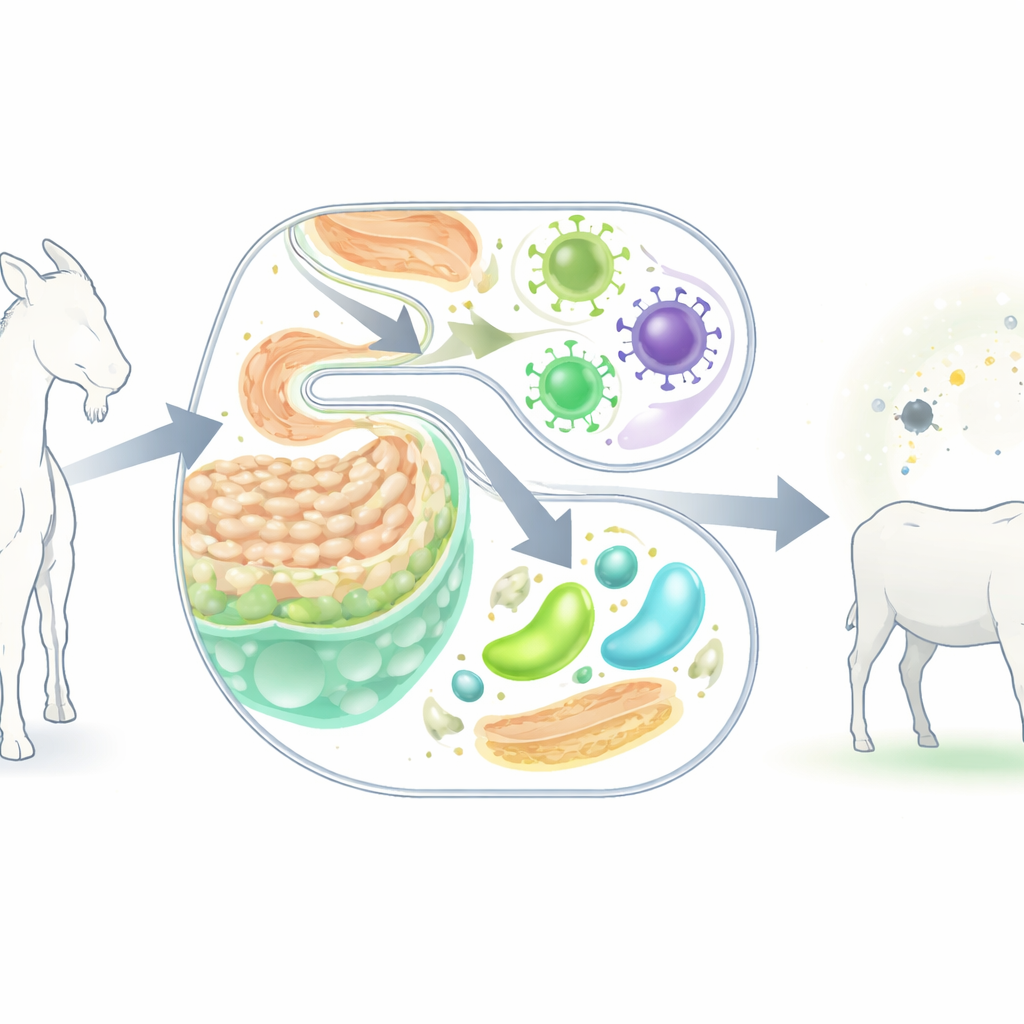
To move beyond surface measurements, the researchers used advanced chemical profiling of blood, known as metabolomics, to track hundreds of small molecules that reflect the body’s ongoing chemistry. They found 307 metabolites that differed between treated and untreated goats. Many of the changes involved fat‑like molecules that help build cell membranes, along with various amino acids and related compounds that are central to energy use and protein building. Patterns in these molecules pointed to several interconnected pathways, including those handling membrane lipids and special forms of amino acids. One compound, phenylacetyl‑L‑glutamine—likely produced with help from gut microbes—stood out. Computer simulations suggested that it can form a particularly stable interaction with an enzyme involved in processing unusual amino acids, hinting at a possible molecular link between the astragalus extract, gut‑derived metabolites, and the goats’ improved antioxidant and immune profiles.
What This Means for Farmers and Consumers
Overall, the study shows that a modest daily dose of astragalus stem polysaccharides can help dairy goats produce more and better‑quality milk while also strengthening their defenses against oxidative stress and supporting immune‑related markers. By transforming an underused plant byproduct into a functional feed additive, this approach could reduce dependence on synthetic supplements or antibiotics and align with consumer demand for more natural, sustainable dairy practices. While the proposed molecular details still need direct testing, the evidence so far positions astragalus stems as a promising, eco‑friendly tool for supporting high‑performing, healthier dairy herds.
Citation: Meng, Z., Song, Y., Mu, Q. et al. Dietary astragalus stems polysaccharides improve antioxidant capacity and lactation performance in dairy goats through integrated metabolomic and mechanistic analyses. Sci Rep 16, 12762 (2026). https://doi.org/10.1038/s41598-026-39922-5
Keywords: goat milk, herbal feed additives, antioxidant defense, lactation performance, metabolomics