Clear Sky Science · en
Conservation tillage and sprinkler irrigation for sustainable water management and enhanced crop yields in maize and field pea cropping system
Farming More With Less Water
As climate change tightens water supplies, farmers everywhere face a pressing question: how can they grow enough food without exhausting rivers and aquifers? This study from northern India tests a practical answer on real fields, showing how gentle soil handling and smart irrigation can boost harvests of maize and peas while using water far more carefully.
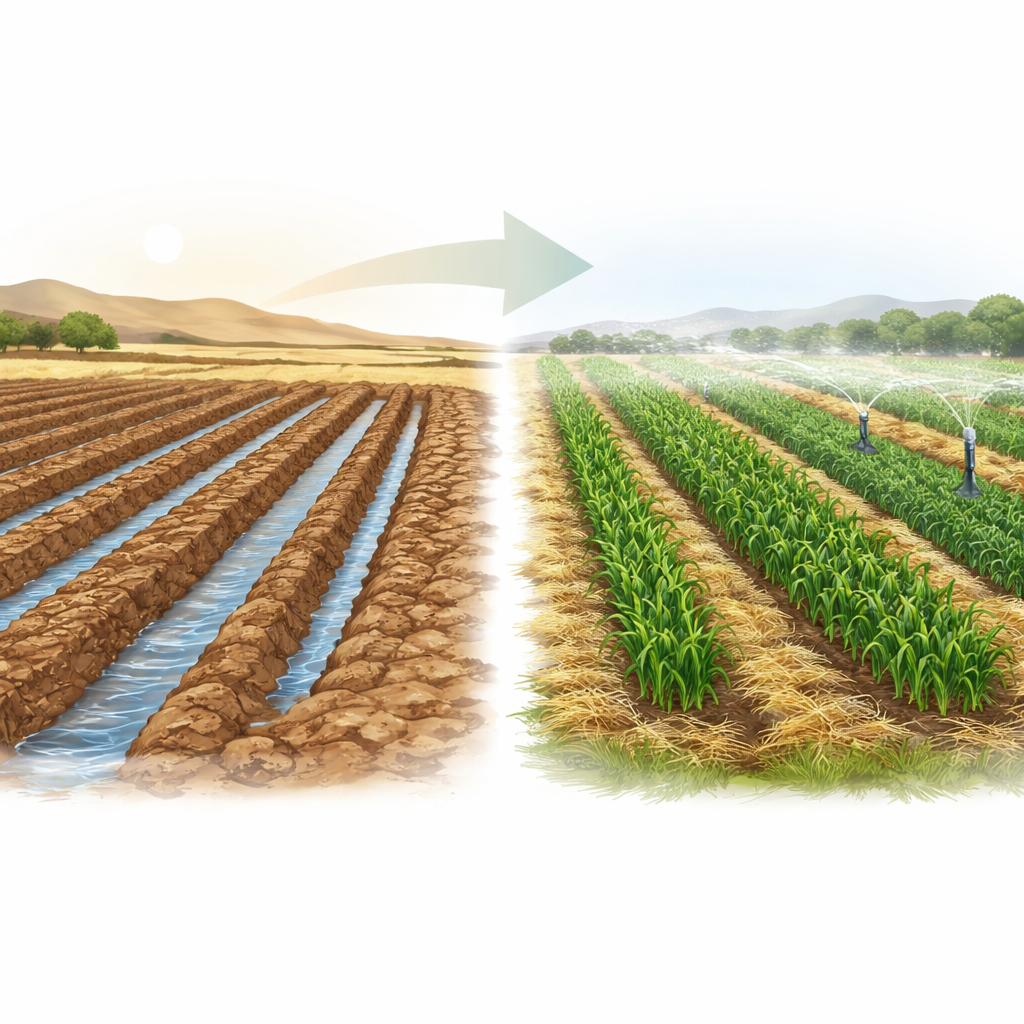
A New Look at Everyday Fields
The researchers focused on a common crop pair: maize grown in the rainy season, followed by field pea in the dry winter months. Traditionally, these fields are ploughed deeply and leveled before every crop, and peas are watered by flooding the furrows. That approach is simple but wasteful. Much of the water evaporates or drains away, and repeated ploughing degrades the soil over time. The team set out to compare this "business as usual" with conservation-style practices that disturb the soil less and apply water more precisely.
Gentler Soil Care and Smarter Watering
On experimental plots near Kanpur in India’s Indo-Gangetic Plains, the scientists tested three ways of preparing the soil: zero tillage, where the soil is left undisturbed and maize stalks are left standing; reduced tillage, with only shallow cultivation; and conventional tillage, with deep ploughing and residue removal. For the pea crop, they paired these soil practices with six watering schedules using either overhead sprinklers or traditional flood irrigation, timed to key stages when the pea plants branch and set pods. The maize relied only on seasonal rainfall, so any irrigation effects carried over from the previous pea crop through changes in soil moisture and health.
Bigger Harvests and Higher Farm Profits
The combination of minimal soil disturbance and sprinklers paid off. Across two years, zero tillage outperformed deep ploughing for both maize and peas. Maize grain yields were about 13% higher under zero tillage than under conventional tillage, and peas yielded up to 25% more grain. When zero tillage was paired with sprinkler irrigation at both branching and pod-formation stages of peas, pea yields jumped by about 70% and maize yields by about one-third compared with the local norm of ploughed fields plus flood irrigation. Looking at the whole season, the maize–pea system produced nearly 19% more grain (expressed as maize equivalent yield) under zero tillage than under conventional tillage. Those extra bushels translated to money: the improved practice raised net income by roughly 46,000 Indian rupees per hectare over standard ploughing, while sprinklers alone added around 14,000 rupees compared with flood irrigation.
Saving Water Drop by Drop
Equally important, the improved methods used water more wisely. Zero and reduced tillage slightly lowered the total amount of water consumed by the pea crop, largely because undisturbed soil and surface residues reduced evaporation. Sprinkler irrigation used less water than flooding yet still delivered it where plants could use it. Together, zero tillage and sprinklers increased the amount of grain produced per unit of water by striking margins. Compared with conventional deep ploughing and flood irrigation, this combination boosted water-use efficiency by about 60% and water productivity—how much grain is grown per cubic meter of water—by about 76%. That means farmers could harvest more food while applying less water, a crucial advantage in semi-arid regions where rainfall is erratic and groundwater is shrinking.
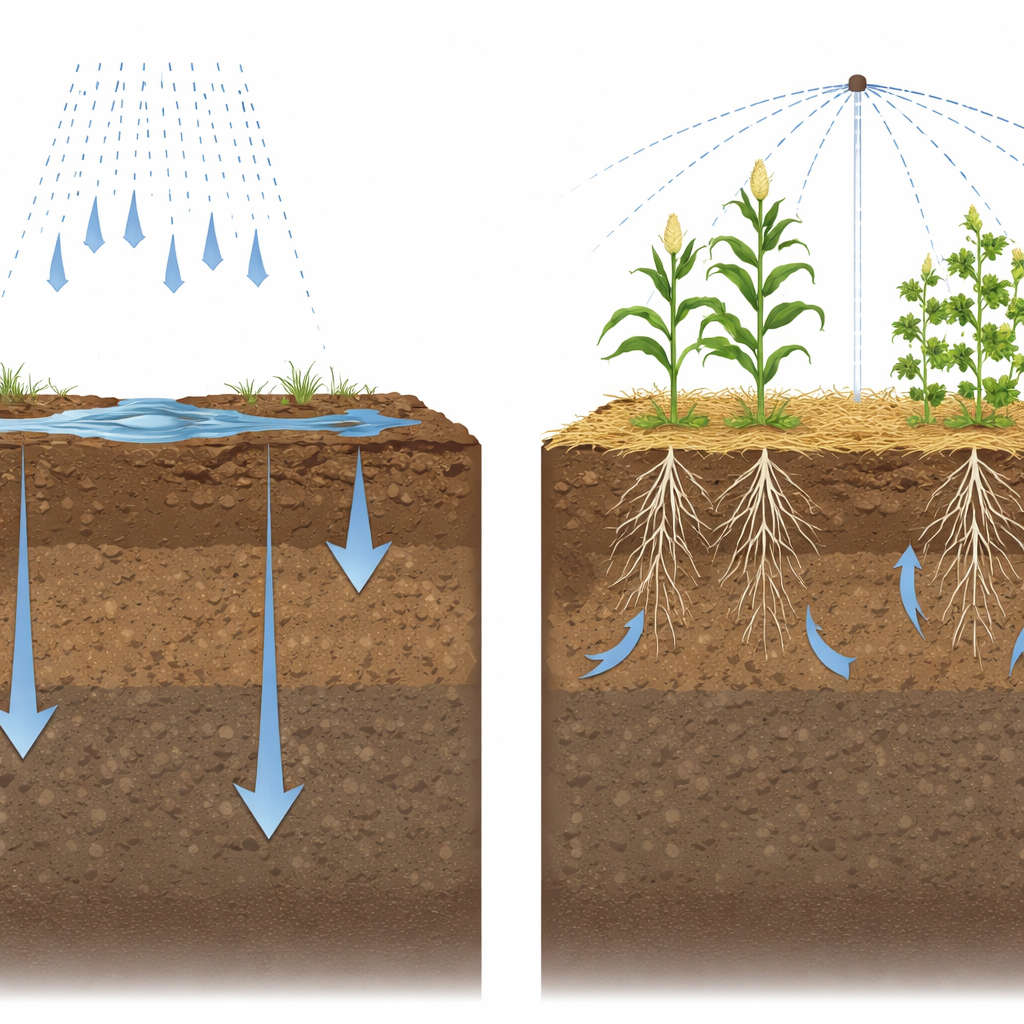
What This Means for Drying Landscapes
For farmers in water-stressed areas, the study’s message is straightforward: leaving the soil largely unploughed, keeping crop residues on the surface, and switching peas from flood irrigation to well-timed sprinklers can increase yields, profits, and water savings at the same time. Maize, grown in the rainy season, benefits indirectly from the healthier, moister soil left behind by the pea crop. While results will vary with local soils and climates, the work shows that simple changes to how fields are tilled and watered can turn a thirsty, input-hungry system into one that is more productive and resilient, helping agriculture adapt to a drier future.
Citation: Singh, R., Nath, C.P., Praharaj, C.S. et al. Conservation tillage and sprinkler irrigation for sustainable water management and enhanced crop yields in maize and field pea cropping system. Sci Rep 16, 11852 (2026). https://doi.org/10.1038/s41598-026-39809-5
Keywords: conservation tillage, sprinkler irrigation, water use efficiency, maize–pea cropping, climate-resilient farming