Clear Sky Science · en
Research and optimization of screening strategy for calcium-activated chloride channel modulators guided by electrophysiological characteristics
Why tiny cell gates matter for future medicines
Hidden in the membranes of our cells are microscopic gates that let charged particles flow in and out, helping us breathe, digest food, feel pain, and even grow tumors. This study looks at one important group of these gates, called calcium-activated chloride channels, and asks a practical question: how can we design smarter lab tests to find new drugs that control them more precisely, with fewer side effects and missed opportunities?
Channels that shape breathing, digestion, and cancer
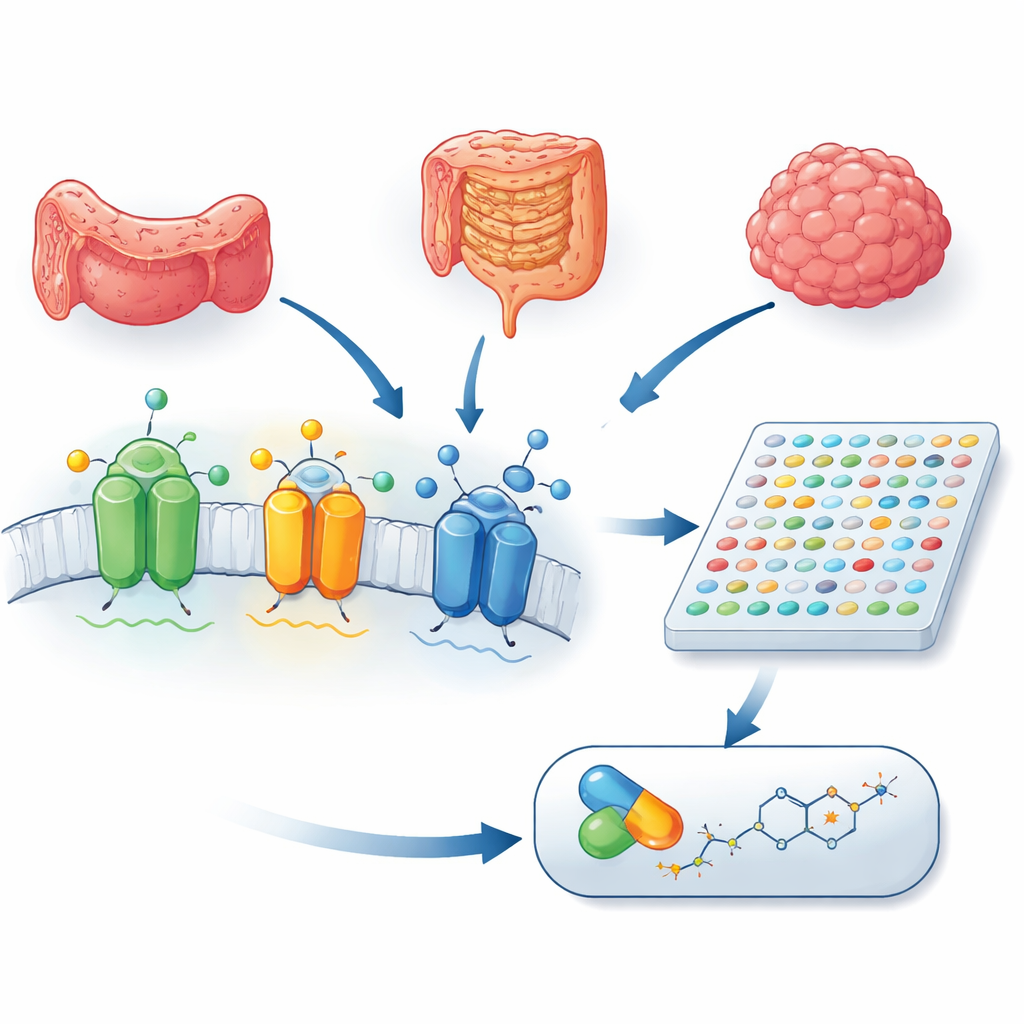
Among calcium-activated chloride channels, two closely related proteins, ANO1 and ANO2, stand out. ANO1 is active in airways, intestines, glands, smooth muscle, sensory nerves, and many tumors, influencing fluid secretion, muscle contraction, cell growth, and cancer spread. Blocking or fine-tuning ANO1 could therefore help in conditions like asthma, high blood pressure, diarrhea, pain, cystic fibrosis, and several cancers. ANO2, by contrast, is especially important in smell and memory-related brain regions. Because these channels are so widespread, researchers need drug molecules that act on the right subtype—especially ANO1—without disturbing its relatives.
Building a reliable test cell that lights up when channels work
To hunt for such molecules, the team first built stable laboratory cell lines that carry either ANO1 or ANO2 together with a special yellow fluorescent protein inside the cells. When the channels open, chloride-like ions rush in and dim this fluorescence in a measurable way. The researchers used virus-based gene delivery, selection with antibiotics, and several checks—microscopy, flow cytometry, and genetic tests—to confirm that the channels sat correctly in the cell membrane and that the fluorescent sensor was present in almost all cells. They then showed that raising calcium inside the cells switched on both ANO1 and ANO2, and that a known channel blocker sharply reduced the resulting electrical currents, confirming that the system reports real channel activity.
Discovering a hidden weakness in a popular screening method
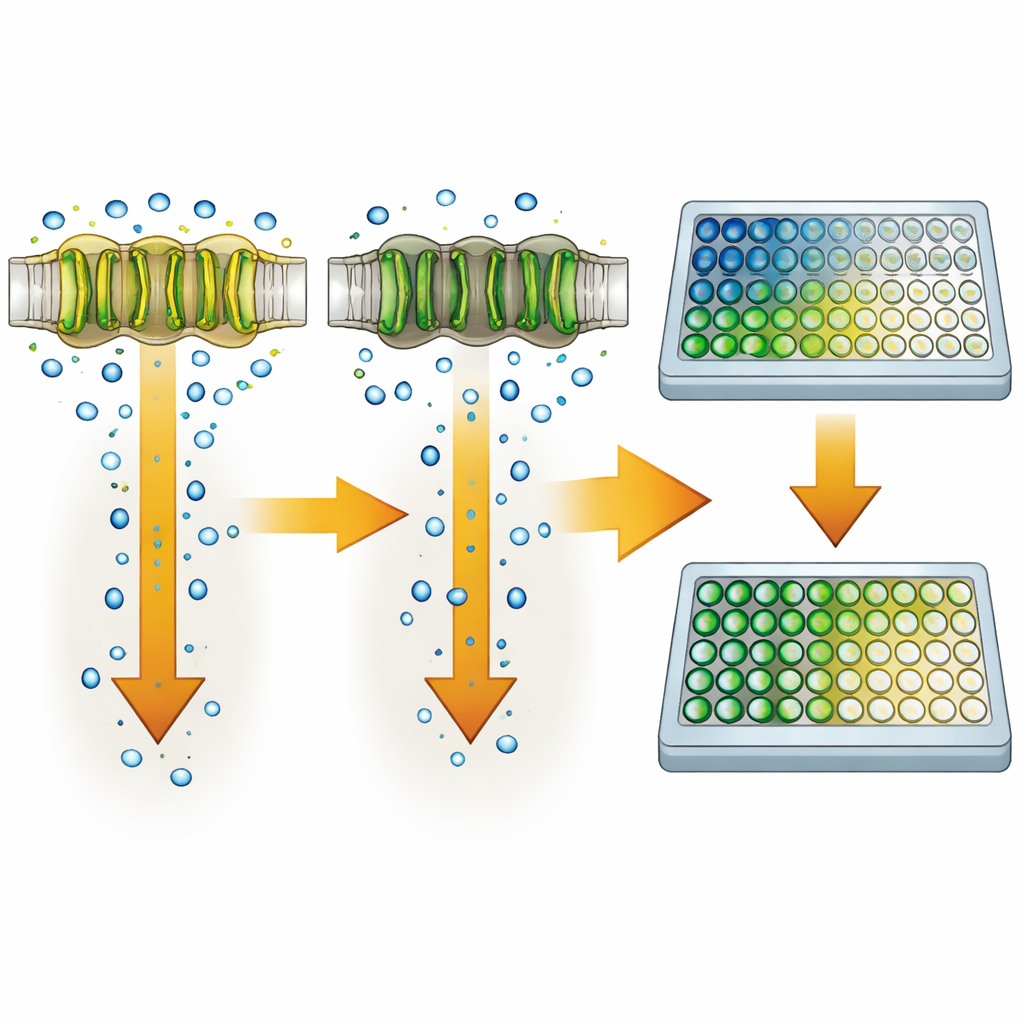
Using sensitive electrical recordings, the scientists uncovered a critical difference between ANO1 and ANO2. Under strong, long-lasting calcium stimulation, ANO1 currents started large but then faded markedly over about ten minutes—a behavior known as rundown—while ANO2 currents stayed stable. Fluorescence-based experiments with chemical activators told a similar story: high doses initially drove ANO1 strongly, but the response weakened with time, whereas lower doses produced steadier activity. This matters because standard high-throughput screening plates may take over half an hour to measure all wells. Compounds tested late in the run could be acting on channels that have already gone quiet, causing potent ANO1 activators to be wrongly dismissed as inactive.
Designing a smarter search for channel-controlling drugs
Guided by these electrical and optical measurements, the team redesigned how ANO1-targeted screening should work. For activators, they propose reducing both the number of compounds tested per plate and the overall detection time, and using concentration gradients across columns so that promising molecules are quickly flagged and then validated with more precise electrical recordings. For inhibitors, they suggest reversing the usual order of steps: instead of adding test compounds before raising calcium, they first activate ANO1 to a stable open state with a carefully chosen agonist, then apply candidate inhibitors. Molecules that simply interfere with upstream calcium signaling no longer appear as false hits, while those that act directly on the open channel stand out more clearly.
What this means for future therapies
In everyday terms, this work shows that the behavior of the target itself—the way ANO1 tires under strong, prolonged stimulation—can quietly sabotage drug discovery if not built into the screening design. By combining detailed electrical measurements with a refined fluorescence assay, the authors create a more dependable platform for spotting molecules that precisely tune ANO1 while sparing similar channels. This refined strategy could speed the discovery of new treatments for diseases in which chloride flow and fluid movement go awry, from thick mucus in cystic fibrosis to overactive growth signals in cancer.
Citation: Wang, Y., Zheng, K., Yang, L. et al. Research and optimization of screening strategy for calcium-activated chloride channel modulators guided by electrophysiological characteristics. Sci Rep 16, 10230 (2026). https://doi.org/10.1038/s41598-026-39762-3
Keywords: calcium-activated chloride channels, ANO1, high-throughput screening, ion channel drug discovery, electrophysiology