Clear Sky Science · en
Reliability analysis in stress-strength model under record values with practical verification
Why breaking records matters for everyday reliability
From aircraft parts and sports performance to city air pollution, we constantly ask the same question: how likely is it that a system will withstand the demands placed on it? Statisticians capture this using “stress–strength” reliability: the chance that a part’s strength is greater than the stress it faces. This paper develops new tools to estimate that chance in situations dominated by rare, extreme events, using only the most extreme observations—record‑breaking values—rather than every data point.
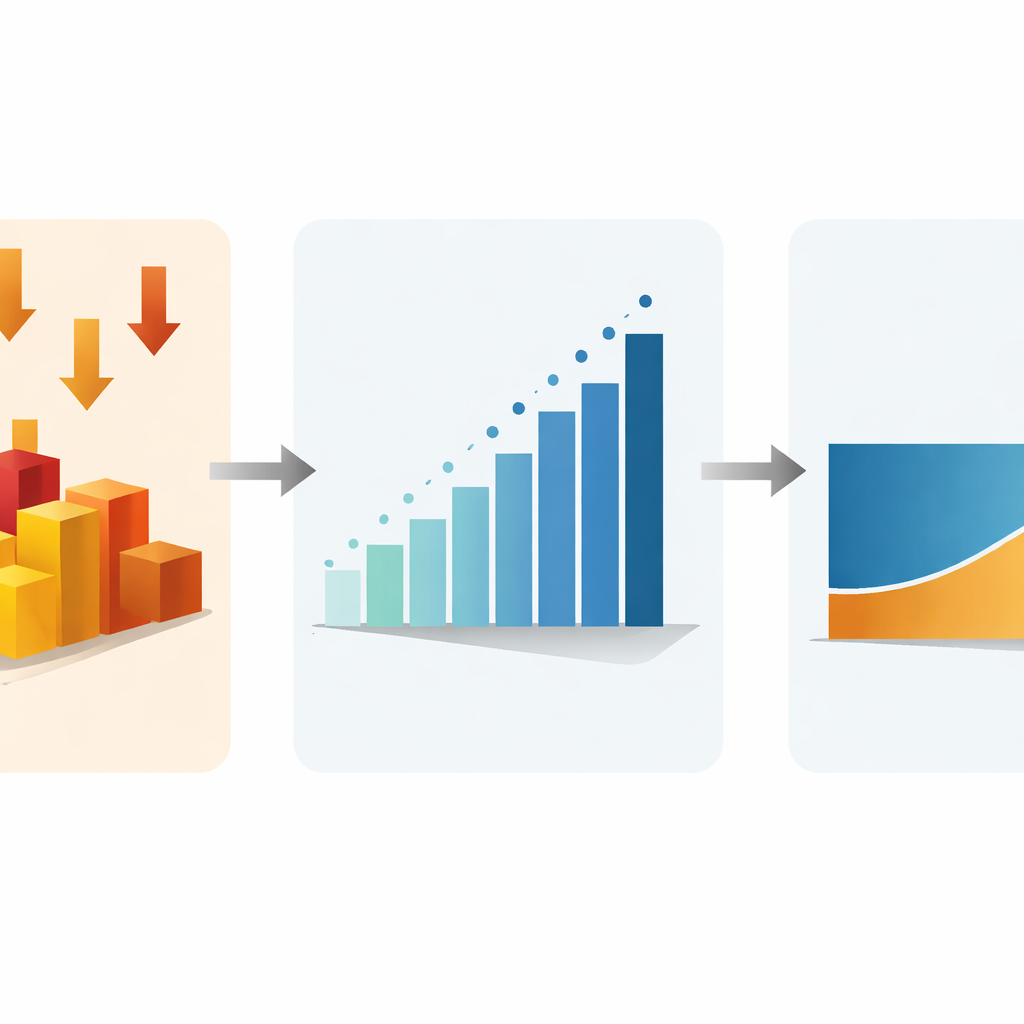
Comparing stress and strength in the real world
In a stress–strength view of reliability, “stress” represents the load a system experiences—such as air turbulence on a wing or spikes in air pollution—while “strength” represents the system’s capacity to cope. The key quantity is the probability that strength exceeds stress. Many modern datasets, especially those involving extremes, show long tails: most values are modest, but a few are very large. The authors model both stress and strength with a flexible long‑tailed distribution called the inverted exponentiated Pareto. This choice makes it easier to capture rare but important extremes that drive failure.
Making the most of record-breaking observations
Instead of using every observation, the study focuses on upper record values: the succession of new highs in a sequence of measurements. These are natural summaries in fields like climate records, finance, or sports, where new “records” attract attention and may be all that is stored. The authors first derive a simple formula for reliability that depends only on two shape parameters describing the stress and strength distributions. They then build “classical” estimates of these parameters using maximum likelihood methods tailored to record data, and from these obtain an estimate of the probability that strength exceeds stress, along with approximate margins of error.
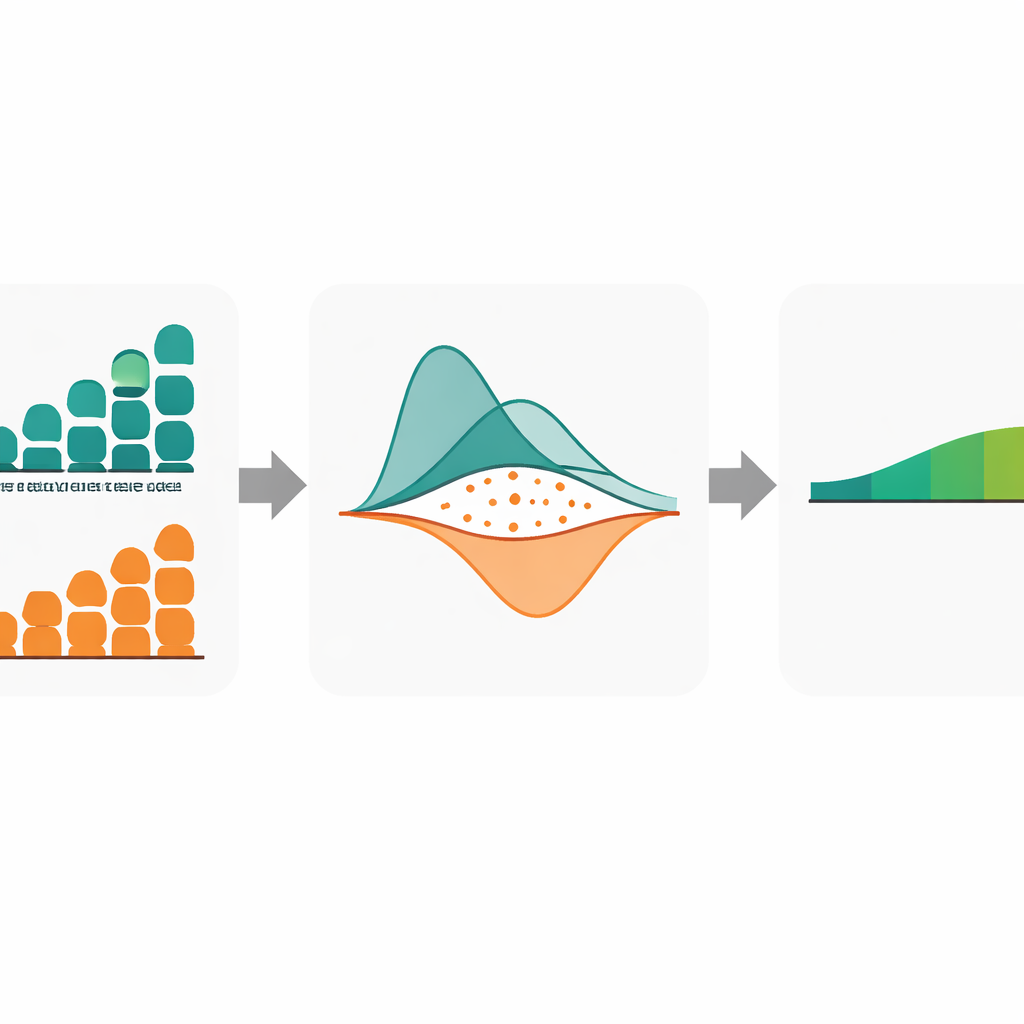
Blending classical and Bayesian views of uncertainty
Beyond classical estimates, the paper develops a family of Bayesian methods that explicitly combine data with prior beliefs about the unknown parameters. The authors consider both non‑informative priors, representing little prior knowledge, and informative priors, tuned to reflect earlier experience. They also explore different ways of penalizing over‑ and under‑estimation through several “loss functions,” including a balanced squared‑error loss and two asymmetric alternatives that treat mistakes in one direction as more costly than the other. Because the resulting mathematics is intricate, they rely on Markov chain Monte Carlo algorithms—Gibbs sampling and Metropolis–Hastings—to simulate from the underlying probability model and approximate the desired reliability estimates and credible intervals.
Testing the methods by simulation and real data
To judge how well these approaches work, the authors run extensive computer experiments. They generate artificial record datasets under known conditions, then compare how close the different methods come to the true reliability. They examine not just average accuracy but also the stability of the estimates and the width and coverage of interval estimates. Across many scenarios, Bayesian estimates under the balanced squared‑error loss are more precise than both classical estimates and Bayesian estimates using the asymmetric loss functions. The study also compares several types of interval estimates, including bootstrap intervals and Bayesian highest posterior density intervals. In general, percentile‑based bootstrap intervals outperform a more complex bootstrap‑t approach, while Bayesian intervals—especially with informative priors—tend to be shorter yet still capture the true reliability more often.
From football goals to air pollution extremes
The authors then put their methods to work on two real datasets. The first records the minutes of the first goal scored in European Champions League matches over two seasons, comparing first‑leg and return‑leg games. Here, the “stress” and “strength” roles help characterize which side of the tie tends to see earlier breakthroughs. The second dataset covers monthly sulfur dioxide concentrations in Long Beach, California, over nearly two decades, comparing spring and late‑summer levels. In both cases, the inverted exponentiated Pareto model fits the skewed, heavy‑tailed data better than several competing distributions. Using only the upper records extracted from these datasets, the Bayesian methods again produce more stable reliability estimates than classical ones, echoing the simulation findings.
What this means for judging reliability
For a general reader, the main takeaway is that the paper offers a principled way to quantify “how safe is safe enough?” when only record‑breaking extremes are available and the underlying behavior has long tails. By carefully modeling both stress and strength with a flexible distribution and by using modern Bayesian computation, the authors show that one can obtain reliable probabilities of survival or failure, along with realistic uncertainty bands, from relatively sparse data. Their results suggest that, in such settings, Bayesian approaches with balanced error treatment give the most trustworthy answers, and that these ideas can be applied across domains—from engineering components to sports timing and environmental risk—where extreme events matter most.
Citation: Hassan, A.S., Alballa, T., Alshawarbeh, E. et al. Reliability analysis in stress-strength model under record values with practical verification. Sci Rep 16, 14460 (2026). https://doi.org/10.1038/s41598-026-39638-6
Keywords: stress-strength reliability, record values, Bayesian estimation, heavy-tailed data, engineering reliability