Clear Sky Science · en
Using machine learning algorithms to study the relationship between meteorological conditions and air quality parameters
Why Weather and City Air Matter
Anyone who has watched a dust storm roll in or smog hang over a city has seen how quickly the air we breathe can change. This study looks at how day‑to‑day weather in an arid, industrial region of Saudi Arabia shapes three important types of air pollution, and whether modern computer learning tools can turn simple weather records into reliable air‑quality forecasts. The findings help explain why some pollutants respond strongly to shifts in humidity and season, while others are driven more by traffic, factories, and sudden dust events.
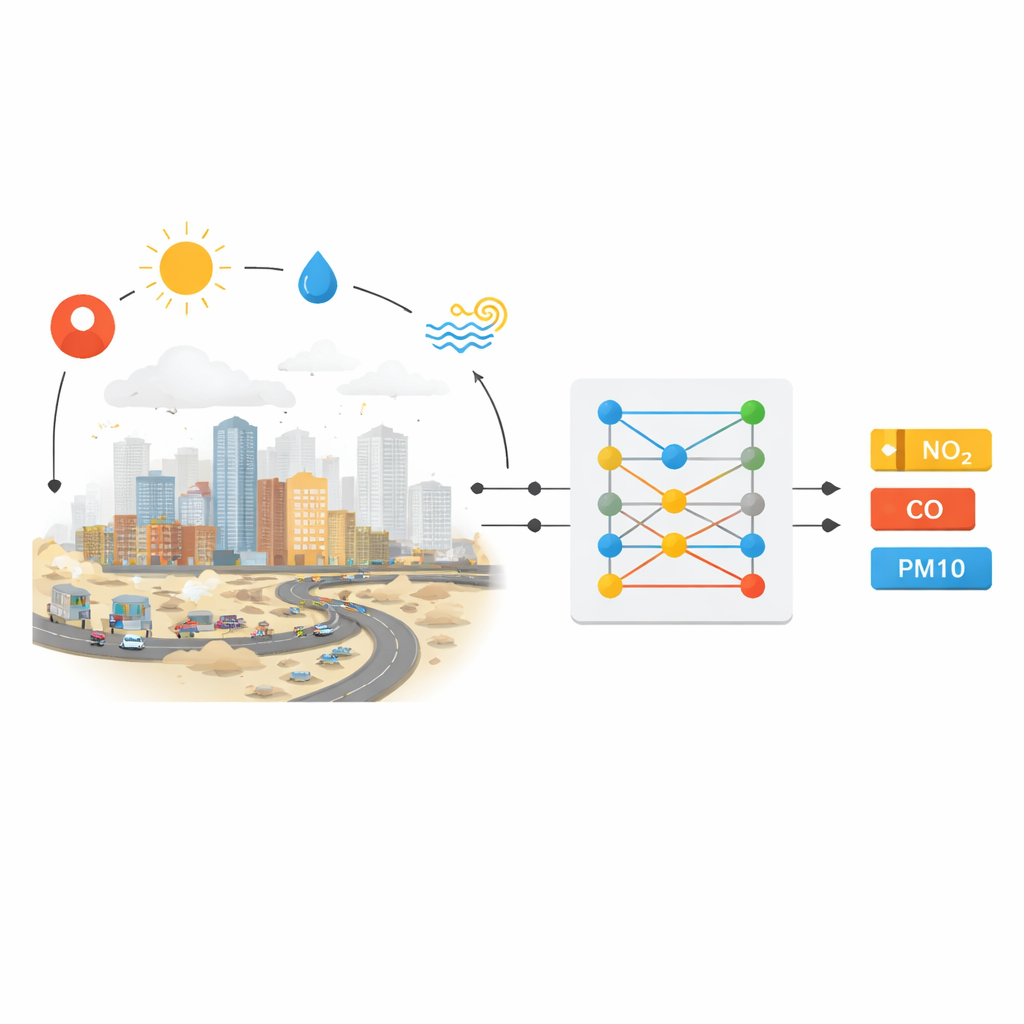
A Desert City as a Natural Laboratory
The research focuses on the Dammam metropolitan area on Saudi Arabia’s eastern coast, a fast‑growing hub of oil, gas, petrochemical plants, power stations, and heavy traffic. The region has a harsh desert climate: very hot summers, mild winters, little rain, and frequent dust storms. Sea breezes from the Arabian Gulf and dry continental winds constantly reshape local weather. This mix of intense human activity and shifting winds, temperatures, and humidity levels makes Dammam an ideal place to study how weather and pollution interact under arid conditions that are very different from those in most previous air‑quality studies.
Turning Weather Records into Clues
The author assembled five years of measurements, from 2017 to 2021, pairing routine weather observations with readings of three key pollutants: nitrogen dioxide from fuel burning, carbon monoxide from incomplete combustion, and coarse particle pollution known as PM10, which in desert cities often comes from blowing dust. Weather data included temperature, humidity, wind speed and direction, dew point, and air pressure, recorded twice a day. After carefully cleaning the data to remove gaps and outliers, the study added a “day of year” marker to capture seasons and then used computer methods to rank which weather factors mattered most for each pollutant before feeding them into predictive models.
Teaching Machines to Read the Sky
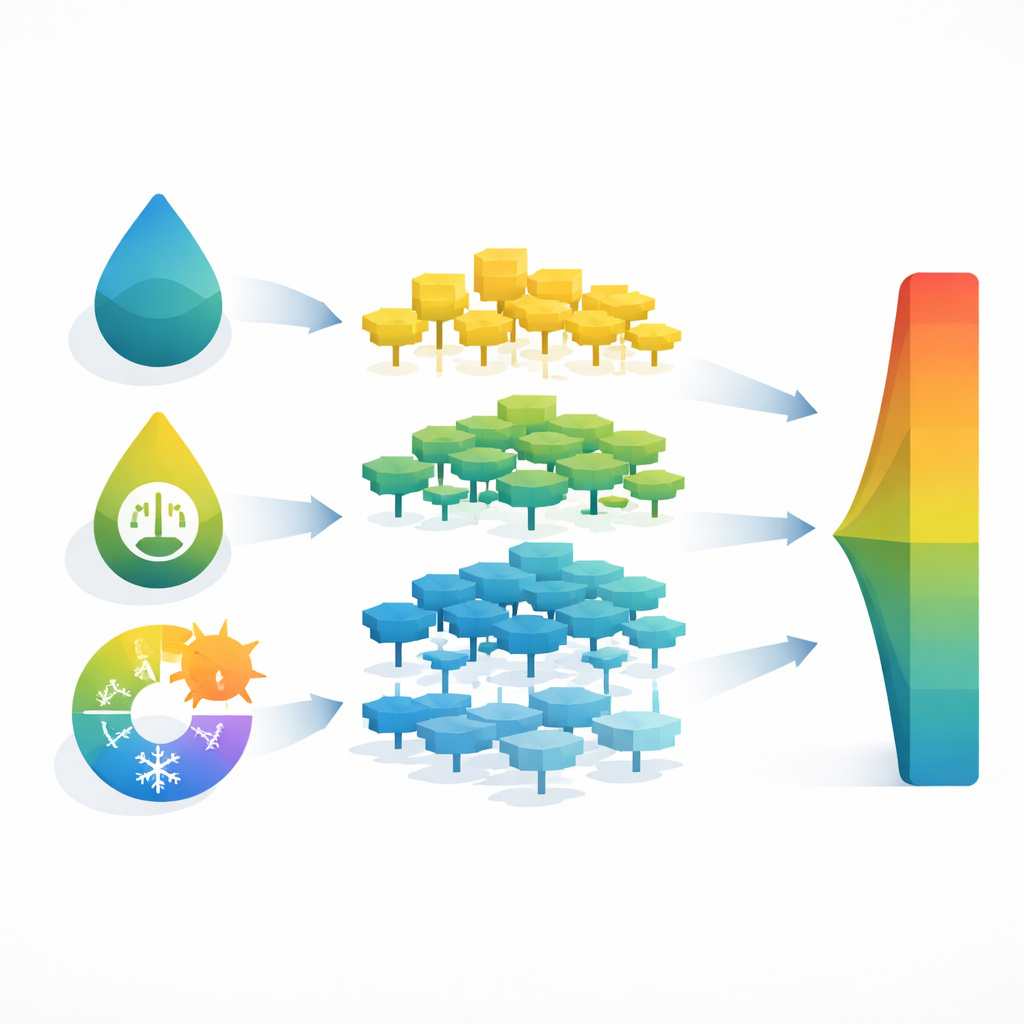
Four types of machine learning models were tested: a neural network, a single decision tree, and two ensemble methods called random forests and gradient boosting, which combine many simple models into a stronger one. The data were split so that most of the records trained the models, while the rest tested how well they could predict unseen cases. For nitrogen dioxide, the gradient boosting model stood out. Using just three inputs—season of the year, dew point, and humidity—it explained more than four‑fifths of the observed variation. This points to a strong role for moisture and seasonal sunlight in shaping how nitrogen compounds form, transform, and linger in the lower atmosphere, even in a dry region.
When Weather Is Not Enough
Carbon monoxide told a more mixed story. The best models captured only about half of its ups and downs, suggesting that while weather and season do matter—cool, stagnant periods tend to trap this gas near the ground—changes in traffic, fuel use, and industrial output are just as important. For PM10, all four approaches struggled. Their predictions were little better, and sometimes worse, than simply using average values. This reflects the chaotic nature of dust in arid cities: sudden gusts, construction work, road traffic, and soil conditions can cause short‑lived spikes that basic weather readings cannot foresee. The study also found that piling on extra weather variables beyond the most relevant few often made predictions worse, highlighting the importance of focusing on the strongest signals rather than feeding models everything at once.
What the Findings Mean for Everyday Life
For people living in dusty, rapidly developing regions, this work shows both the promise and limits of weather‑driven air‑quality forecasts. Smart combinations of simple weather data can reliably anticipate swings in certain gases, especially nitrogen dioxide, offering a low‑cost tool for issuing health alerts and planning emission controls where dense monitoring networks are not available. At the same time, the stubborn unpredictability of dust‑related particles warns that protecting public health in desert cities will require richer information on land use, soil moisture, traffic, and satellite‑tracked dust, not weather alone. Together, these insights chart a path toward more targeted, locally tuned forecasting systems that can help communities breathe a bit easier under challenging skies.
Citation: Tawabini, B. Using machine learning algorithms to study the relationship between meteorological conditions and air quality parameters. Sci Rep 16, 10392 (2026). https://doi.org/10.1038/s41598-026-39579-0
Keywords: air quality, machine learning, desert pollution, meteorology, Saudi Arabia