Clear Sky Science · en
Brain-derived microvesicles induce activation of aspirin-treated platelets via the PLC/PKC pathway
Why this matters for people on aspirin
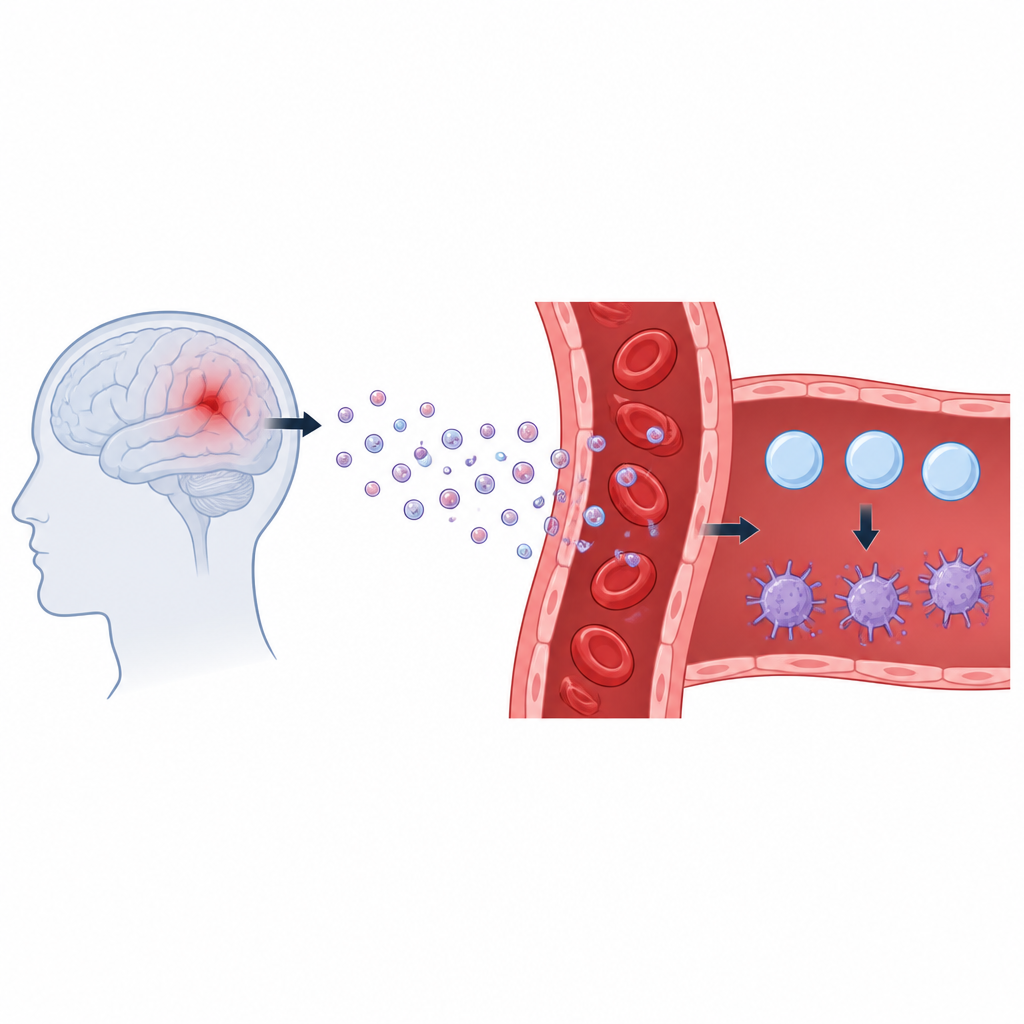
Aspirin is a daily companion for many older adults hoping to prevent heart attacks and strokes. Yet one of its most feared side effects is bleeding in the brain. Puzzlingly, people who suffer a brain bleed while on aspirin do not always bleed more than others. This study asks a simple but important question: does the injured brain itself send signals into the blood that can wake up aspirin-silenced platelets and help stop bleeding?
Tiny messengers from the injured brain
When brain cells are damaged, they shed tiny membrane bubbles known as microvesicles into the surrounding fluid and, eventually, into the bloodstream. The researchers focused on microvesicles that come from brain support cells and call them brain-derived microvesicles. These particles carry pieces of cell membrane and proteins, and can fuse with other cells. Using electron microscopy and particle tracking, the team showed that they successfully isolated large numbers of these brain vesicles from mice, confirming their size, shape, and brain origin.
Testing platelets from people taking aspirin
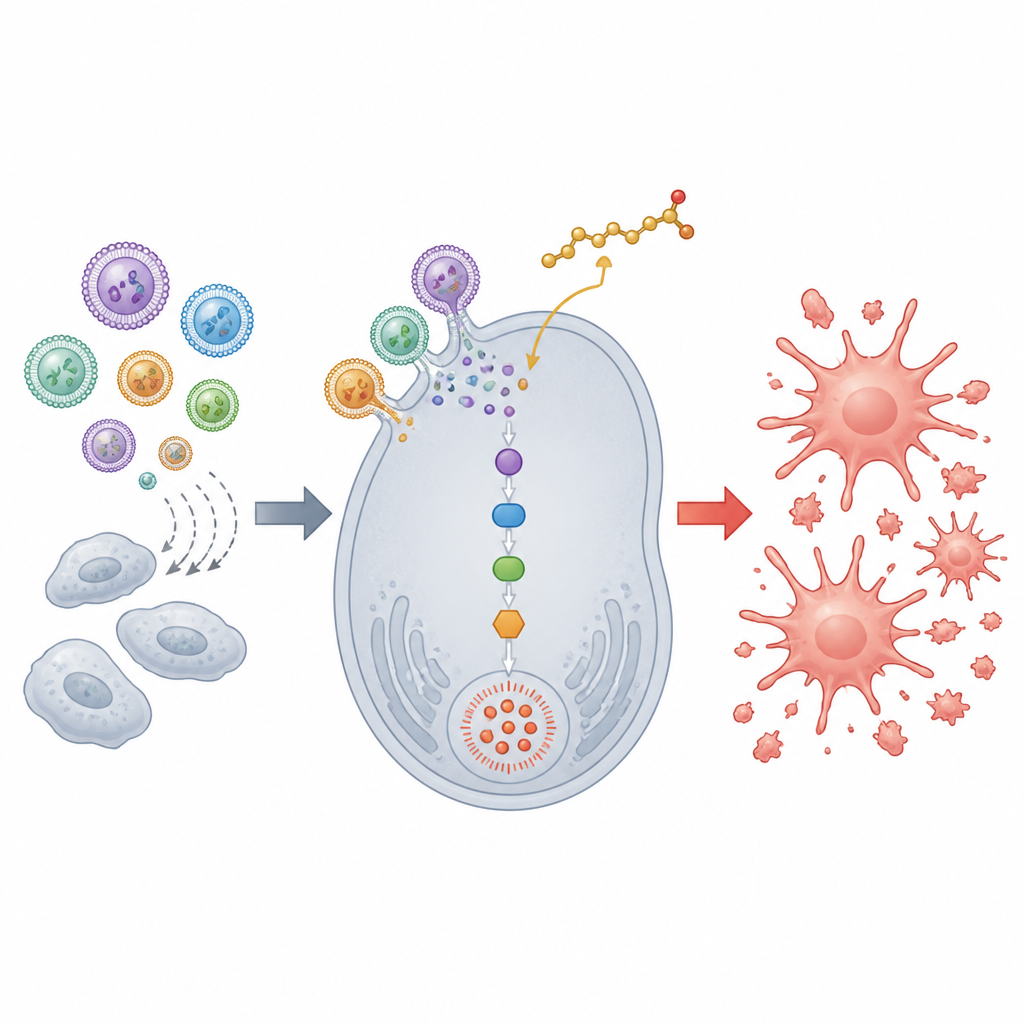
Next, the scientists collected blood from volunteers who had been taking aspirin long term, ensuring that their platelets were truly less reactive to common triggers. They then mixed these aspirin-treated platelets with brain microvesicles, with a fatty molecule called arachidonic acid, or with both together. Using flow cytometry and enzyme tests, they found that microvesicles plus arachidonic acid drove platelets into a clearly activated state and boosted levels of thromboxane, a chemical that normally helps platelets clump. High-resolution imaging showed that under this combined stimulus, platelets dramatically changed shape, ballooned, and often broke apart, unlike the relatively quiet cells seen with aspirin alone.
A surprising mix of activation and impaired clumping
Although the platelets looked activated and released more signaling molecules, they actually clumped less well in standard aggregation tests when exposed to high amounts of brain microvesicles. The authors suggest that these platelets may be shifting from a clumping role to a different, more extreme procoagulant state, in which they promote clotting chemistry on their surface but lose the ability to form stable aggregates. In parallel, the team showed that the brain vesicles themselves contain cyclooxygenase-1, the same enzyme in platelets that aspirin is designed to block, raising the possibility that vesicle-borne copies of this enzyme can partially bypass aspirin’s brake.
Peering inside the platelet’s signaling machinery
To understand how these changes happen inside the cell, the researchers used large-scale measurements of protein phosphorylation, a chemical tag that turns many signaling proteins on or off. Comparing platelets from healthy volunteers and aspirin users, with and without brain vesicles and arachidonic acid, they mapped thousands of phosphorylation sites. They saw that aspirin dampened many signals linked to platelet formation and activation, while adding brain vesicles plus arachidonic acid switched key pathways back on. In particular, proteins in the phospholipase C and protein kinase C chain, along with Akt, showed stronger activation. When the team blocked phospholipase C with a drug, downstream protein kinase C activity fell, supporting the idea that this pathway is central to how brain vesicles reactivate aspirin-treated platelets.
What this could mean for patients
Put simply, this work suggests that tiny particles released from injured brain tissue can carry active enzymes and signals into the bloodstream, partly overcoming aspirin’s dampening effect on platelets through an internal signaling chain. In the setting of a brain bleed, this microvesicle-driven reawakening of platelets might help limit bleeding, which could explain why long-term aspirin use does not always worsen hemorrhage. At the same time, the altered platelet behavior might also influence later clotting risks. While more research is needed before these insights affect treatment, the study offers a new way to think about how the brain and blood communicate during injury.
Citation: He, Yf., Zhang, Jc., Wang, Yz. et al. Brain-derived microvesicles induce activation of aspirin-treated platelets via the PLC/PKC pathway. Sci Rep 16, 14896 (2026). https://doi.org/10.1038/s41598-026-39509-0
Keywords: aspirin, platelets, brain microvesicles, cerebral hemorrhage, platelet signaling