Clear Sky Science · en
Delamination of lithium iron phosphate from aluminum foil using electrical pulsed discharge without heat, water, or chemicals
Why this battery story matters
Lithium iron phosphate (LFP) batteries are becoming the workhorses of electric buses, budget electric cars, and home energy storage because they are safe, durable, and relatively inexpensive. But when these batteries reach the end of their lives, pulling apart their tightly bonded layers without wasting material or creating pollution is surprisingly hard. This study introduces a way to peel the active battery material off its metal backing using nothing more than a precise burst of electricity—no ovens, no wash water, and no harsh chemicals—opening a pathway to cleaner, cheaper battery recycling. 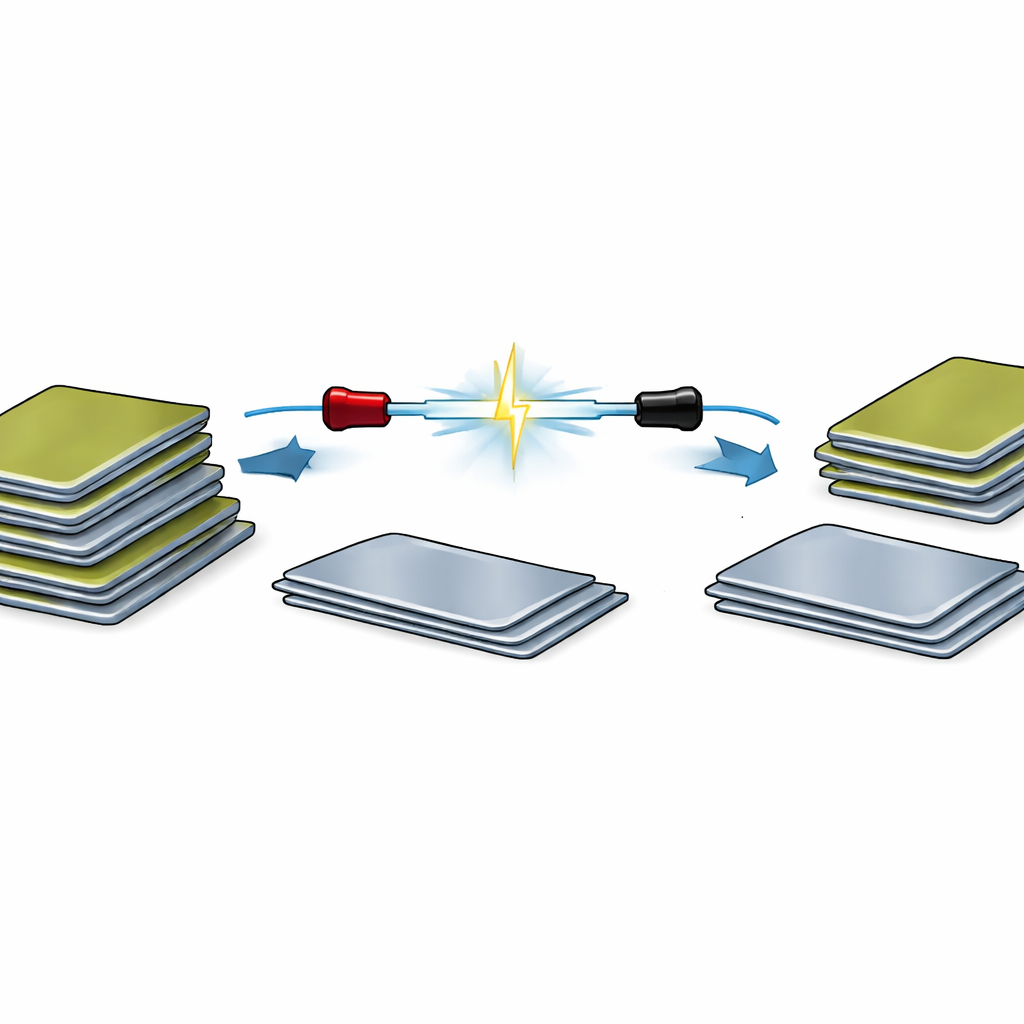
A closer look inside a battery sheet
An LFP battery cathode is built like a layered sandwich. A thin sheet of aluminum foil acts as a current collector, and on top sits a thicker layer that contains LFP particles, a polymer binder that glues everything together, and a bit of carbon to help conduct electricity. In both factory scrap and used batteries, this composite layer clings stubbornly to the aluminum, so recyclers usually resort to grinding, burning, or chemical baths to separate them. Those methods can damage the LFP’s crystal structure, contaminate it with aluminum fragments, or reduce it to lower-value iron compounds, meaning the material often cannot be simply put back into new batteries.
Peeling with pulses instead of heat and chemicals
The researchers tested a different idea: sending a single, high-voltage electrical pulse along the cathode sheet while it is clamped between metal electrodes in air. The pulse drives a large but very brief current mainly through the aluminum foil, which heats the interface between the foil and the LFP layer from within. Computer modeling showed that, at the right energy (about 0.59 joules per milligram of electrode), the interface can briefly reach temperatures high enough to melt the polymer binder without overheating the rest of the sheet. As the binder softens and the hot and cooler regions expand differently, mechanical stresses build up across the thickness of the composite layer, helping the LFP coating lift cleanly away from the foil as an intact sheet. 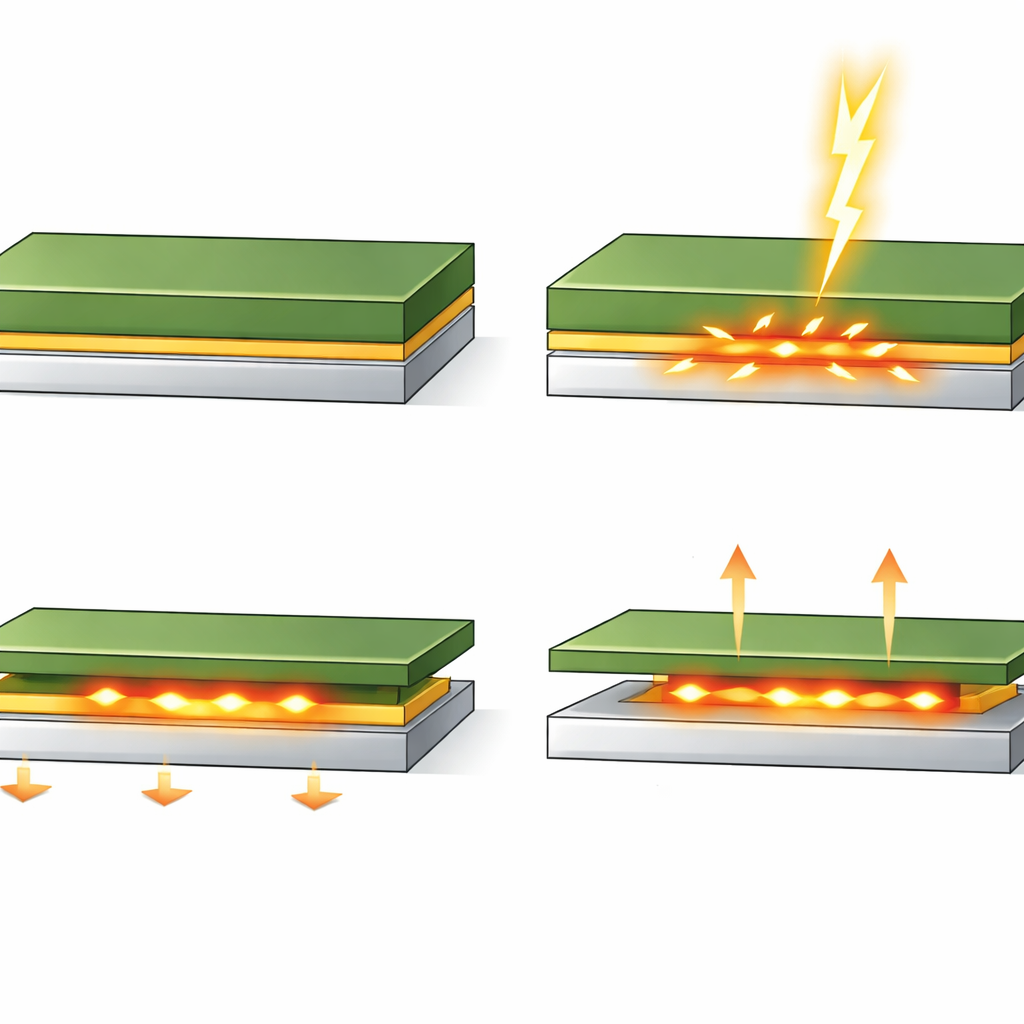
How battery history changes the split
To understand how real-world aging affects this process, the team compared three kinds of cathodes: unused factory scrap with no electrolyte, “fresh” spent cells that had seen little degradation, and more heavily aged cells. All were treated with nearly the same pulse energy. Factory scrap needed the highest energy to achieve more than 98 percent separation, because it lacked leftover electrolyte salt that could help weaken the bond. In the fresher used cells, traces of lithium salt remaining in the pores decomposed under the brief heating and produced reactive fluorine-containing species that attacked the binder right at the interface, giving excellent delamination over the whole energy range tested. In the degraded cells, however, spotty deposits that had formed during years of cycling disrupted the current pathways, causing uneven heating and leaving more areas incompletely separated at lower energies.
Keeping valuable powder clean and intact
Microscopy and chemical analysis revealed that, unlike grinding or high-temperature treatment, the pulsed method leaves the LFP coating largely undamaged and free from aluminum contamination (below 0.1 weight percent in all tests). X-ray measurements before and after treatment showed that the positions and intensities of the LFP diffraction peaks were essentially unchanged, meaning its crystal framework survived intact. Only limited surface changes associated with pre-existing degradation and electrolyte reactions were observed in some used samples. Importantly, the LFP layer often detached as a continuous sheet rather than crumbling, reducing the need for additional cleaning or sorting steps down the line.
Testing recycled material in a new cell
To check whether this gently recovered material could actually work in a fresh battery, the team made new cathodes that blended 10 percent recycled LFP from the pulsed process with 90 percent pristine powder. When tested in coin cells, these mixed electrodes delivered a discharge capacity of 148 milliamp-hours per gram at a modest rate, closely matching cells made entirely from new LFP. Electrical resistance measurements and impedance spectra showed only minor differences, indicating that the brief electrical pulse did not introduce harmful defects or slow down the movement of charge within the electrode.
What this means for future recycling
For non-specialists, the core outcome is straightforward: a fast electrical jolt can neatly peel the useful LFP layer away from its aluminum backing, at room temperature and without adding water or chemicals, while keeping the material good enough to be reused in new batteries. Because the method consumes little energy and generates no liquid waste, it could serve as an efficient first step in “direct recycling,” where valuable cathode material is recovered with its structure mostly intact rather than being broken down and rebuilt from scratch. With LFP batteries poised to dominate many electric vehicle and grid-storage markets, such low-impact separation techniques could play a key role in making the battery life cycle more circular and sustainable.
Citation: Tokoro, C., Kurihara, T., Narita, A. et al. Delamination of lithium iron phosphate from aluminum foil using electrical pulsed discharge without heat, water, or chemicals. Sci Rep 16, 12627 (2026). https://doi.org/10.1038/s41598-026-39469-5
Keywords: lithium iron phosphate recycling, battery cathode delamination, electrical pulsed discharge, direct battery recycling, sustainable lithium-ion batteries