Clear Sky Science · en
The prognostic value of the PALBI score for mortality prediction in stroke: an internal and external validation study
Why the Liver Matters After a Stroke
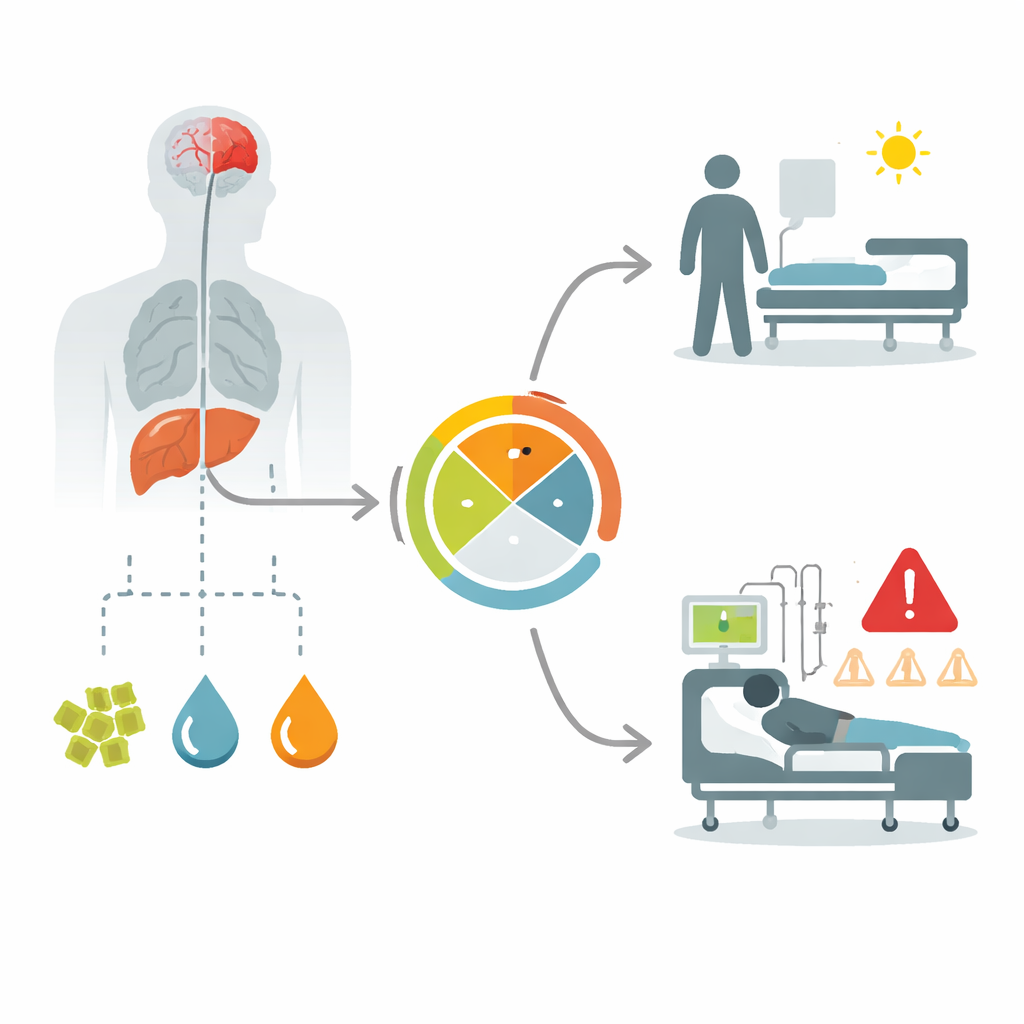
When people think about stroke, they usually picture damage to the brain, not the liver. Yet this study shows that the liver’s condition, captured in a simple blood-based score, can say a lot about whether a critically ill stroke patient is likely to survive their hospital stay and the year that follows. By mining two large U.S. intensive care databases, the researchers tested whether a liver-focused score called PALBI—based on platelets, albumin, and bilirubin—can help doctors spot which stroke patients are at especially high risk and might need closer monitoring or more cautious care.
A Simple Score From Routine Blood Tests
The PALBI score combines three measurements that are already part of standard hospital blood work: platelets (cells involved in clotting), albumin (a protein made by the liver that reflects nutrition and liver function), and bilirubin (a waste product cleared by the liver). Instead of looking at each of these readings one by one, PALBI blends them into a single number that reflects how well the liver is coping. Previous research suggested PALBI predicts outcomes in liver disease and other critical illnesses. The question here was whether that same score could also forecast how stroke patients fare, given that stroke triggers body-wide stress, inflammation, and metabolic changes that heavily involve the liver.
What the Researchers Did
The team analyzed records of 2,265 adults with severe stroke admitted to intensive care units in the MIMIC-IV database, a detailed collection of hospital data from Boston. They calculated each patient’s PALBI score using the first blood samples taken on ICU admission, then grouped patients into four bands from lowest to highest PALBI. They tracked who died in the hospital and who died within one year. Using statistical models that adjusted for age, other illnesses, vital signs, organ-function tests, stroke treatments, and several established severity scores, they asked whether PALBI still added predictive power on top of everything doctors already measure.
Clear Link Between Liver Score and Survival
The results were striking: patients with worse PALBI scores faced substantially higher risks of both in-hospital death and death within a year. As PALBI increased, the chance of dying rose in a steady, dose–response fashion rather than in sudden jumps. Even after controlling for dozens of other factors, each unit increase in PALBI was linked with about a 40% higher risk of death at one year and a notable rise in the odds of dying before discharge. This held true for both major stroke types—ischemic (caused by blocked vessels) and hemorrhagic (caused by bleeding)—suggesting that the liver’s condition matters across the spectrum of stroke. Subgroup analyses hinted that the score was especially informative in patients without pneumonia for long-term outcomes, and in those needing blood-pressure–support medicines during their ICU stay for short-term outcomes.
Putting the Score to Work With Machines
To see how PALBI compares with other predictors, the authors built modern machine-learning models (Random Forest and Support Vector Machine) to forecast death after stroke. In these models, PALBI consistently emerged as the second most important feature, just behind a well-known index of chronic illnesses called the Charlson Comorbidity Index. When they added PALBI to the models, their ability to correctly distinguish survivors from non-survivors improved, as reflected in higher areas under the receiver-operating characteristic curve. Decision-curve analyses suggested that including PALBI could offer more clinical benefit than treating all patients the same or relying only on traditional risk scores. 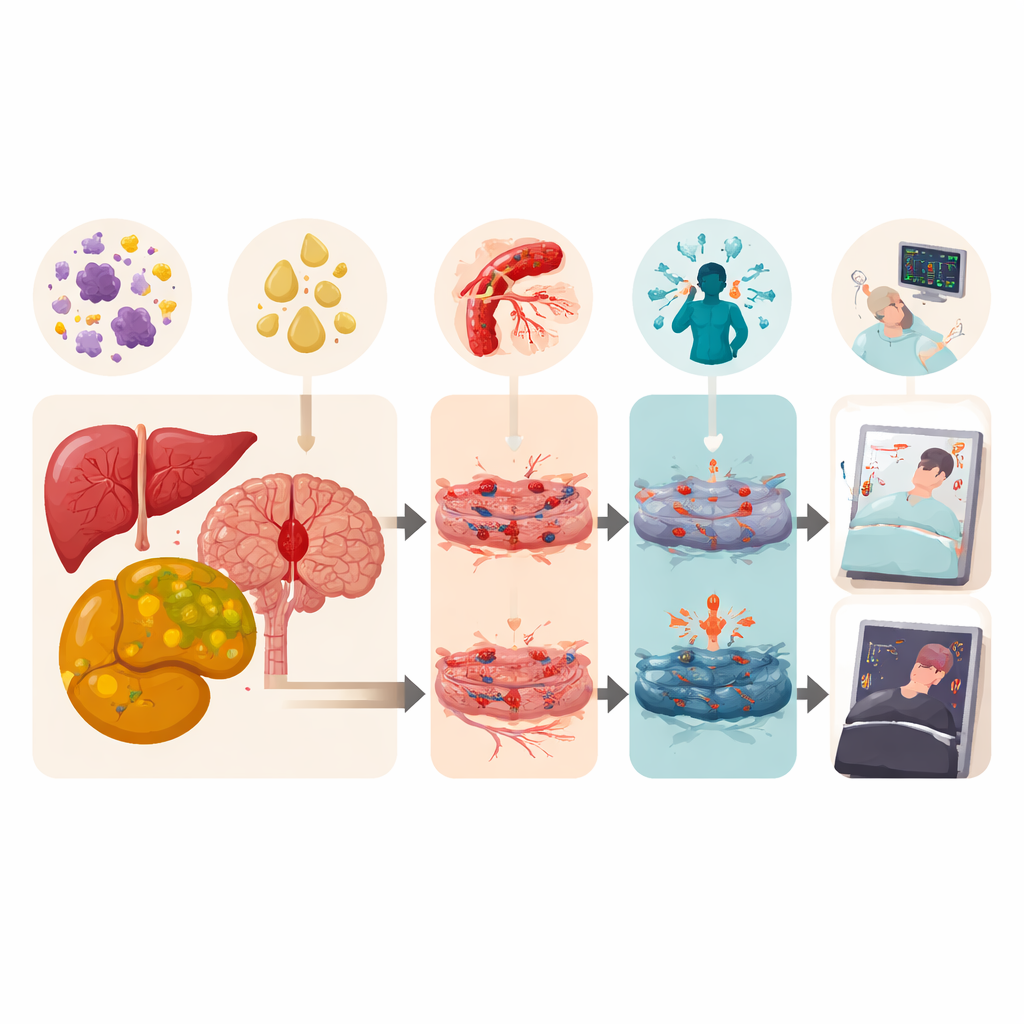
Checking the Findings in Another Hospital System
Because a single hospital’s experience can be misleading, the researchers tested PALBI again in a separate group of 4,729 stroke patients from the multi-center eICU Collaborative Research Database, which includes many hospitals across the United States. Despite some differences in what data were available, the pattern held: higher PALBI scores were clearly tied to higher in-hospital death rates, and patients in the highest PALBI group had about 70% greater odds of dying in the hospital than those in the lowest group. This external check suggests that the link between PALBI and stroke outcome is not a fluke of one institution or one dataset.
What This Means for Patients and Care Teams
In everyday terms, this study suggests that how well the liver is functioning during the critical early hours of stroke care is a strong signal of overall resilience. PALBI does not point to a simple treatment—lowering the score itself is not yet a therapeutic target—but it can help flag patients whose bodies have less reserve and who may be more vulnerable to complications like infections, bleeding problems, and organ failure. Because PALBI can be calculated from routine blood tests, it could be folded into existing stroke risk tools to guide closer monitoring, gentler drug choices, and earlier supportive measures. Future work will need to test how best to use this information and whether intervening on liver-related pathways can actually improve recovery after stroke.
Citation: Jiao, Y., Zhang, C., Bai, H. et al. The prognostic value of the PALBI score for mortality prediction in stroke: an internal and external validation study. Sci Rep 16, 10290 (2026). https://doi.org/10.1038/s41598-026-39342-5
Keywords: stroke prognosis, liver function, PALBI score, intensive care, mortality risk