Clear Sky Science · en
Association of Life’s Essential 8 with albuminuria in a Northern Chinese population: a cross-sectional study
Why this study matters for everyday health
Most people know that habits like eating well and staying active protect the heart. Fewer realize that the same habits may quietly shield the kidneys long before any symptoms appear. This study from northern China looked at how closely a person’s overall heart health score, called Life’s Essential 8, is linked to early signs of kidney damage detected in urine. Understanding this connection helps explain how everyday choices may prevent serious kidney disease years down the line.
Eight simple pillars of heart and kidney health
Life’s Essential 8 is a checklist created by the American Heart Association to capture overall cardiovascular health. It combines four everyday behaviors—diet, physical activity, smoking or secondhand smoke exposure, and sleep—with four measurable health factors: body weight, blood pressure, blood sugar, and blood cholesterol. Each component is scored from poor to ideal, and then combined into a total score that classifies people into low, medium, or high cardiovascular health. The idea is that the higher the score, the better protected a person is against heart and blood vessel diseases—and, as this study explores, possibly kidney problems as well.
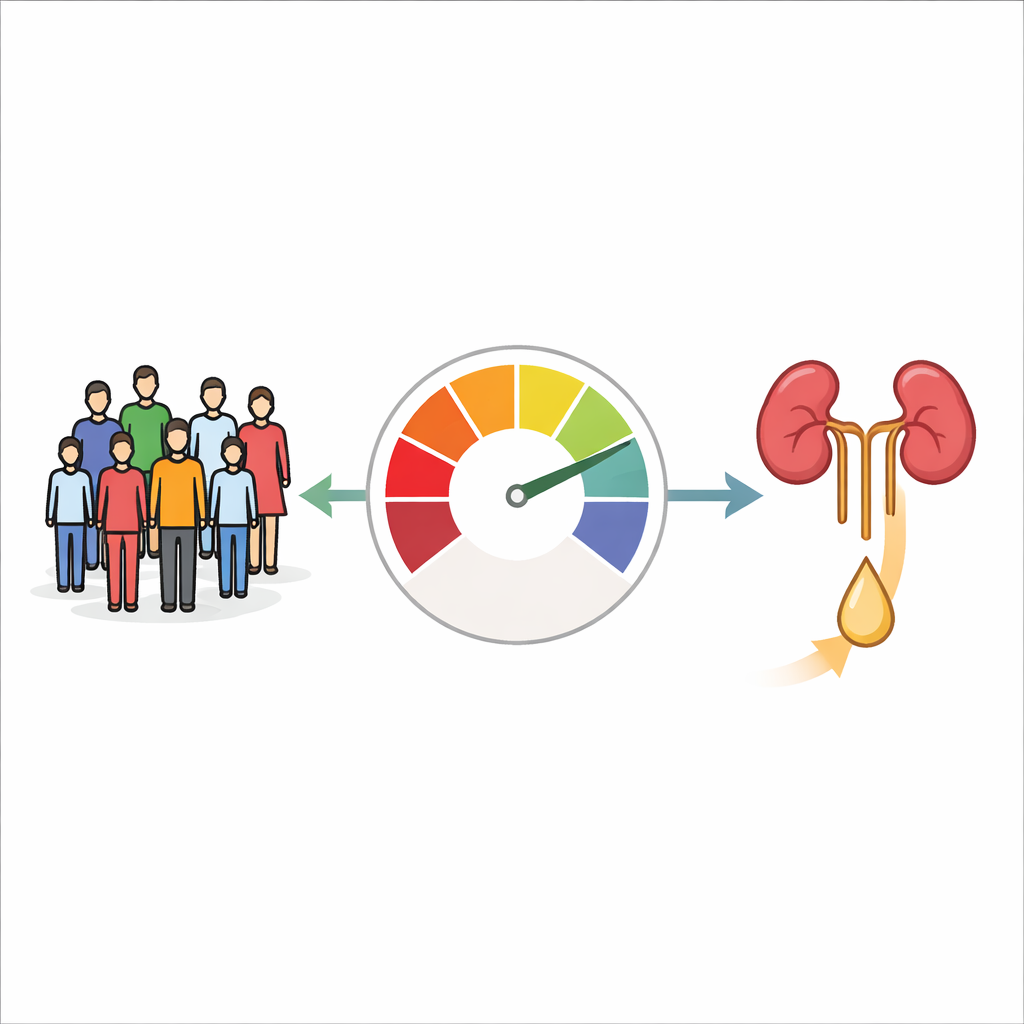
Looking for silent kidney stress in a large population
The researchers analyzed data from 8,648 adults aged 18 and older living in Shaanxi Province in northern China, drawn through a multistage sampling process of both urban and rural communities. None had a diagnosed chronic kidney disease at the start. All participants answered detailed questionnaires about lifestyle and medical history, had their blood pressure and body measurements taken, and provided fasting blood and morning urine samples. Kidney stress was assessed using the ratio of albumin (a blood protein) to creatinine in urine, a standard marker known as albuminuria. Even slightly elevated albumin in urine signals early kidney damage and a higher risk of future kidney failure and heart disease.
Healthier lives, healthier kidneys
Albuminuria was found in 11 percent of participants. When the researchers compared people with different Life’s Essential 8 scores, a clear pattern emerged: better overall cardiovascular health was linked to a much lower chance of albumin leaking into the urine. In the low-score group, about one in five had albuminuria, compared with roughly one in seven in the middle group and only about one in twenty in the high group. After accounting for age, sex, education, drinking, prior vascular disease, and kidney filtration rate, people with medium scores had about half the odds of albuminuria versus the low group, and those with high scores had about one quarter the odds. Each 10‑point increase in the Life’s Essential 8 score was associated with roughly a one‑third drop in the odds of albuminuria.
Which health factors mattered most
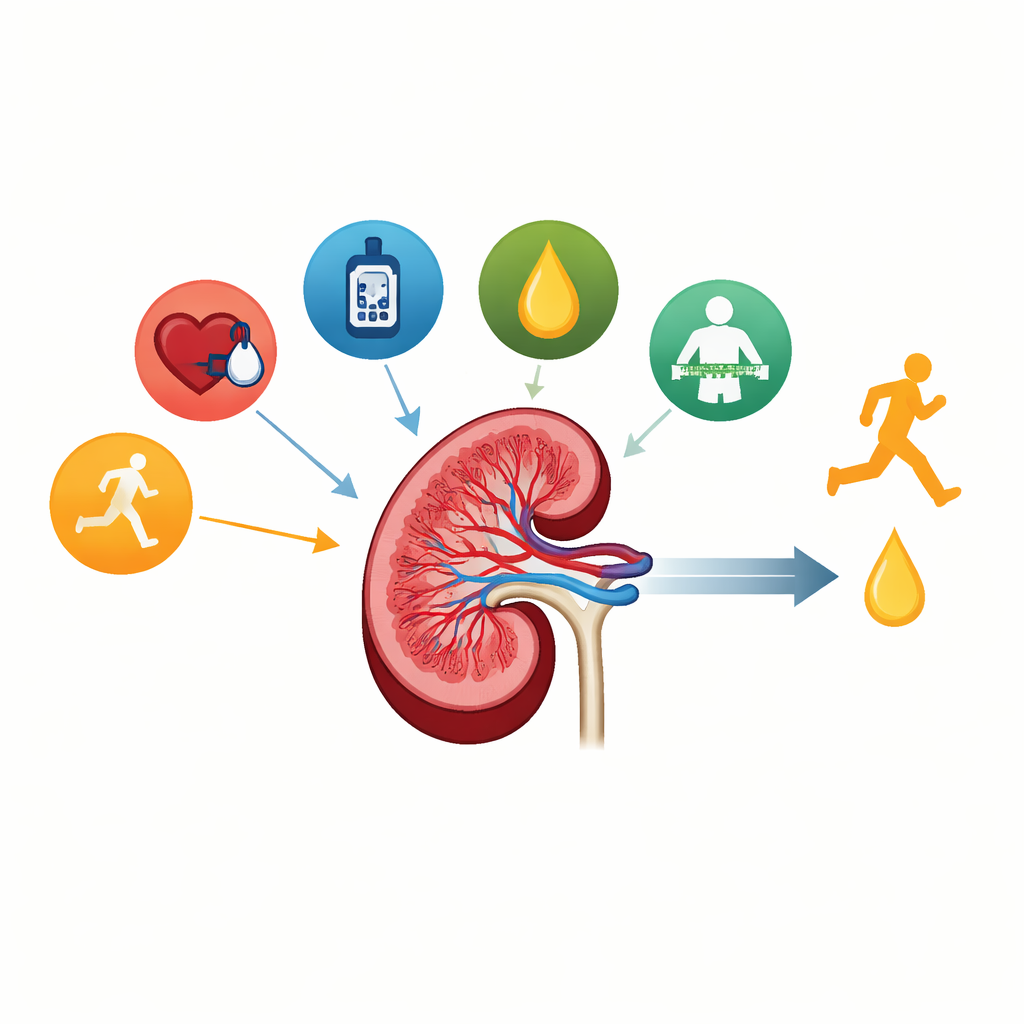
Not all components of the score contributed equally. The strongest links to lower albumin in urine came from well-controlled blood sugar, blood pressure, body weight, and blood lipids (the fats in the bloodstream). People with ideal levels in these areas had markedly lower odds of kidney stress. Higher physical activity scores were also tied to less albuminuria, supporting the idea that regular movement benefits kidney blood vessels. In contrast, in this specific population, the self-reported scores for diet, sleep, and nicotine exposure did not show the expected protective pattern, possibly because they relied on questionnaires prone to recall errors or cultural differences in reporting.
Men, women, and the so-called kidney paradox
Women in this study had higher rates of albuminuria than men across all health score groups, echoing previous research showing that women are more likely to show early lab signs of kidney problems, even though men often progress faster to outright kidney failure. Still, when the team examined men and women separately, higher Life’s Essential 8 scores were linked to lower albuminuria in both sexes, and the difference in strength of this relationship between men and women was not statistically meaningful. Some of the apparent sex gap may reflect biological factors, such as lower muscle mass and different hormone levels in women, which can influence how urine tests are interpreted.
What this means for everyday prevention
For non-specialists, the message is straightforward: the same mix of habits and health measures that keep the heart resilient also appears to protect the kidneys, even before disease is diagnosed. In this large Chinese sample, higher Life’s Essential 8 scores went hand in hand with lower levels of albumin in urine, a warning sign of future kidney damage. Keeping blood pressure, blood sugar, cholesterol, and body weight in check—along with staying active—may substantially reduce the hidden strain on the kidneys for both men and women. The findings suggest that tracking Life’s Essential 8 in clinics and community programs could help flag people at higher risk of kidney injury early, when lifestyle changes and treatment are most likely to make a lasting difference.
Citation: Man, Z., Zhang, S., Hu, G. et al. Association of Life’s Essential 8 with albuminuria in a Northern Chinese population: a cross-sectional study. Sci Rep 16, 11089 (2026). https://doi.org/10.1038/s41598-026-39217-9
Keywords: cardiovascular health, albuminuria, kidney disease prevention, Life’s Essential 8, blood pressure and kidneys