Clear Sky Science · en
The ActivLife exergame rehabilitation program improves functional abilities in pre-frail and frail older adults: a clinical trial
Why Video Games for Seniors Matter
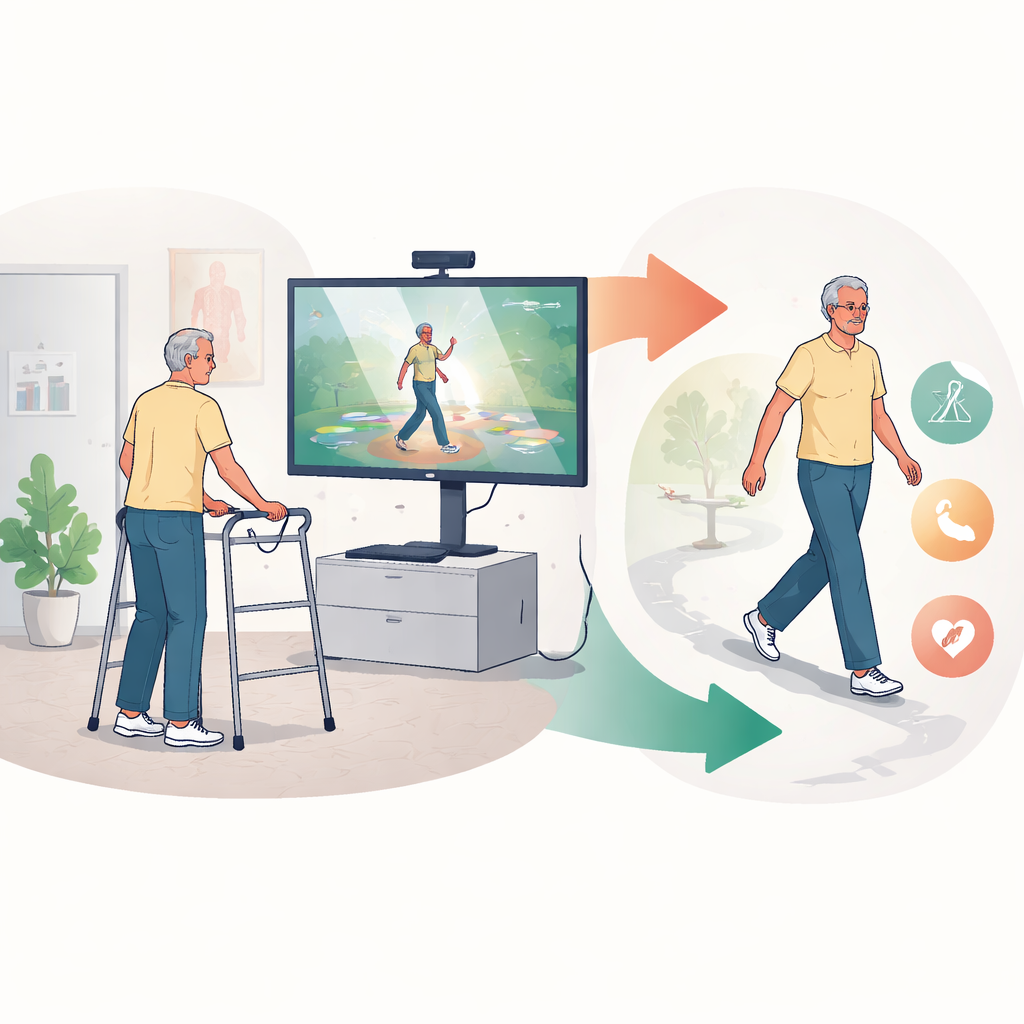
As people live longer, many older adults struggle to stay strong, steady on their feet, and independent in daily life. A growing concern is “frailty,” a state of weakness and tiredness that makes even simple tasks harder and raises the risk of falls, hospital stays, and loss of independence. This study explores an unexpected ally in the fight against frailty: video games that make players move their bodies. By turning exercise into play, these “exergames” may help older adults—especially those already showing early signs of frailty—regain strength, balance, and confidence.
Understanding Frailty and the Promise of Active Play
Frailty is more than just normal aging. It reflects a loss of physical reserve that makes the body less able to bounce back from everyday stresses such as illness or a minor fall. Research shows that targeted exercise can slow, delay, or even reverse frailty in some older adults, but many people avoid traditional workouts because of fear of injury, boredom, or lack of motivation. Exergames offer a different approach: players use their arms, legs, and trunk to control on-screen actions through motion sensors. This blends physical and mental challenges, provides instant visual feedback, and can turn repetitive exercises into something engaging and fun.
How the ActivLife Program Was Set Up
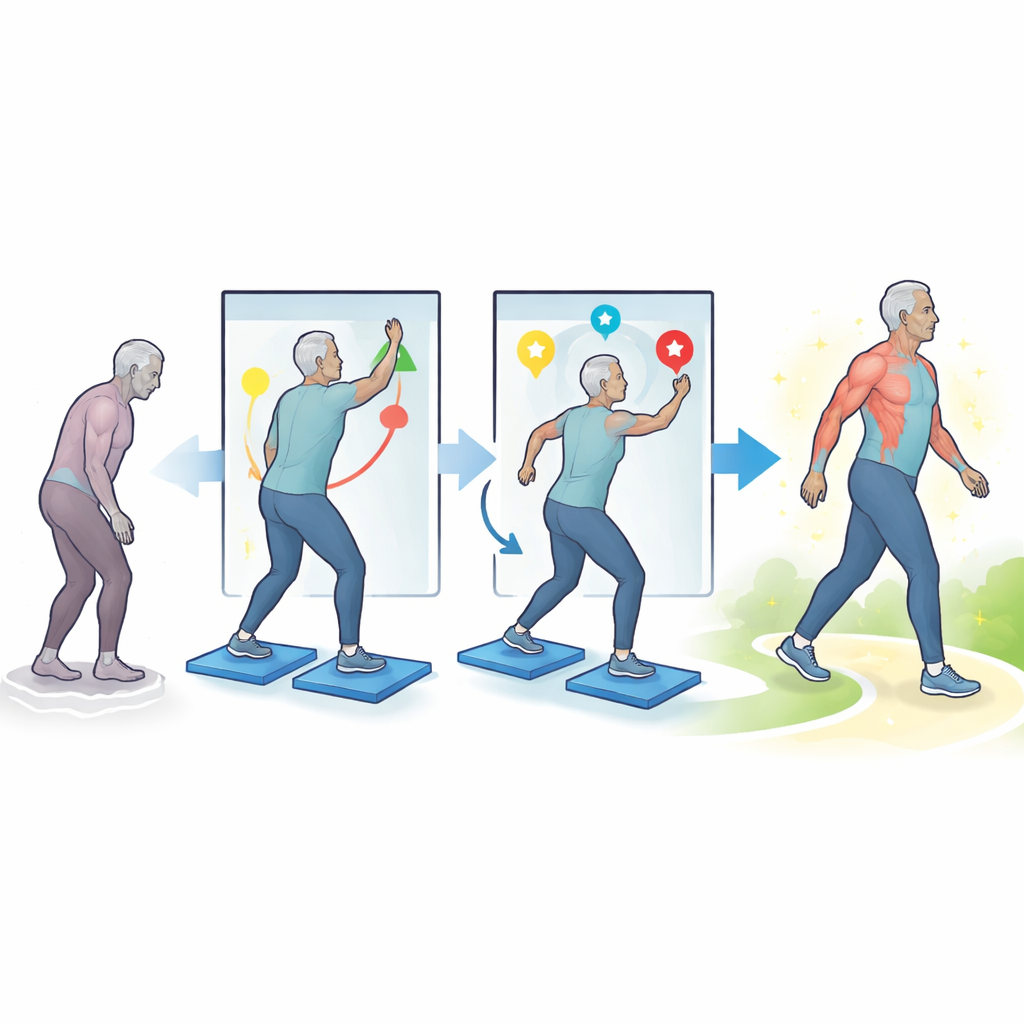
The researchers worked with 111 adults aged 65 to 89 at a primary care clinic in Poland. Participants were grouped as robust, pre-frail, or frail using a standard checklist that considers factors such as walking speed, grip strength, tiredness, and activity level. Everyone completed a six-week program using the ActivLife rehabilitation platform, which combines a safety harness, a motion sensor, and a set of specially designed games. Twice a week for 30 minutes, under supervision, participants performed movements like stepping, reaching, turning, lifting their arms, and shifting their weight, sometimes while solving simple puzzles. The games were gradually adjusted in difficulty so exercises stayed challenging but safe.
What Changed in Strength, Balance, and Walking
After six weeks, most participants showed stable or improved frailty status, and overall frailty dropped slightly but significantly. About 18% moved into a less frail category, while very few worsened. The biggest improvements appeared in people who were pre-frail at the start. In this group, tests of leg and arm strength, balance, and walking endurance all improved. They could stand up from a chair more times in 30 seconds, complete a balance-and-agility course faster, and march in place for longer, all signs of better physical function. Frail participants also gained, especially in handgrip strength and balance, and their risk of falling, as measured by a standard test, went down. Robust participants saw smaller but still measurable benefits, such as better endurance.
Who Stuck With the Program and Why That Matters
Not everyone finished the training. Out of 186 older adults who started, 111 completed the full program. Those who were frail at the beginning were the least likely to finish, often because of flare-ups of chronic disease, transportation problems, or limited family support. In contrast, pre-frail and robust participants had completion rates close to 80%. These patterns suggest that exergaming is especially practical and effective when introduced early—before health problems and mobility limitations make regular attendance difficult. The study also found that improvements did not depend strongly on age, sex, or education, hinting that the approach can work across a broad range of older adults.
What This Means for Everyday Life
For a layperson, the key message is that a short, game-like exercise program can help older adults, especially those just starting to show signs of slowing down, stay stronger and steadier on their feet. While the six-week ActivLife program produced only modest changes in frailty scores overall, it clearly improved strength, balance, and walking ability in many participants and reduced fall risk in both frail and pre-frail groups. The authors conclude that exergames are a promising, enjoyable tool that can be built into primary care and community programs to help older adults maintain independence. Longer and more rigorous studies are still needed, but this work suggests that moving in front of a screen might one day be a standard part of staying healthy in older age.
Citation: Bujnowska-Fedak, M.M., Sobieski, M., Fedak, A. et al. The ActivLife exergame rehabilitation program improves functional abilities in pre-frail and frail older adults: a clinical trial. Sci Rep 16, 12637 (2026). https://doi.org/10.1038/s41598-026-38989-4
Keywords: frailty, older adults, exergames, balance and strength, fall prevention