Clear Sky Science · en
Evaluation of rainwater harvesting system in university buildings for non-potable water demand
Turning Rain into a Campus Resource
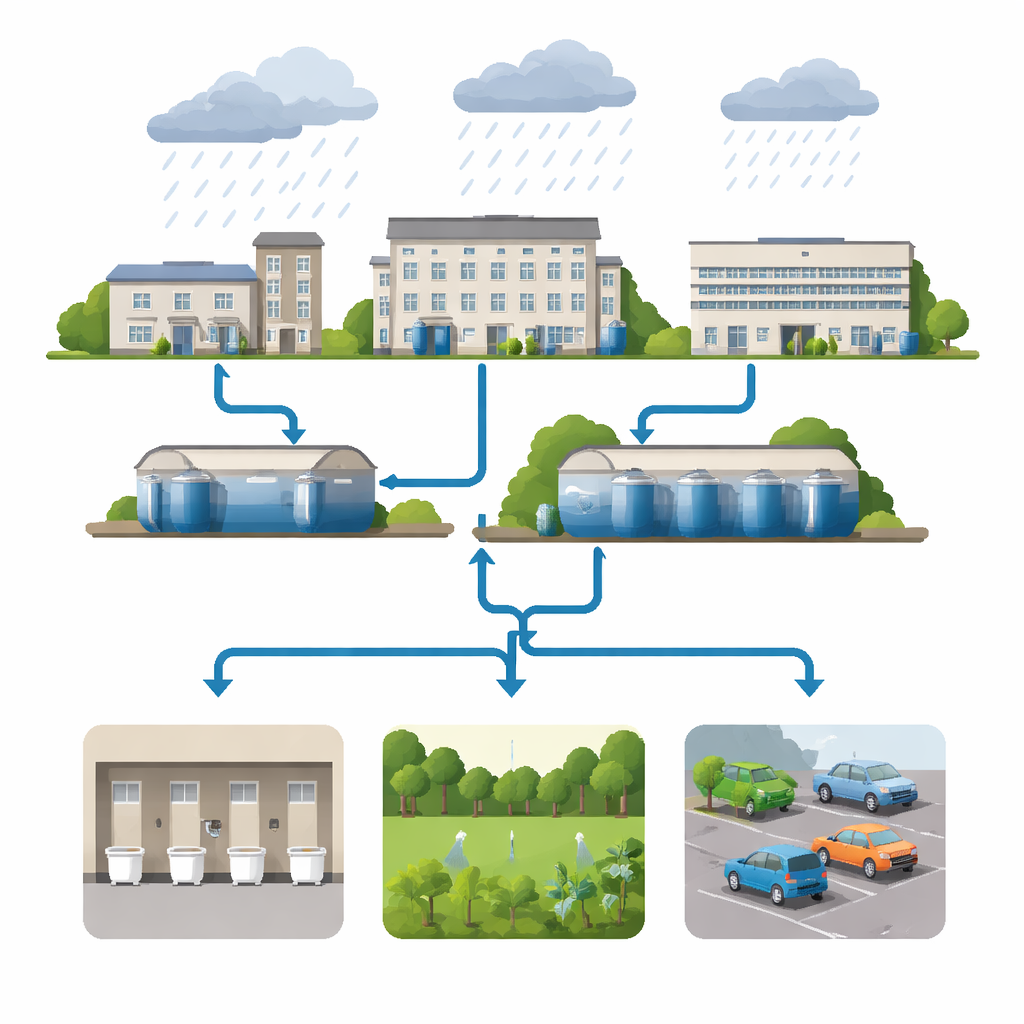
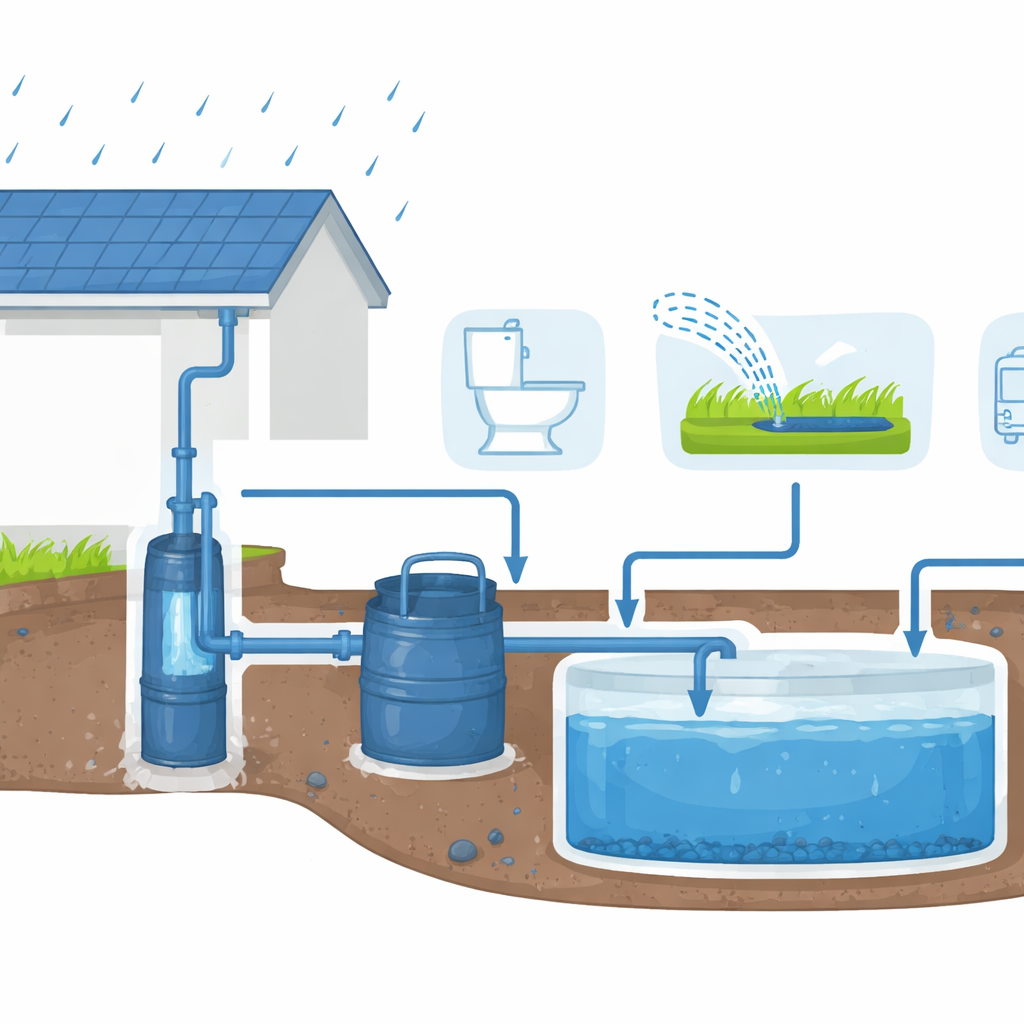
On many growing campuses and in crowded cities, clean tap water is treated as if it were limitless, even though supplies are under pressure from population growth and climate change. This study looks at a simple question with big implications: how much daily water use at a university could be met just by capturing the rain that already falls on its roofs? By following the water from roof to storage tank to everyday uses like toilets, garden sprinklers, and vehicle washing, the researchers show how a modest system can ease strain on drinking-water supplies—and where its limits lie.
Why Saving Tap Water Matters
Freshwater shortages are no longer a distant concern. As cities spread and pavements replace soil, less rain soaks into the ground, more rushes away as dirty runoff, and underground reserves are pumped faster than nature can refill them. At the same time, climate change is shifting rainfall patterns toward longer dry spells and heavier downpours. Bangladesh’s coastal city of Chattogram faces all of these challenges, along with polluted urban water bodies. In this setting, making better use of the clean rain that hits large roofs is an appealing way to cut demand on treated tap water and reduce the volume of stormwater that has to be drained away.
A Campus as a Living Laboratory
The researchers focused on Southern University Bangladesh, a private campus with five main academic buildings and a mix of lawns, roads, and drainage channels. They mapped the grounds, roof areas, and sewer network, then used a standard computer tool for urban drainage, the Stormwater Management Model, to follow how rainfall from 1982 to 2021 would flow across this small watershed. Special attention went to the last 15 years, when annual rainfall has been consistently high, though with an uneven pattern of wet and dry months. The team treated each building roof as a potential collector, routing its runoff into storage tanks sized to match the physical space available beside each structure.
Barrels, Underground Tanks, and Everyday Uses
Two storage setups were tested. In the first, rain from each roof was directed only into above-ground plastic barrels totaling 56,000 liters across the campus. In the second, these barrels were paired with larger underground tanks, boosting total storage to 140,000 liters. The team then compared how much of three non-drinking uses could be met: toilet flushing, lawn irrigation, and washing campus buses and cars. For toilets, they assumed standard low-volume flushes used twice a day per person; for gardens, they used national guidelines for watering grass and plants; for vehicles, they used measured water volumes per wash, with only a couple of wash days each month.
How Much Rainwater Can Really Help?
The simulations show that storage size and user numbers are critical. With barrels alone, the largest-roof buildings could supply roughly 10–40 percent of flushing needs for typical daily crowds, while smaller roofs with small tanks did far less. Adding underground tanks raised toilet coverage to nearly all needs for about 30 daily users per building, and still about one-third for 100 users. Garden watering was even more sensitive to storage and the number of dry months: at 50,000 liters of storage, the system met around one-third to two-fifths of lawn demand in typical years, but with 140,000 liters it could meet nearly all of it. For vehicle washing, modest storage was enough to supply nearly all the water to clean about ten cars, and, with larger tanks, up to 28 cars or 14 buses could be washed entirely using rainwater.
Reliability, Money, and Practical Limits
Beyond yearly averages, the study examined how often the rainwater system would actually meet daily demand. With 50,000 liters of storage, toilets for a small group of users could be fully supplied every day of the year, but reliability dropped as the user count rose. For gardens, a 140,000-liter system could keep irrigation running through most dry months in typical years. Vehicle washing was the most reliable use, since it occurred infrequently. Financially, the direct savings from replacing municipal water for these non-drinking uses were modest—tens of dollars per year at current low water tariffs—because tank sizes are limited by available space. However, if similar stored rainwater were treated and used as drinking water, potential savings at current campus purchase prices would jump into the thousands of dollars per year.
What This Means for Campuses and Cities
For a lay reader, the takeaway is straightforward: even a small urban campus can cover a sizable share of its everyday water needs by capturing rain from existing roofs, especially when storage is right-sized and uses like vehicle washing and garden care are prioritized. While the immediate cash savings on non-drinking uses may be modest, the benefits include easing pressure on scarce treated water, improving resilience during dry spells, and cutting polluted runoff. As more campuses and commercial sites adopt similar systems—and possibly add treatment to make roof runoff drinkable—rainwater harvesting can become a practical piece of the puzzle for sustainable urban water management.
Citation: Chowdhury, M.A.H., Akter, A. Evaluation of rainwater harvesting system in university buildings for non-potable water demand. Sci Rep 16, 12836 (2026). https://doi.org/10.1038/s41598-026-38972-z
Keywords: rainwater harvesting, campus water use, stormwater management, non-potable water, urban sustainability