Clear Sky Science · en
The probiotic Lactiplantibacillus plantarum ATCC10241 inhibits wound-associated pathogens through the secretion of organic acids
Friendly Bacteria for Faster Healing
Chronic wounds and burns are often slow to heal because they become overrun with hard-to-treat microbes. This study explores whether a “good” bacterium, originally found in sauerkraut, can help keep dangerous wound germs in check. By understanding exactly how this probiotic behaves, researchers hope to turn it into a simple, low-cost aid that could both fight infection and support the body’s own healing process.
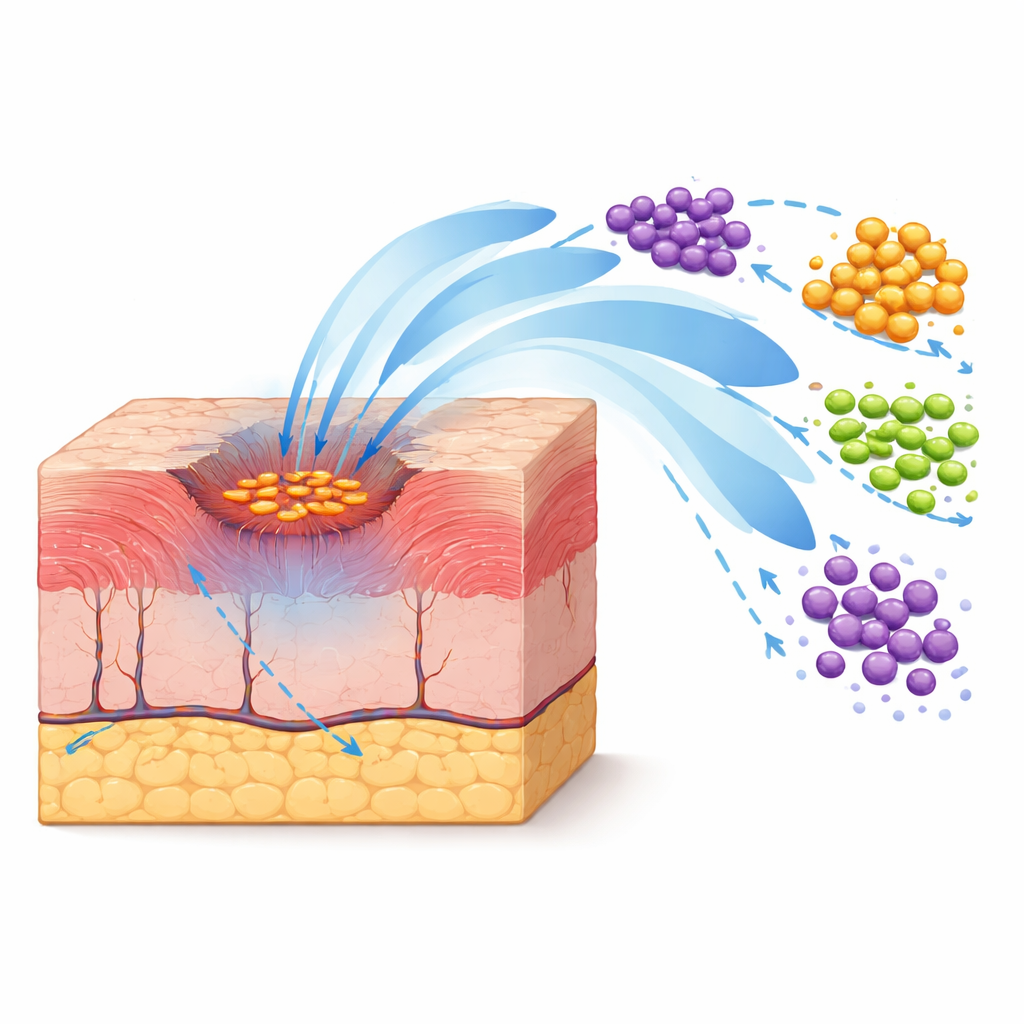
A Helpful Microbe Steps Into the Wound
The focus of the work is a probiotic strain called Lactiplantibacillus plantarum ATCC10241. Unlike the probiotics usually associated with gut health, this one is applied directly to the skin. Earlier studies had already shown that it can strongly inhibit Pseudomonas aeruginosa, a notorious cause of infected burns and chronic ulcers. The authors wanted to know whether its protective reach extends to other key wound microbes, especially Acinetobacter baumannii, which is often multidrug-resistant, and Staphylococcus aureus, a common skin and wound bacterium.
Putting the Probiotic to the Test
To probe its powers, the team grew the probiotic together with different pathogens on agar plates, in shaken liquid cultures, and in cell-free liquid taken from probiotic cultures ("spent broth"). Across these setups, L. plantarum ATCC10241 consistently held back the growth of P. aeruginosa and A. baumannii, often driving their numbers below the limits of detection for at least two days. It also slowed S. aureus, though this species proved more tolerant. The researchers then challenged a panel of 27 clinical isolates taken from real wounds and saw a similar pattern: almost complete suppression of most P. aeruginosa and A. baumannii strains, but only modest effects on S. aureus, and in one case even a slight growth boost—possibly because that strain was starved for nutrients that the probiotic happened to supply.
Hunting for the Secret Weapon
Many probiotics produce tiny protein weapons called bacteriocins that can puncture and kill rival microbes. A genome scan showed that this strain of L. plantarum carries a full gene cluster for making well-known bacteriocins called plantaricins. The authors confirmed that these genes are weakly switched on during lab growth, both alone and in the presence of pathogens. Yet when they treated the probiotic broth with heat and with a broad-spectrum protein-cutting enzyme, its ability to inhibit pathogens hardly changed. In contrast, simply neutralizing the acidity of the broth completely removed its antimicrobial punch, and buffering the growth medium also erased its protective effect.
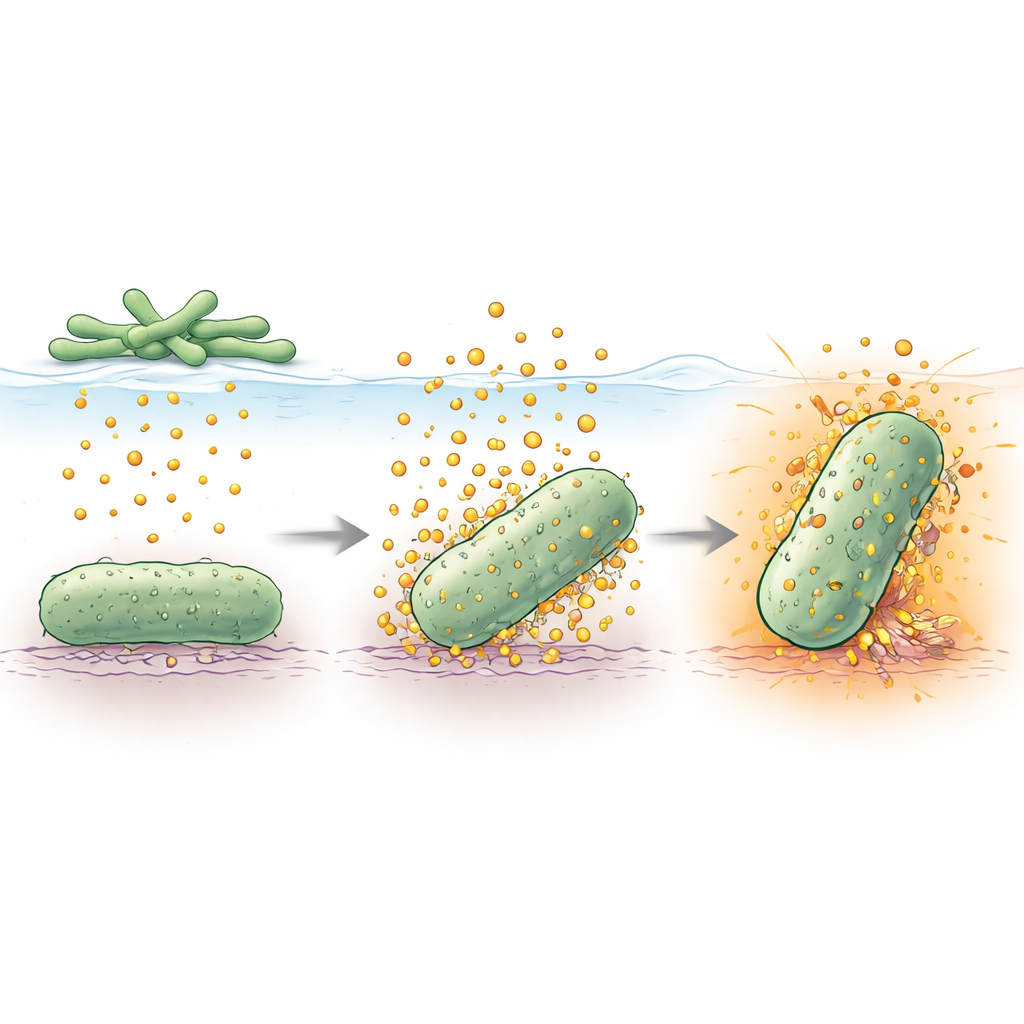
Acidifying the Neighborhood
These clues pointed to a simpler explanation: acid. L. plantarum is a lactic acid bacterium that ferments sugars into organic acids, especially lactic acid, which lowers the surrounding pH. The researchers measured that cultures of this strain drove the pH of their medium down to around 3.8, more strongly than a comparison probiotic, Lacticaseibacillus rhamnosus GG. When they mimicked this change by adding pure lactic acid to sterile broth, they could reproduce almost exactly the same level of pathogen inhibition. Further tests showed that for the same pH, lactic acid was more damaging to pathogens than simple hydrochloric acid, indicating that both the low pH and the nature of the organic acid itself matter. Some bacteria, like S. aureus, tolerate acidic surroundings better than others, which explains why they were less affected.
What This Means for Treating Wounds
Altogether, the study shows that this probiotic strain protects against a broad range of wound-associated microbes mainly by souring its surroundings with organic acids, rather than by relying on complex protein toxins. That acid bath is particularly effective against troublesome species such as P. aeruginosa and multidrug-resistant A. baumannii, and might also support healing because chronic wounds are often too alkaline. At the same time, the bacterium’s genes for plantaricins remain a kind of untapped toolkit that could become important under the right conditions in the body or via future engineering. These insights strengthen the case for using L. plantarum ATCC10241 as a topical probiotic to help control wound infections while complementing standard care.
Citation: Van Ginneken, S., Lories, B. & Steenackers, H.P. The probiotic Lactiplantibacillus plantarum ATCC10241 inhibits wound-associated pathogens through the secretion of organic acids. Sci Rep 16, 14201 (2026). https://doi.org/10.1038/s41598-026-38966-x
Keywords: probiotic wound therapy, Lactiplantibacillus plantarum, organic acids, Pseudomonas and Acinetobacter, chronic wound infection