Clear Sky Science · en
LK-1: an investigational therapy targeting hCG-β in metastatic breast, bladder, ovarian, and cervical cancers
Why a Pregnancy Hormone Matters for Cancer
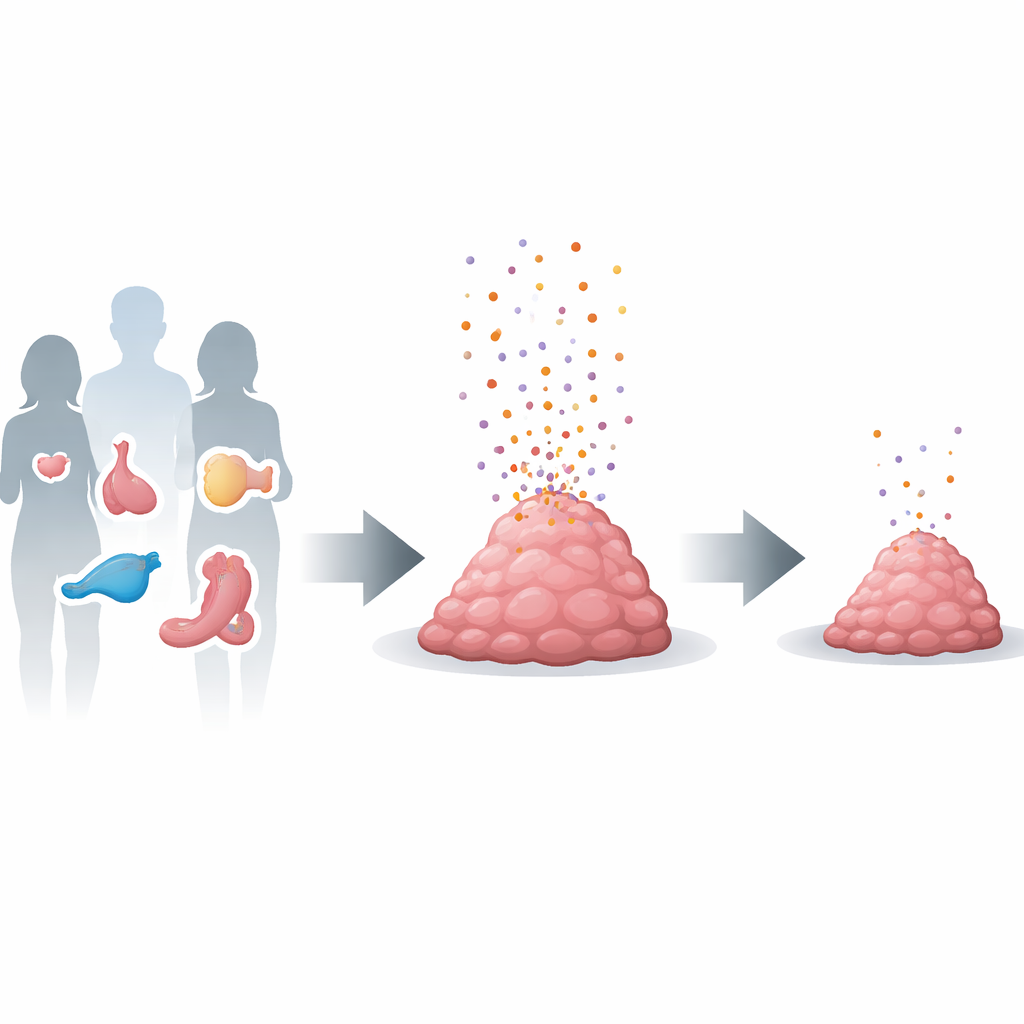
Most people know human chorionic gonadotropin, or hCG, as the “pregnancy hormone” that turns home tests positive. But a particular piece of this hormone, called the beta subunit, can also be produced by many cancers. When tumors make this hormone fragment, patients often do worse. This study explores a new experimental drug, called LK-1, designed to switch off production of this harmful signal at its genetic source, with the hope of slowing or even shrinking cancers of the breast, bladder, ovary, and cervix.
A Hormone Gone Rogue
During a healthy pregnancy, hCG helps sustain the developing embryo. In several types of tumors, however, cells start making hCG-beta inappropriately. Its appearance has been linked with advanced disease, resistance to treatment, and shorter survival in cancers such as bladder, breast, ovarian, cervical, and others. Lab studies suggest that tumor-made hCG-beta can protect cancer cells from self-destruction, help them invade nearby tissue, spread to distant sites, stimulate new blood vessel growth, and slip past the immune system. Because it plays roles in so many aggressive behaviors, hCG-beta has long been viewed as an attractive, but technically challenging, drug target.
Turning Off the Signal at Its Source
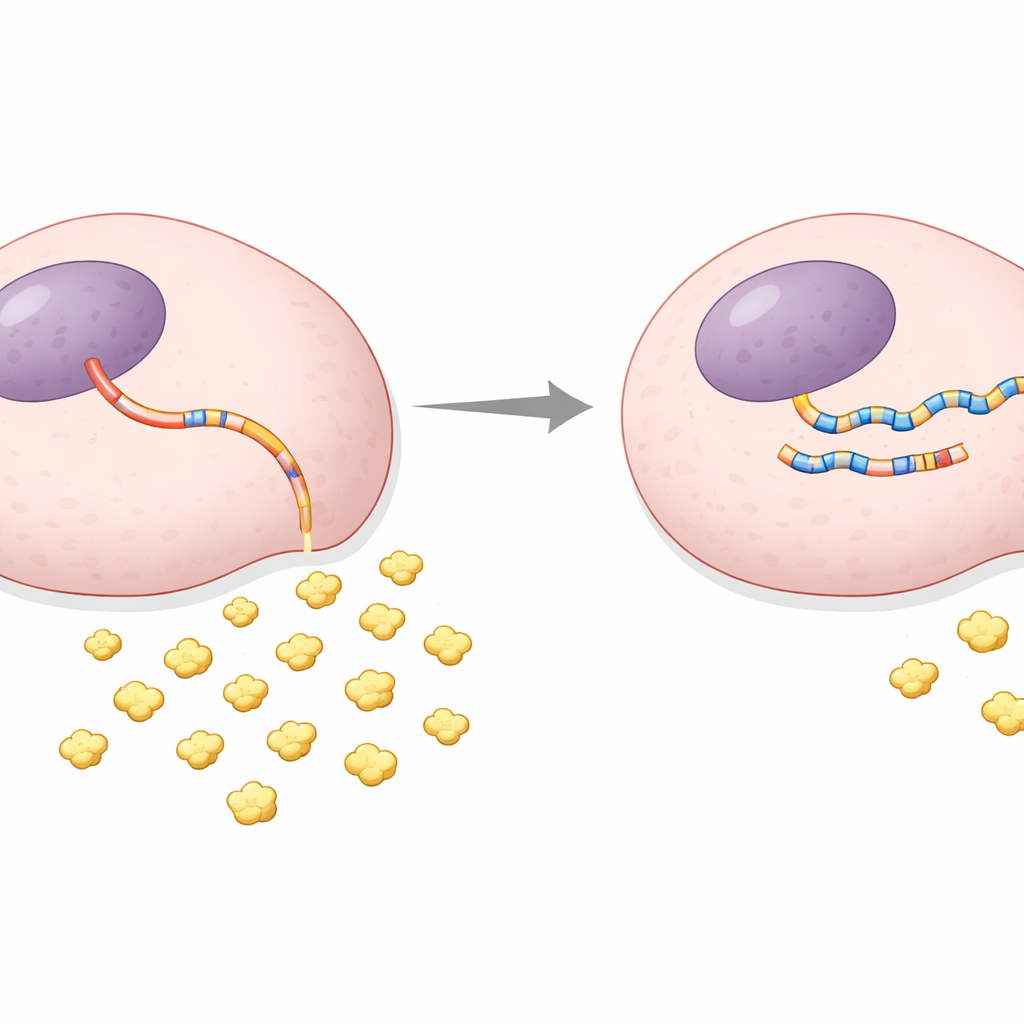
Earlier attempts to attack hCG-beta mainly relied on vaccines or antibodies that recognize the protein after it is made. These approaches have faced obstacles because hCG exists in several closely related forms, with complex sugar decorations that vary from person to person and tissue to tissue. The team behind this study pursued a different strategy: block hCG-beta before it is ever built. They used a technology called morpholino antisense oligomers—short, synthetic strands that bind to the messenger molecules carrying a cell’s instructions for making a protein. Their lead compound, LK-1, is engineered to latch onto multiple hCG-beta-related messages inside cancer cells and physically prevent the cell’s protein-making machinery from reading them.
Finding the Best Genetic Blocker
Designing such a blocker is not as simple as matching one sequence. The genes that encode hCG-beta come in several closely related copies and variants. The researchers first created 19 different morpholino designs, each aimed at slightly different portions of the hCG-beta message. They tested these in a panel of cancer cell lines drawn from triple-negative and hormone-positive breast cancers, bladder, ovarian, cervical cancers, and a pregnancy-related tumor. Measures of cell survival and of hCG-beta released into the culture medium—detected with methods ranging from standard lab tests to off-the-shelf pregnancy strips—revealed that only some designs were potent. One, labeled PMO 8 and later renamed LK-1, stood out by sharply lowering hCG-beta levels at relatively low doses while also reducing cancer cell viability.
How LK-1 Affects Tumor-Like Behavior
With LK-1 selected, the team examined its impact more deeply. Across multiple hCG-beta–producing cancer cell lines, LK-1 treatment led to fewer living cells, more markers of cell death, and dramatic drops in both secreted and cell-associated hCG-beta protein, as confirmed by sensitive biochemical assays. Importantly, a bladder cancer line that does not make hCG-beta was unaffected, suggesting that LK-1’s toxicity depends on its intended target. When researchers added conditioned fluid rich in hCG-beta back to treated cells, some of the lost cell survival was restored, reinforcing the idea that depriving tumors of their own hormone-like support contributes to their demise. LK-1 also curtailed the ability of cells to form colonies over time and slowed their movement into scratch “wounds” in a dish, hinting that it could lessen invasive and metastatic behavior.
From Flat Dishes to Miniature Tumors
Because real tumors grow in three dimensions, the scientists also used a spheroid system—tiny, ball-shaped clusters of cancer cells that better mimic tumor structure. When breast cancer cells were exposed to LK-1 before spheroids formed, the resulting spheres were smaller and showed more dead cells near their surface. Treating already-formed spheroids was less dramatic in size but still increased cell death, especially around the outer rim, where hCG-beta likely acts locally as a growth-promoting signal. Interestingly, LK-1 did not appear to stall the cell cycle, suggesting that its main effect is to tip cells toward death rather than simply pausing their division.
What This Could Mean for Future Cancer Care
Taken together, the findings point to LK-1 as a promising, highly targeted way to disarm cancers that rely on hCG-beta for survival and spread. By shutting down production of this hormone fragment at the message level, LK-1 sidesteps some of the complexity that has hampered vaccine and antibody strategies. Still, all of the work so far has been done in cell-based systems, which cannot fully capture the realities of the human body, including immune responses, drug distribution, and long-term safety. The next steps—testing LK-1 in animal models and eventually in people—will be needed to learn whether this clever genetic silencing approach can become a practical weapon against hCG-beta–expressing tumors.
Citation: Kinion, J.H., McAllister, M.B., Summerton, J.E. et al. LK-1: an investigational therapy targeting hCG-β in metastatic breast, bladder, ovarian, and cervical cancers. Sci Rep 16, 10061 (2026). https://doi.org/10.1038/s41598-026-38909-6
Keywords: hCG-beta, antisense therapy, morpholino, cancer progression, targeted treatment