Clear Sky Science · en
Reinforcing smart grid resilience through blockchain-supported deep learning models for theft detection
Why stolen power matters to everyone
Most of us take it for granted that when we flip a switch, the lights come on—and that our bill more or less matches what we used. But around the world, a surprising share of electricity simply “disappears” through theft and tampering with meters. These invisible losses cost billions of dollars, strain power networks, and can even cause blackouts. This study explores how combining modern artificial intelligence with blockchain—best known from cryptocurrencies—can help utilities spot suspicious usage patterns quickly, protect honest customers, and keep the grid running smoothly.
A new kind of power network
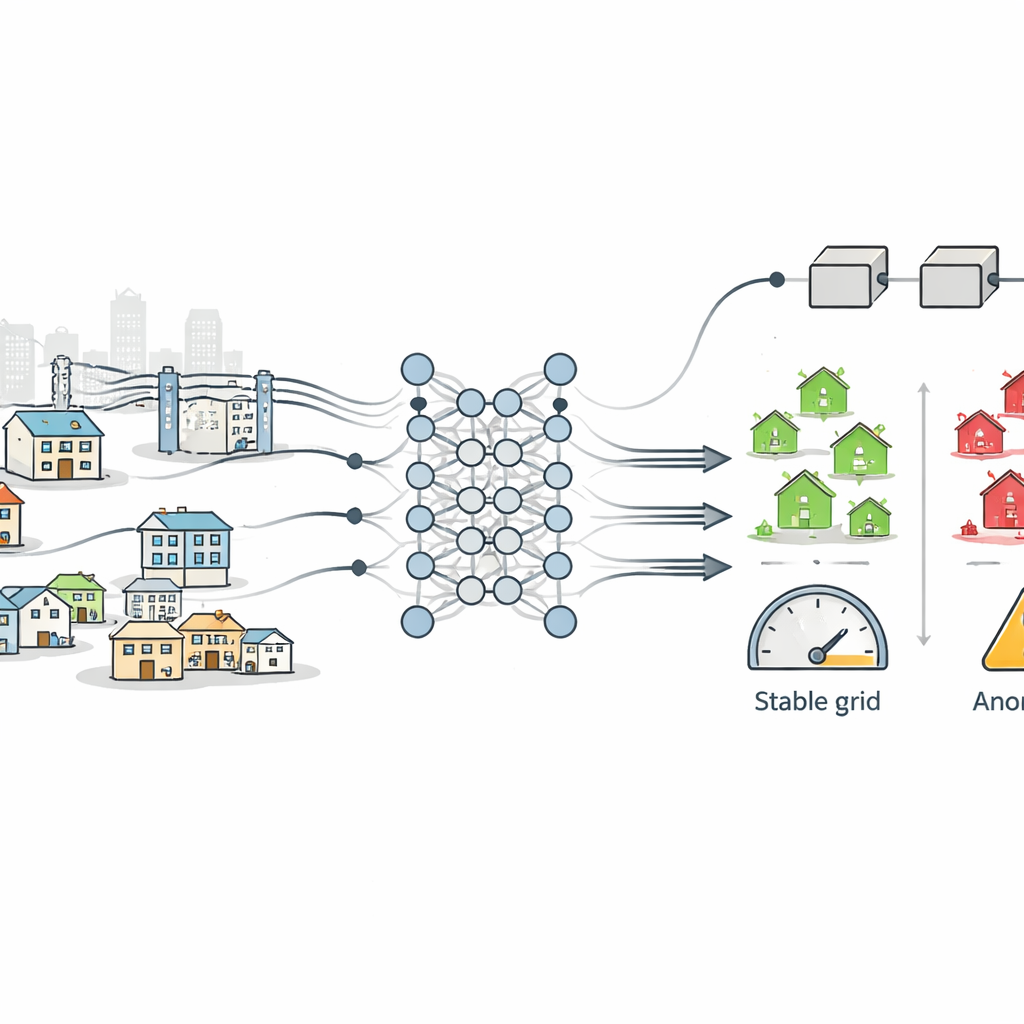
Traditional power grids were built for one-way flow: big power plants sending electricity outward to homes and businesses. Today’s smart grids add a second ingredient—data. Smart meters report detailed, time-stamped information about how much electricity each customer uses. That richness is both a blessing and a challenge. It makes it possible to hunt for unusual patterns that hint at theft, but the volume and complexity of the data can overwhelm older detection methods that relied on simple rules or hand-crafted statistics. On top of that, utilities must protect customer privacy and prove that any evidence of fraud hasn’t been altered.
Teaching machines what “normal” looks like
The authors tackle these problems with a deep learning model called an LSTM-autoencoder. Instead of being told in advance which customers are honest or dishonest, this model is trained only on normal behavior and learns to compress and then reconstruct typical daily and seasonal usage patterns. Before training, the team carefully cleans the data: they fill in missing readings, smooth away extreme glitches, rescale values into a common range, and add simple features such as time of day, day of week, and measures of how steady or “spiky” a customer’s demand is. They also artificially generate examples of theft-like behavior—such as reversing usage patterns or quietly shrinking daytime consumption—to create a more balanced picture of what the model might encounter.
Spotting quiet cheats in the crowd
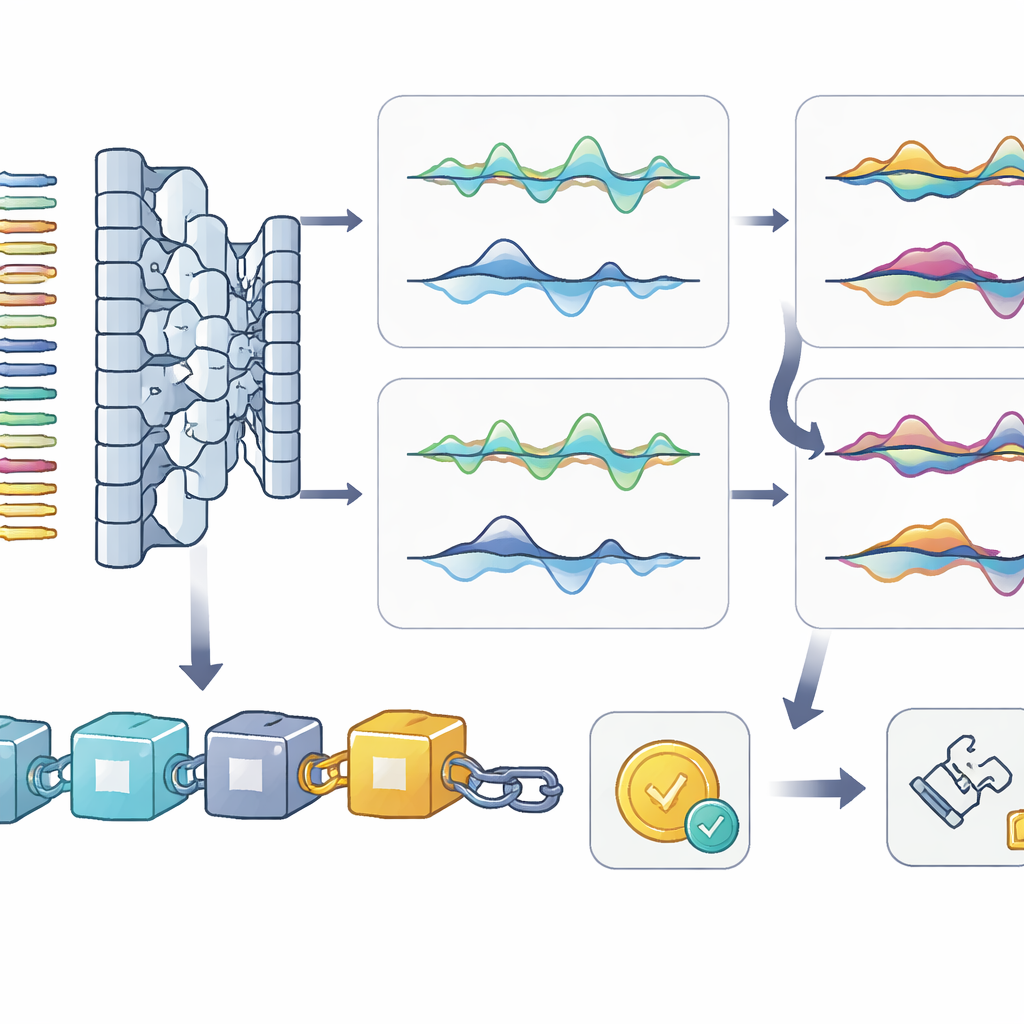
Once trained, the autoencoder acts like a very strict memory of typical behavior. For a normal customer, it can recreate the input pattern almost perfectly. When someone tampers with a meter or hides part of their usage, the pattern no longer fits what the model expects, and the reconstruction error jumps. By setting a threshold on this error, the system flags likely theft without needing labeled examples for every possible trick. In tests on a real-world consumption dataset covering many types of customers over a year, the approach reached about 95% accuracy and a high F1-score, meaning it correctly caught most theft cases while avoiding too many false alarms.
Locking in trust with blockchain
To make the detection results trustworthy, the framework adds a lightweight blockchain layer. Instead of stuffing raw meter readings onto an energy-hungry digital ledger, only the key outputs—such as the model’s decision, its error score, and a time stamp—are written to the chain. These entries are cryptographically linked so that any attempt to alter past records would be obvious. Smart contracts on the blockchain can automatically trigger follow-up actions, such as sending alerts, applying penalties, or granting rewards to consistently honest users, without exposing private usage details. This separation keeps computation efficient while providing an auditable trail that regulators and customers can trust.
What this means for everyday users
For ordinary households and businesses, the message is hopeful: smarter, data-driven tools can cut down on electricity theft without turning the grid into a privacy nightmare. By teaching machines to recognize normal behavior and then securing their findings on a tamper-proof ledger, the proposed system helps utilities limit financial losses, keep prices fairer, and reduce strain on power lines. In simple terms, it is like giving the grid both a sharper eye and a better memory—one that can tell when something is off, prove what it saw, and respond quickly, all while keeping honest customers’ detailed habits out of public view.
Citation: Bibi, F., Rehman, S.U., Bibi, S. et al. Reinforcing smart grid resilience through blockchain-supported deep learning models for theft detection. Sci Rep 16, 10515 (2026). https://doi.org/10.1038/s41598-026-38824-w
Keywords: electricity theft, smart grid, deep learning, blockchain, energy security