Clear Sky Science · en
Huperzine A improves neurological function in mice with intracerebral hemorrhage by alleviating neuroinflammation and ferroptosis
Why protecting the brain after a bleed matters
When a blood vessel bursts deep inside the brain, the sudden bleed—called an intracerebral hemorrhage—can leave survivors with lasting problems in movement, memory, and thinking. Unlike more familiar “clot-type” strokes, there are few effective medicines to limit the damage from this kind of brain bleed. This study asks whether huperzine A, a plant-derived compound already used in China to support memory in Alzheimer’s disease, might also shield the brain from some of the worst consequences of a hemorrhagic stroke.
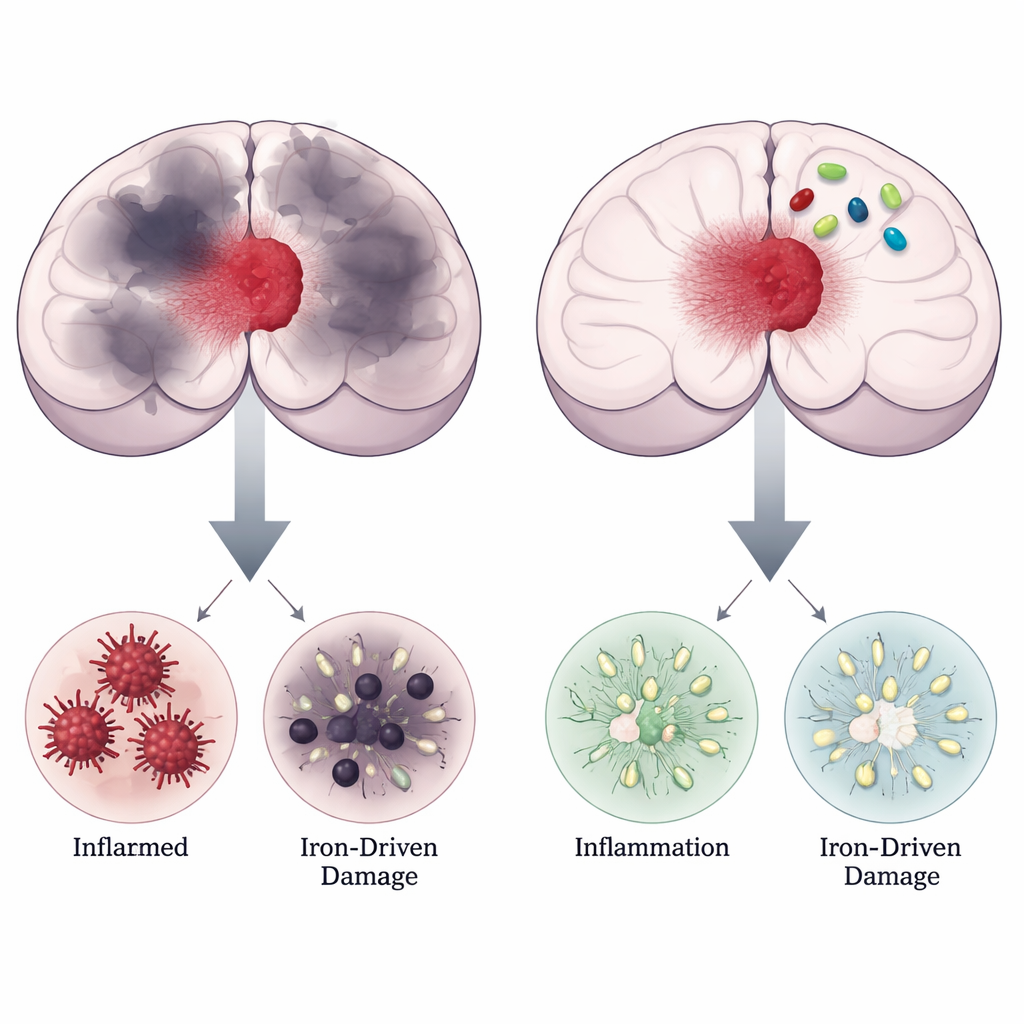
A brain injury with two waves of damage
The authors explain that a brain bleed does more than simply crush nearby tissue. First, the pooled blood directly injures cells. Then, in the hours and days that follow, breaking down red blood cells release iron and other contents that spark inflammation and a toxic form of cell death linked to iron overload. This delayed wave of damage can steadily erode brain function. Inflammation comes from overactive support cells in the brain, while excess iron promotes a destructive chemical process that scars and shrinks energy-producing structures inside neurons. Blocking these secondary hits could preserve more brain tissue and improve recovery.
An Alzheimer’s drug candidate put to a new test
Huperzine A is best known as a compound that boosts chemical signaling involved in memory, and it can readily cross from the bloodstream into the brain. In this study, researchers used a mouse model in which a small amount of an enzyme is injected to trigger a controlled hemorrhage in a deep brain region. Mice were divided into three groups: a sham group without a true bleed, a hemorrhage group without treatment, and a hemorrhage group that received daily huperzine A starting one day after the bleed—timing meant to mimic the delay before many patients reach the hospital. Over two weeks the team tracked movement, coordination, and learning, and then examined brain tissue for signs of neuron survival, inflammation, and iron-related damage.
Better behavior and more surviving brain cells
Mice given huperzine A showed clearer functional benefits. On a standardized neurological score, treated animals performed better than untreated hemorrhage mice at one and two weeks, suggesting improved movement and reflex control. In a water maze test of spatial learning and memory, treated mice found a hidden platform faster, swam shorter paths, and spent more time searching in the correct area, indicating stronger cognitive recovery. When the researchers looked directly at the brain, they found that huperzine A–treated mice had more healthy-appearing neurons in key memory regions, supporting the idea that the drug helped spare nerve cells from delayed death after the bleed.
Dialing down inflammation and iron-driven cell death
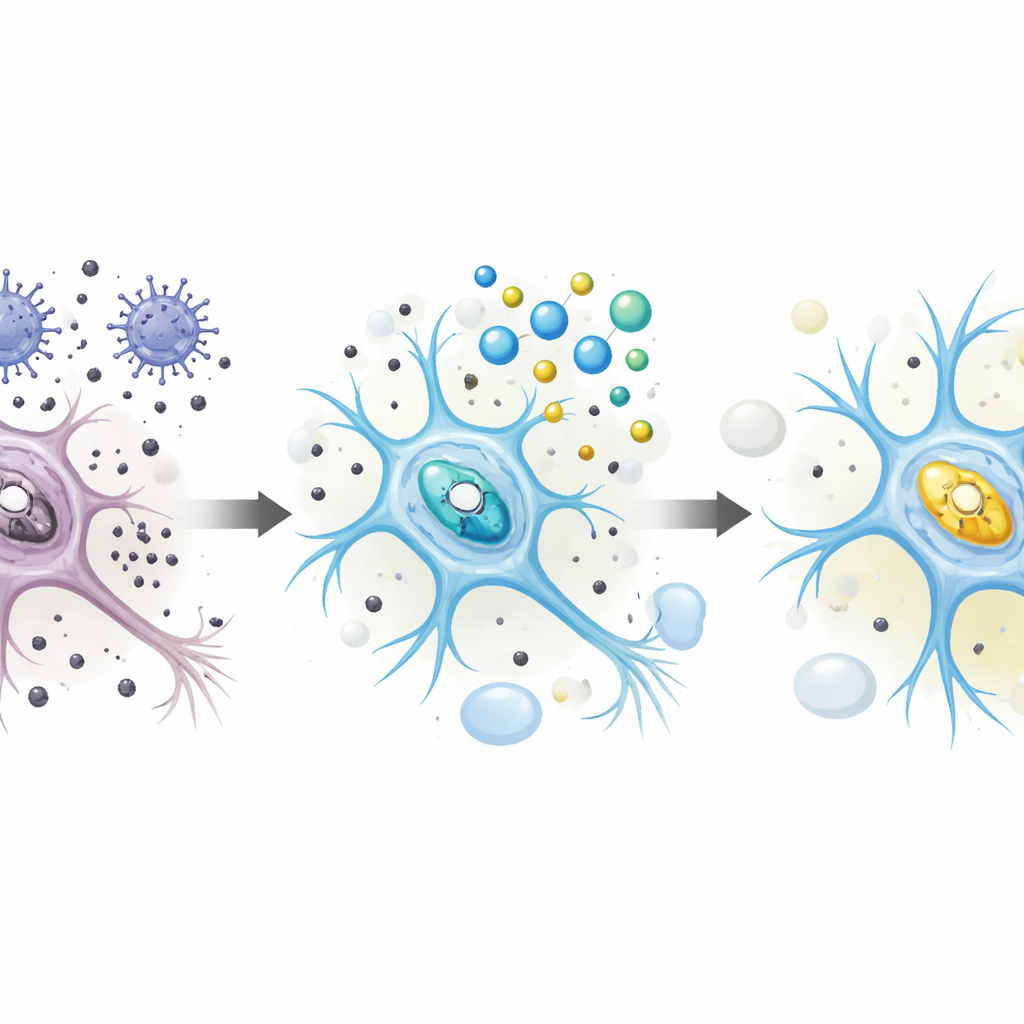
The team then probed how huperzine A might be providing this protection. They observed fewer activated immune-like cells in the brains of treated mice and lower levels of two major inflammatory molecules, suggesting that the drug calmed the local inflammatory storm that normally follows a hemorrhage. At the same time, staining for iron and ultrastructural imaging showed that huperzine A reduced iron buildup and lessened the typical shrinkage of mitochondria, a hallmark of an iron-linked cell death process called ferroptosis. Measurements of key proteins fit this picture: the drug was associated with less iron entry into cells, more iron export, and higher levels of a protective enzyme that neutralizes damaging lipid reactions, without broad changes in all iron-related pathways.
What this could mean for future stroke care
Taken together, the results suggest that huperzine A helps mice recover from brain hemorrhage by both quieting harmful inflammation and easing iron-triggered cell destruction, leaving more neurons alive and functioning. While the study cannot yet prove cause-and-effect for each pathway, and was limited to male mice, it points to huperzine A as a promising multi-target candidate for treating hemorrhagic stroke. If future work in animals and humans confirms these effects and clarifies the mechanisms, an existing brain-penetrant compound used in memory disorders might one day become part of the toolkit to protect the brain after a devastating bleed.
Citation: Wang, S., Li, S., Sun, X. et al. Huperzine A improves neurological function in mice with intracerebral hemorrhage by alleviating neuroinflammation and ferroptosis. Sci Rep 16, 12444 (2026). https://doi.org/10.1038/s41598-026-38642-0
Keywords: intracerebral hemorrhage, huperzine A, neuroprotection, brain inflammation, iron toxicity