Clear Sky Science · en
Artificial intelligence adoption for advancing energy justice: a multidimensional perspective
Why Smart Technology and Fair Energy Matter to Everyone
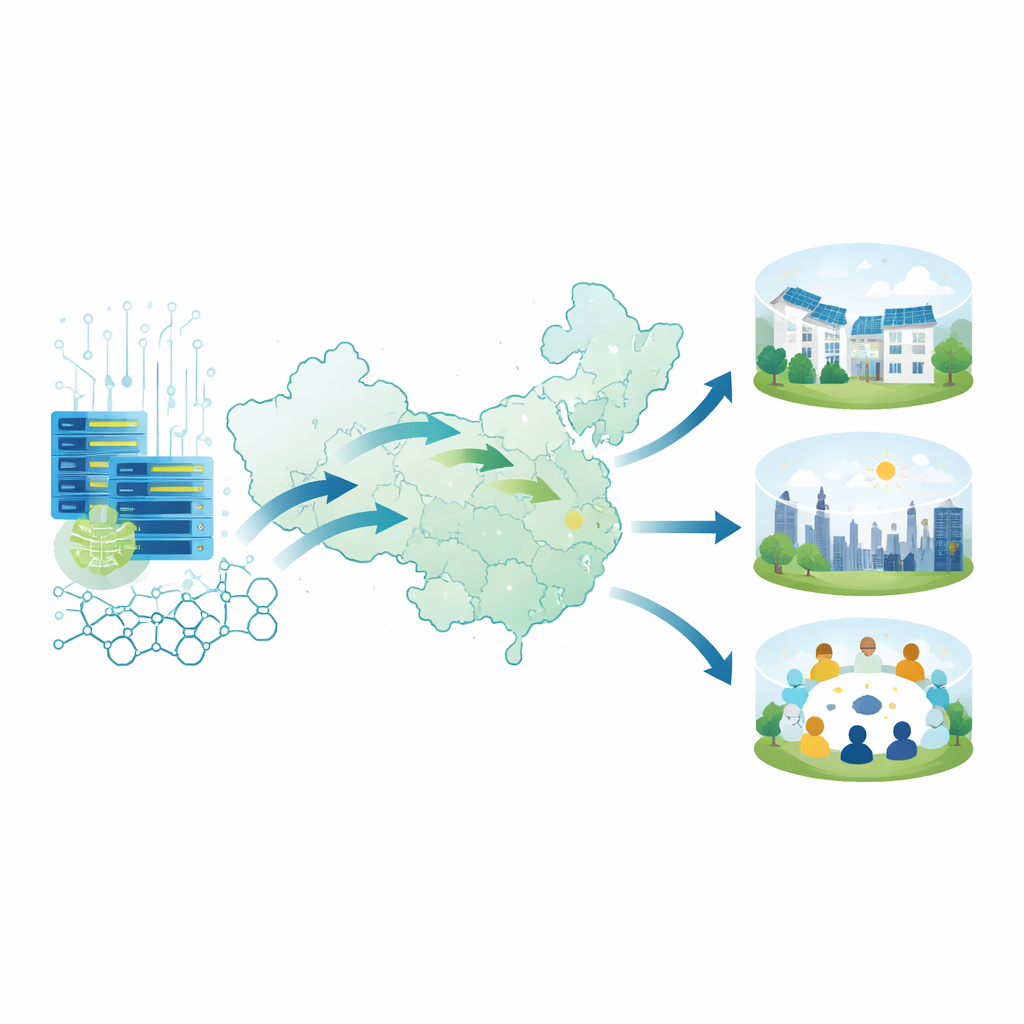
As the world shifts away from fossil fuels, a crucial question looms: who wins and who loses in this energy transition? This paper looks at how artificial intelligence (AI) is reshaping not just how efficiently we produce and use energy, but how fairly the benefits and burdens are shared across society. Focusing on 30 provinces in China from 2008 to 2022, the authors ask whether AI makes the energy system more just, and under what conditions it can truly support both the climate and ordinary people.
Big Picture: A Fairer Energy Future in a High-Tech World
The study starts from a simple but powerful idea: the clean energy transition must be fair to be successful. Traditional energy systems have often placed pollution, high bills, and unreliable service on poorer communities, while wealthier groups enjoy better access and cleaner air. At the same time, AI is rapidly spreading through power grids, factories, buildings, and transport networks, promising big gains in efficiency and flexibility. Instead of assuming that technology is automatically good or bad, the authors treat AI as a tool whose social impact depends on how it is designed, regulated, and used.
What the Researchers Measured and How
To move beyond theory, the authors built a detailed “energy justice” index for each Chinese province. This index tracks four aspects of fairness: how evenly energy benefits and harms are distributed; how open and participatory decision-making is; whether vulnerable groups are recognized and protected; and whether past harms, such as pollution and job loss, are being repaired. They then measured AI adoption using regional AI patent activity and related data. With these tools, and a battery of advanced statistical methods, they tested whether provinces with more AI activity showed better or worse performance on these different justice dimensions over time.
Mixed Impacts: Gains in Voice and Visibility, Strains in Sharing
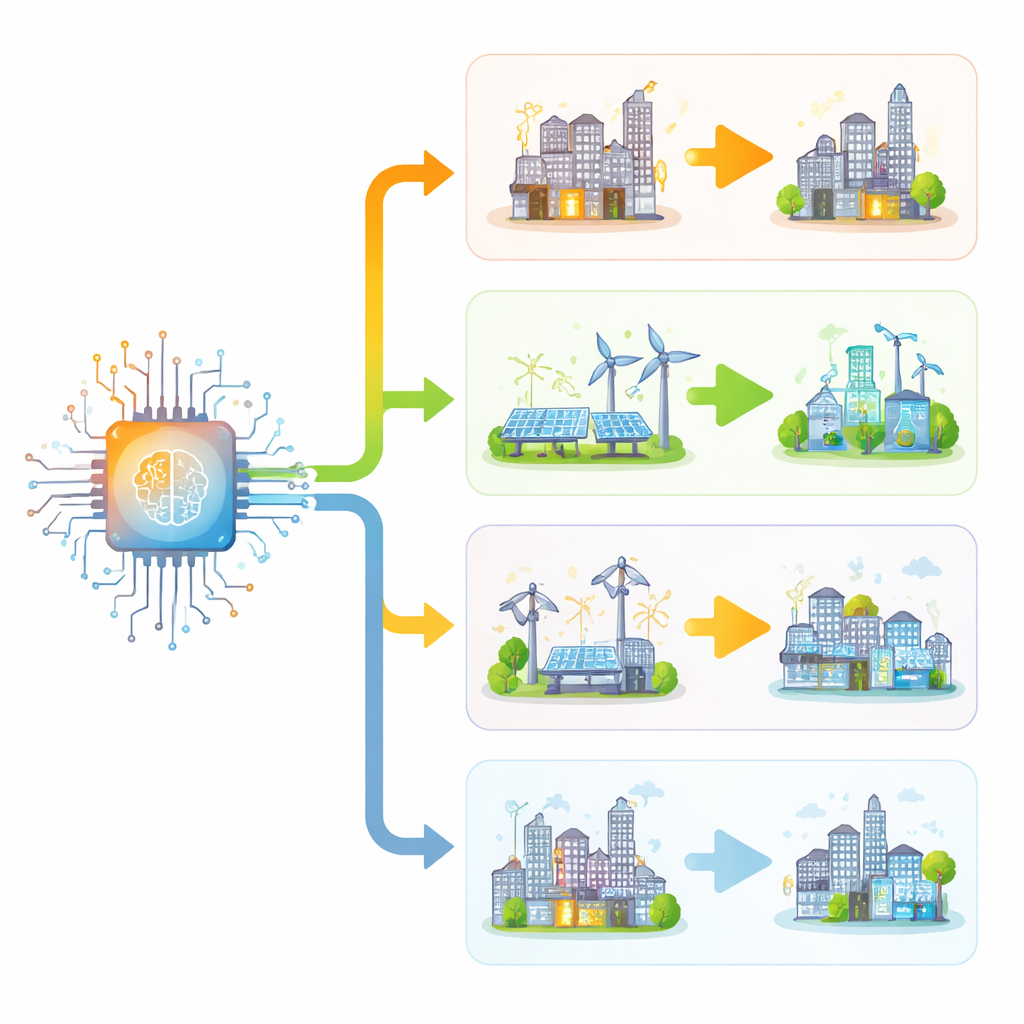
The results paint a nuanced picture. Overall, provinces with higher AI adoption saw clear improvements in their energy justice scores. AI helps power systems run more efficiently, encourages cleaner technologies, supports smarter pricing that can fund better infrastructure, and allows some industries to spread out rather than crowding pollution into a few neighborhoods. These changes tend to make access to energy more reliable and environmental impacts less concentrated. At the same time, the benefits are far from uniform. AI strongly boosts procedural justice and recognition justice: digital platforms lower information costs, open up new channels for public participation, and allow governments to better identify and support households that struggle with energy needs. Yet, in the early stages, AI can worsen distributive justice by favoring wealthy regions, capital-heavy firms, and highly skilled workers, while the costs of new infrastructure and higher demand may show up in higher energy bills.
Why Place, Policy, and Infrastructure Change the Outcome
Where you live turns out to matter a great deal. The positive effects of AI on energy justice are strongest in China’s more developed eastern provinces, which already have robust digital networks, stronger institutions, and more resources to invest in clean technologies. In central and western regions, where basic development and industrial restructuring remain pressing challenges, AI’s benefits for justice are much weaker or even absent. The study also finds “threshold effects”: once environmental rules become strict enough, and once digital infrastructure—especially fiber-optic networks—reaches a certain quality, AI’s contribution to fairness rises sharply. In other words, without capable regulators and solid digital foundations, AI may remain a tool for efficiency and profit rather than for social equity.
What This Means for People and Policy
For a layperson, the key takeaway is that AI can help make energy cleaner and fairer, but only if societies actively steer it in that direction. Left to market forces alone, AI may deepen gaps in who can afford clean power, who breathes polluted air, and who has a say in decisions. With smart environmental regulations, investments in digital infrastructure, and policies that prioritize low-income and vulnerable groups, AI can instead become a lever for a “just transition” that pairs climate action with social protection. The authors conclude that AI is not a neutral gadget or a magic fix; it is a powerful social tool whose fairness depends on the rules, institutions, and values that guide its use.
Citation: Ye, Y., Huang, T., Shi, Z. et al. Artificial intelligence adoption for advancing energy justice: a multidimensional perspective. Sci Rep 16, 13273 (2026). https://doi.org/10.1038/s41598-026-38421-x
Keywords: energy justice, artificial intelligence, just energy transition, digital infrastructure, environmental regulation