Clear Sky Science · en
Real world evaluation of multiparametric MRI using diffusion weighted imaging and MRCP for pancreatic cancer surveillance
Why this matters for early cancer detection
Pancreatic cancer is one of the deadliest cancers because it is usually found too late for curative treatment. This study asks a simple but important question: can we quietly keep watch over people at higher risk using a specialized type of MRI scan, catching dangerous changes in the pancreas while there is still time to act, without putting patients through frequent invasive procedures?
Watching the pancreas over time
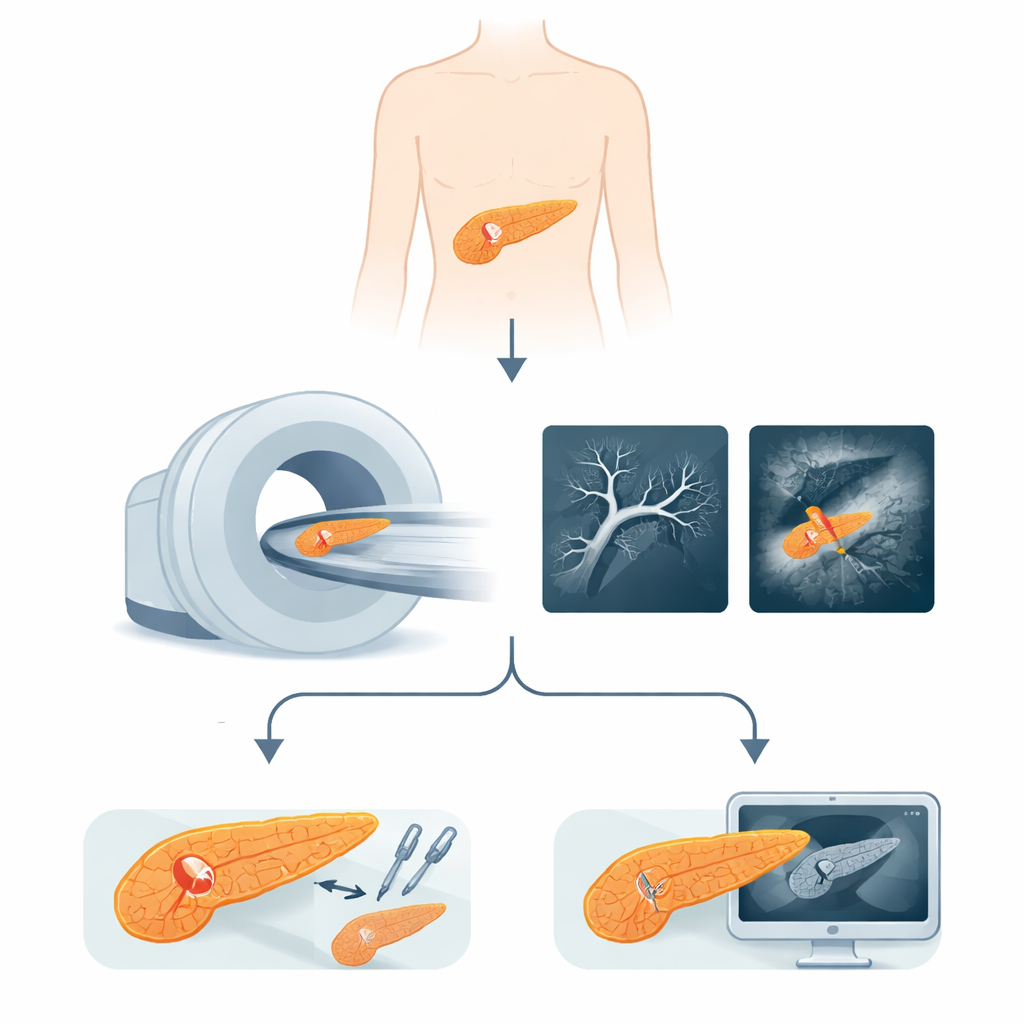
The researchers followed 169 people who did not have symptoms but did have reasons to be at higher risk for pancreatic cancer. Most had small fluid-filled cysts in the pancreas, some had chronic inflammation of the gland, and others had subtle duct changes. At the beginning, all participants had thorough testing with endoscopic ultrasound and detailed MRI, and anyone with signs of existing cancer was excluded. The remaining group then entered a regular checkup program designed to spot new worrisome changes as early as possible.
A gentle scanning plan
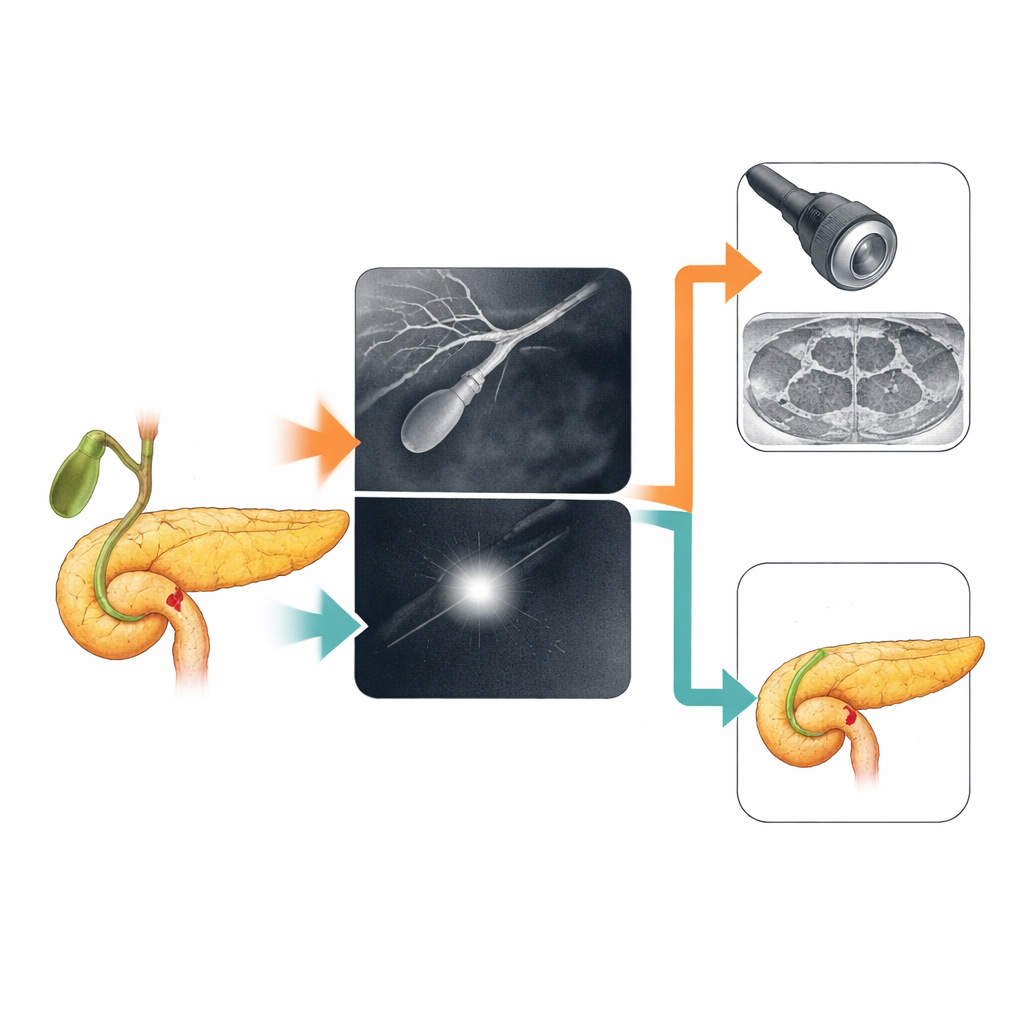
The heart of the program was a multiparametric MRI scan, a mouthful that simply means using several MRI “looks” at once. Two are key here. One, called MRCP, outlines the network of tiny tubes that carry digestive juices through the pancreas, revealing narrowings and upstream widening that can hint at a hidden tumor. The other, diffusion-weighted imaging, highlights areas where water motion inside tissue is unusually constrained, a common feature of many cancers. Every six months, participants had this MRI package plus simple blood tests. If the scans continued to look unchanged, they just came back again in another half year.
What counted as a warning sign
To keep decisions consistent, the team defined a “variant” as a specific new change on MRI: either a fresh narrowing of the main pancreatic duct with widening further along, or a new bright spot on diffusion images paired with a dark area on its companion map. When a variant appeared, the response was to intensify the checkup: patients underwent contrast-enhanced CT scans, repeat endoscopic ultrasound, or closer-interval MRI to decide whether surgery or other treatment was needed. In day-to-day practice, this meant MRI served as a low-burden gatekeeper, and more invasive tests were reserved for those whose scans truly changed.
What the follow-up revealed
Over a median of 30 months of follow-up, covering 414 person-years, only 19 variants appeared, corresponding to an event rate of 0.046 per person-year and a typical six‑month variant incidence of about 2.8%. Two of these 19 cases turned out to be pancreatic cancer, both caught at a stage where surgery was possible. Many other variant findings were ultimately harmless—such as changes due to inflammation or nearby lymph nodes—emphasizing that false alarms are part of the price of looking closely. However, these false positives were usually sorted out with one or two additional tests, and most participants continued under surveillance without progressing to cancer during the study.
What this means for patients
For people already known to be at higher risk of pancreatic cancer, this work suggests that regular, focused MRI checkups can detect some cancers early enough for curative surgery, while avoiding the repeated sedation and radiation exposure that come with other imaging methods. Although many suspicious findings do not prove to be cancer, the low rate of such triggers and the use of follow‑up tests to clarify them keep the approach practical. In plain terms, carefully scheduled MRI surveillance offers a gentler way to keep an eye on a dangerous disease, giving at‑risk patients a better chance that, if cancer does appear, it will be found when doctors can still remove it.
Citation: Fukuba, N., Takahashi, Y., Onoe, M. et al. Real world evaluation of multiparametric MRI using diffusion weighted imaging and MRCP for pancreatic cancer surveillance. Sci Rep 16, 8856 (2026). https://doi.org/10.1038/s41598-026-38357-2
Keywords: pancreatic cancer, MRI screening, early detection, cystic pancreatic lesions, cancer surveillance