Clear Sky Science · en
Marginal zone B cells mediate humoral immunity in vaccine-induced versus naturally acquired immunity against SARS-CoV-2
Why this study matters for everyday health
As the world moves into a new phase of the COVID-19 pandemic, an urgent question remains: how well do our immune systems, especially in older adults, respond to vaccines compared with natural infection? This study zooms in on a special group of immune cells called marginal zone B cells, which act as rapid first responders in the blood. By comparing what happens after vaccination in younger adults and after Omicron infection in unvaccinated elderly people, and by using a detailed mouse model, the researchers reveal why vaccines can give more timely and better-shaped protection than relying on infection alone.
Key players in our rapid defense
Marginal zone B cells sit at strategic “checkpoints” in the spleen and blood, where they can quickly sense invaders and help start antibody production. Unlike the slower, highly specialized cells that refine immunity over time, these cells provide a swift bridge between the body’s early alarm system and its long-term defenders. The team set out to understand how much these cells contribute to the quality and speed of antibody responses against SARS-CoV-2, the coronavirus that causes COVID-19, and how this role differs between vaccination and natural infection, especially in the context of aging.
What the mouse experiments reveal about antibody quality
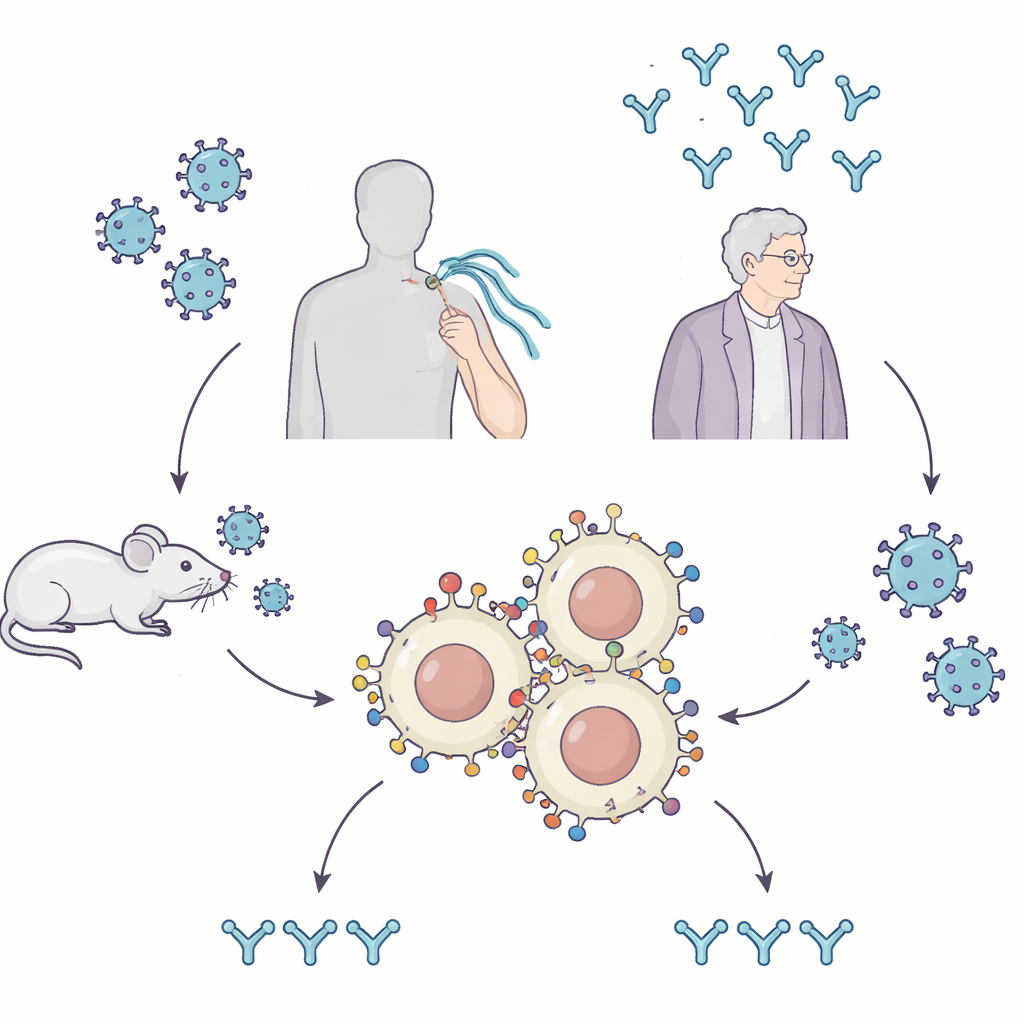
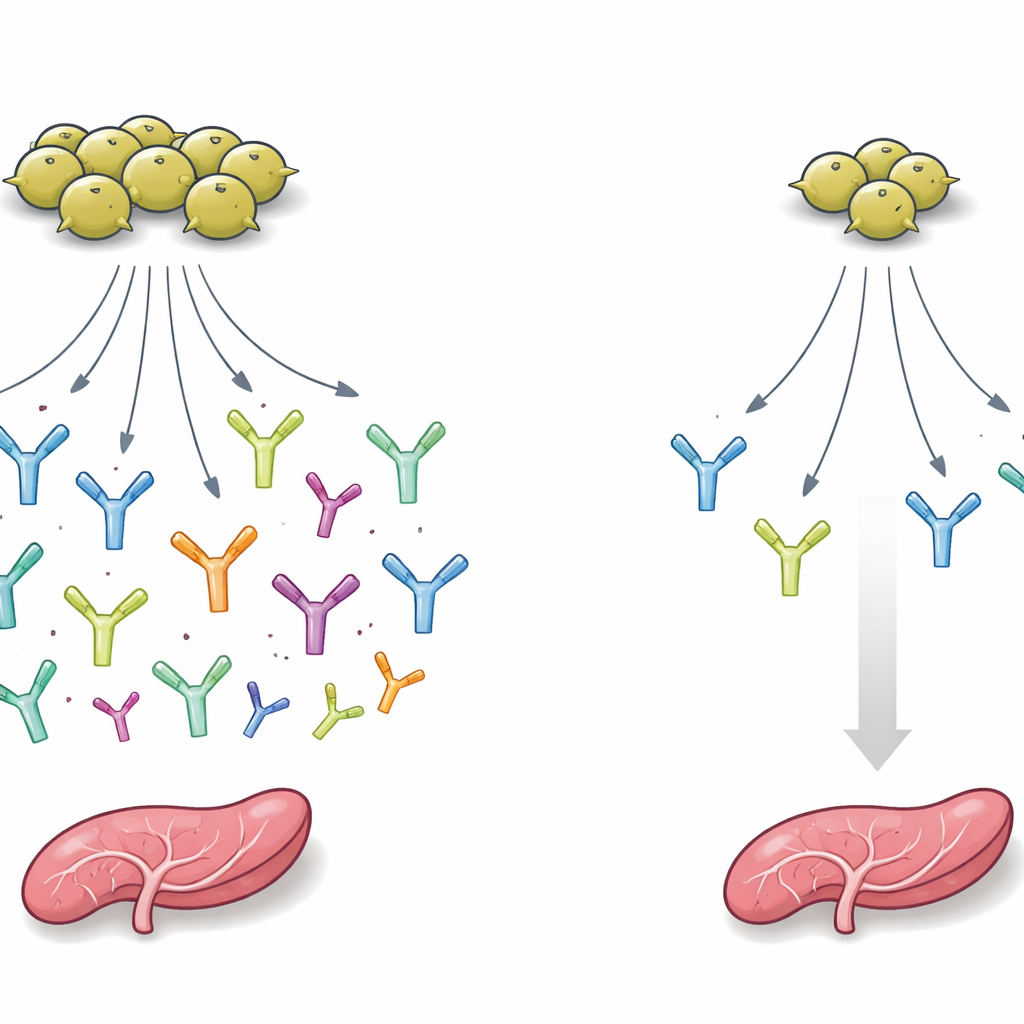
To probe the basic biology, the researchers used mice lacking functional marginal zone B cells and compared them with normal mice. Both groups were immunized with virus-like particles carrying the coronavirus spike protein, mimicking a focused vaccine challenge. Surprisingly, the overall amount of spike-specific antibodies in the blood was similar in both kinds of mice. However, when the scientists examined the fine details of the antibody repertoire, they found that mice with intact marginal zone B cells generated a far more diverse collection of antibody “clones” and gene combinations. In contrast, deficient mice showed fewer unique clones and a narrower spread of recognition patterns, suggesting that while the total antibody level looked normal, the breadth and balance of protection were compromised.
Vaccination in adults: a fast and flexible boost
The human part of the study followed 121 healthcare workers aged 20 to 59 who received an inactivated whole-virus SARS-CoV-2 vaccine. Blood samples were collected before vaccination, after the second dose, six months later, and one week after a booster shot. Antibody levels against SARS-CoV-2, including those that block the virus from binding its entry receptor, climbed sharply after the second dose, declined over six months, and rose again to high levels after the booster. Sensitive microarray tests showed that vaccination focused antibodies strongly against the spike protein and its receptor-binding region. At the same time, the proportion of marginal zone B cells and a helper T-cell type that supports B cells both expanded after the booster, while another B-cell subset shrank. This pattern suggests that marginal zone B cells and their T-cell partners are particularly mobilized during booster vaccination, helping the body recall and refine its defense.
Natural infection in the elderly: delayed mobilization
In a separate group of unvaccinated elderly patients with Omicron infection, the team compared immune profiles during the acute illness and later recovery. Markers of inflammation were highest during the acute phase and eased during recovery. Overall antibody levels against SARS-CoV-2 did not differ much between the two time points. However, the fraction of marginal zone B cells in the blood was significantly higher during recovery than during acute illness, while other B-cell and helper T-cell subsets changed little. This suggests that in older, infection-naïve individuals, these key B cells are recruited more slowly, coming to the forefront only as the body is already emerging from the worst of the infection, potentially leaving a window of vulnerability earlier on.
What this means for protecting older people
Putting the mouse and human data together, the study paints a consistent picture: marginal zone B cells help shape not just how much antibody the body makes, but how broad, balanced, and timely that protection is. Vaccination in younger adults quickly engages these cells and their T-cell partners, producing a rich and flexible antibody response that is strongly boosted by a third dose. In contrast, natural Omicron infection in the elderly is associated with a slower rise of marginal zone B cells and weaker antibody patterns, likely reflecting age-related weakening of the immune system. For non-specialists, the main takeaway is that relying on infection to build protection is a poor strategy for older adults. Vaccines, especially with boosters, better recruit these rapid-response B cells, offering earlier and more reliable shield against COVID-19 and its variants.
Citation: Shu, J., Yao, J., Tan, M. et al. Marginal zone B cells mediate humoral immunity in vaccine-induced versus naturally acquired immunity against SARS-CoV-2. Sci Rep 16, 10280 (2026). https://doi.org/10.1038/s41598-026-38298-w
Keywords: COVID-19 vaccines, marginal zone B cells, SARS-CoV-2 antibodies, immune aging, Omicron infection