Clear Sky Science · en
The immune-modulatory potential of helminth-derived proteins in cellular models of inflammation: a systematic review with cross-study quantitative data analysis
Worms That Calm an Angry Immune System
Many people think of parasitic worms only as villains that make us sick. Yet these same worms have evolved clever ways to soften their host’s immune response so they can live inside us for years. This review explores whether the very proteins worms use to hide from our defenses could be turned into precision tools to quiet harmful inflammation in human disease.
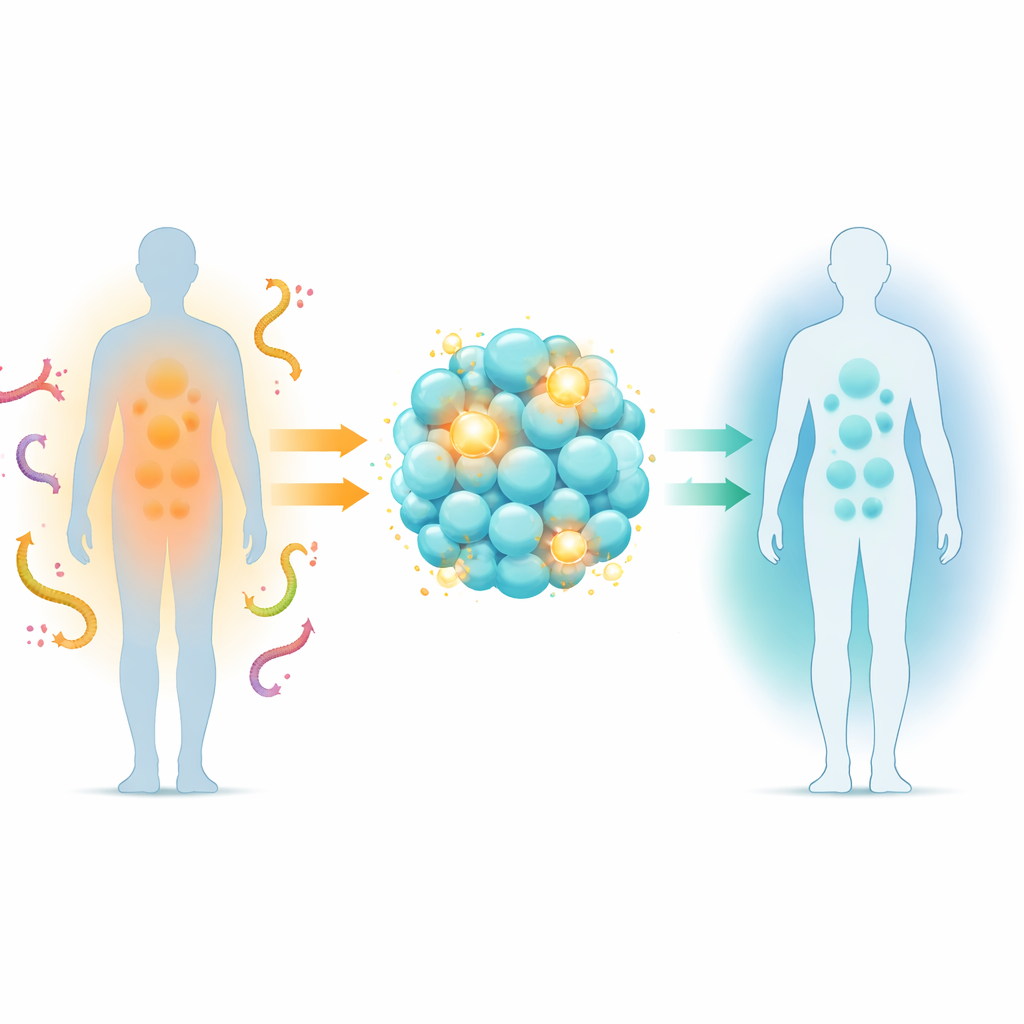
Why Fewer Worms Can Mean More Inflammation
More than a billion people worldwide carry intestinal or tissue-dwelling worms, known as helminths. In places with better sanitation, these infections have become rare—but at the same time, autoimmune and allergic conditions like colitis, eczema, and asthma have climbed. This pattern supports the “old friends” idea: over millions of years, our immune system coevolved with worms and other microbes, learning to stay balanced in their presence. When worms are removed from the picture, the immune system may be more prone to overreact, attacking harmless triggers or even our own tissues.
How Worms Talk to Our Immune Cells
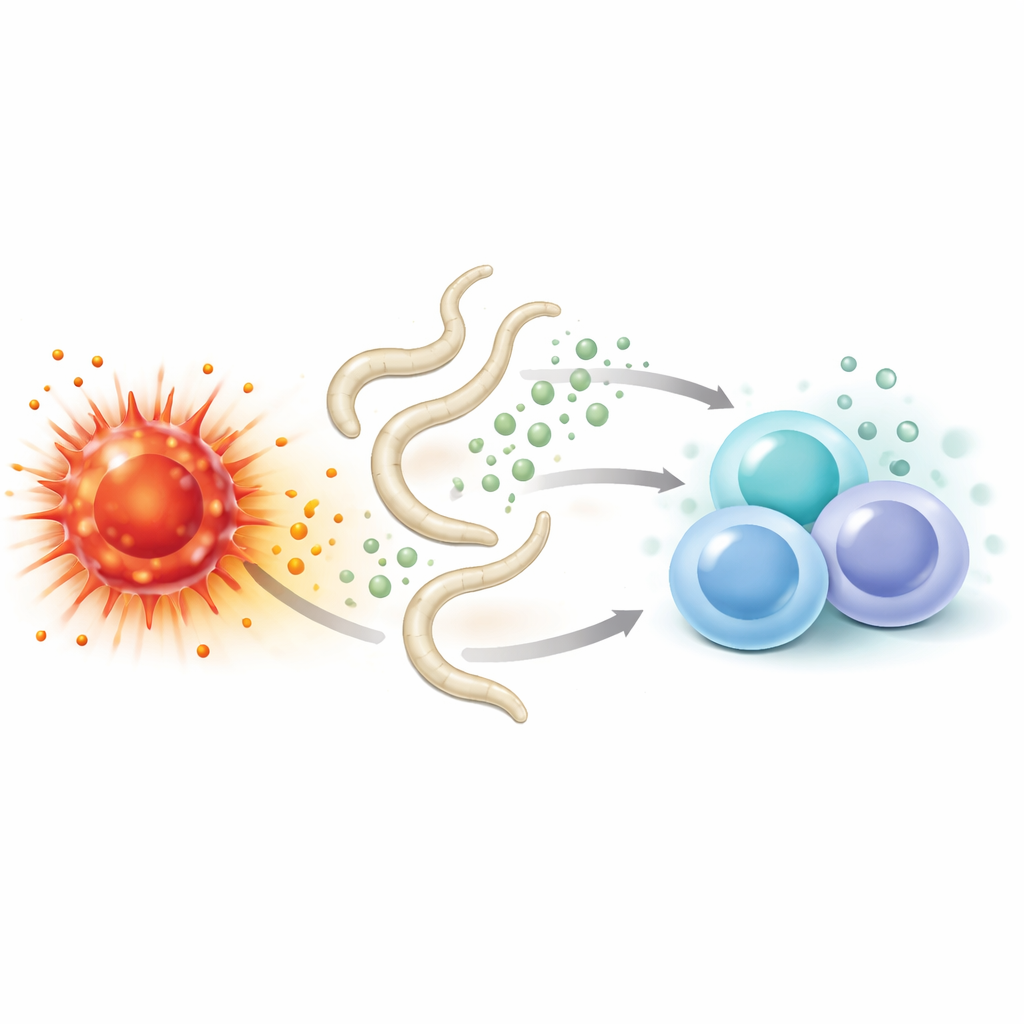
Helminths do not simply dodge the immune system; they actively reprogram it. They release a mix of small proteins—here called helminth-derived immunomodulatory proteins, or HDIPs—that can dial down aggressive immune pathways and promote more tolerant ones. The authors systematically gathered 79 laboratory studies in which purified worm proteins were added to immune cells grown in dishes and then challenged with potent irritants that mimic infection. Most experiments used key defender cells such as macrophages, dendritic cells, and mixed blood immune cells, and triggered inflammation with bacterial components or strong chemical stimulants.
What the Data Say About Inflammation Signals
Across more than 200 experimental records, a clear pattern emerged. When immune cells were exposed to inflammatory triggers alone, they produced high levels of “alarm” molecules—pro-inflammatory cytokines that help coordinate attacks but can also cause tissue damage if overproduced. Adding worm proteins consistently pushed these alarm signals down, often dramatically, for molecules like IL-12, IL-1β, IL-6, and TNF. At the same time, many HDIPs boosted levels of calming cytokines such as IL-10 and TGFβ, which help put the brakes on runaway immune responses. One cytokine, IL-17, tended to increase, and some others showed mixed or no clear changes, highlighting that not every signal is shifted in the same way.
Which Worms and Which Cells Matter Most
The review shows that this inflammation-dampening effect is shared across many worm species and many distinct proteins. Nematodes (roundworms) like Haemonchus contortus and Acanthocheilonema viteae, flatworms such as Fasciola hepatica and Schistosoma species, and tapeworms like Echinococcus granulosus all produced proteins that softened inflammatory outputs from immune cells. Certain protein families—especially those acting as cutting enzymes called cysteine proteases, or as cathelicidin-like defense molecules—were repeatedly linked to strong shifts away from damaging inflammation. Interestingly, the suppressive effects were generally stronger in purified macrophage cultures than in mixed blood cell samples, likely because the latter contain many different cell types that respond in varied ways.
Hints About Species Differences and Knowledge Gaps
The authors also asked whether worm proteins act similarly on cells from different host species. In mouse and human macrophages, they found very comparable reductions in inflammatory signals, suggesting that some worm strategies may work across mammals. In mixed blood cells from goats versus humans, however, one key signal, IL-2, was reduced only in human cells. The review also points out how little is known about the effects of worm proteins on other important cell types, such as brain immune cells or mast cells involved in allergies, and how most studies rely on a single kind of trigger rather than the wide variety of danger cues present in real diseases.
From Parasitic Trick to Possible Therapy
Taken together, the evidence suggests that many helminth-derived proteins share a powerful ability to tilt immune responses away from damaging inflammation and toward a more controlled, healing state. Rather than infecting patients with live worms—which carries obvious safety concerns—these purified proteins, or synthetic versions inspired by them, could be developed as targeted treatments for conditions driven by an overzealous immune system, such as inflammatory bowel disease, multiple sclerosis, or rheumatoid arthritis. The review maps out where the strongest data lie and where important gaps remain, offering a roadmap for turning an ancient parasite survival trick into modern, inflammation-taming medicines.
Citation: Stucke, S., Feeney, A., Lalor, R. et al. The immune-modulatory potential of helminth-derived proteins in cellular models of inflammation: a systematic review with cross-study quantitative data analysis. Sci Rep 16, 11957 (2026). https://doi.org/10.1038/s41598-026-38162-x
Keywords: helminth-derived proteins, immune modulation, chronic inflammation, cytokines, autoimmune disease