Clear Sky Science · en
Characterization of bacterial microbiome and molecular detection of rickettsiosis in free-living ticks (Amblyomma sculptum Berlese, 1888)
Why Tiny Ticks Matter
Brazilian spotted fever is one of the deadliest tick-borne diseases in the Americas, yet the dangerous bacteria behind it are found in less than one out of every hundred free-living ticks. This puzzle has led scientists to look beyond a single germ and instead study ticks as miniature ecosystems, packed with many kinds of microbes that may help or hinder disease. This article follows researchers in southeastern Brazil as they map the hidden bacterial world inside a key tick species and search for rickettsial bacteria that could affect human health.
Looking Inside a Local Tick Hotspot
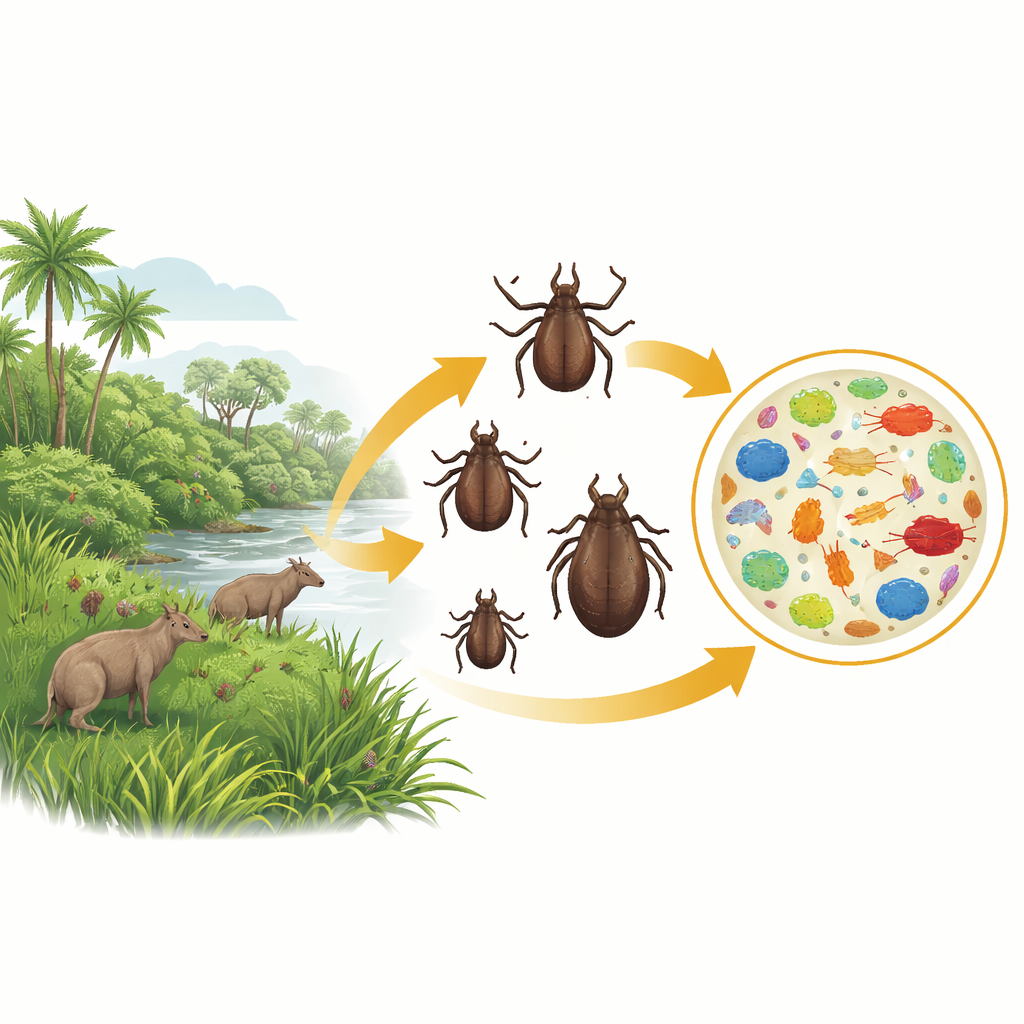
The team focused on Amblyomma sculptum, the main tick linked to Brazilian spotted fever in the state of São Paulo. They collected 154 free-living ticks from six natural sites around the city of Piracicaba, an area known for frequent and often fatal cases of the disease. Using carbon dioxide traps to lure ticks from vegetation, they gathered nymphs and adult males and females, then grouped them into 13 pools based on life stage and sex. From each pool, they extracted DNA and applied high-throughput sequencing of a standard bacterial marker gene, known as 16S rRNA, to catalog which bacteria were present. They also ran a second, more targeted genetic test to pin down which species of Rickettsia were hiding among these microbes.
A Crowd of Bacteria, Not Just One Villain
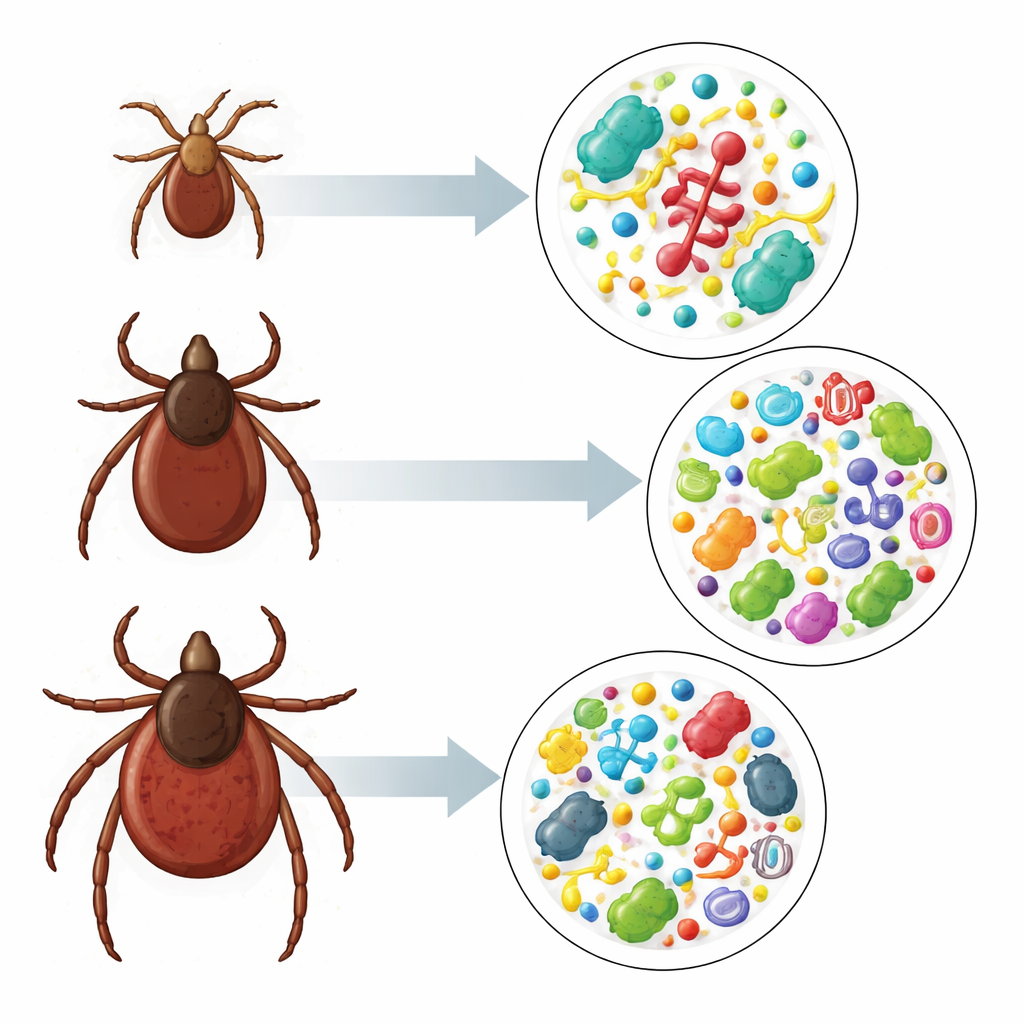
The microbial census revealed a surprisingly rich and varied bacterial community. Across all samples, the scientists detected 180 bacterial genera spread over 15 major lineages. One large group, Proteobacteria, dominated especially in nymphs, while other groups such as Actinobacteria and Bacteroidetes were more common in adult males. Many of the most abundant bacteria, including genera typically found in soil and water, likely reflect the ticks’ contact with the environment as they wait on vegetation for passing hosts. Alongside these background residents, the team also found genera that include well-known animal and human pathogens, such as Rickettsia, Anaplasma, Ehrlichia and Coxiella. These potentially risky groups appeared mainly in a subset of pools, especially those containing nymphs.
How Tick Age and Sex Shape Their Inner World
By comparing diversity measures across life stages and sexes, the researchers showed that the tick microbiome is not static. Adult males hosted the richest and most even mix of bacteria, followed by adult females, while nymphs had fewer kinds of bacteria and a community dominated by a smaller set of taxa. When the team examined how entire communities differed between samples, they found clear separation between nymphs and adults, and between males and females, driven more by changes in the balance of shared bacteria than by completely different lineages. Nymph samples tended to cluster tightly together, suggesting a more uniform, specialized community, while adult males showed a wider spread, indicating more variable compositions from place to place.
Tracking Down the Rickettsia Hiding in Ticks
The broad 16S survey could flag the presence of Rickettsia, but not tell whether the species was the highly lethal Rickettsia rickettsii or a more benign cousin. To answer that, the scientists amplified and sequenced a second gene, gltA, from all pools. Only one pool, made up of ten nymphs, tested positive. When they examined this gene in detail, it matched Rickettsia bellii with complete sequence identity. R. bellii is considered an ancestral, non-lethal rickettsial species that has been found in many types of ticks and may actually interfere with the transmission of more dangerous spotted fever agents. Based on the pooled data, the minimum infection rate in this tick sample was about two-thirds of one percent, in line with low but non-zero rates reported in other Brazilian studies.
What This Means for Disease Risk
Taken together, the findings show that Amblyomma sculptum ticks in this high-risk region carry a complex, stage- and sex-dependent community of bacteria, but at the time of sampling they harbored only a non-pathogenic rickettsial species detectable by the methods used. For the public, this means that even when the most dangerous bacterium is rare or absent, ticks remain important sentinels of changing microbial landscapes that can influence future outbreaks. By combining broad microbiome profiling with targeted tests for specific disease agents, studies like this help health authorities build more nuanced tick surveillance and control strategies, ultimately improving our ability to prevent severe tick-borne infections in people and animals.
Citation: Almeida, A.P., Moncau-Gadbem, C.T., Goes, C.P. et al. Characterization of bacterial microbiome and molecular detection of rickettsiosis in free-living ticks (Amblyomma sculptum Berlese, 1888). Sci Rep 16, 12402 (2026). https://doi.org/10.1038/s41598-026-38069-7
Keywords: tick microbiome, Brazilian spotted fever, Rickettsia bellii, Amblyomma sculptum, tick-borne diseases