Clear Sky Science · en
Comparison of AAV9-driven motor neuron transduction following different CNS-directed delivery methods in mice
Why this research matters for future brain treatments
Many devastating conditions, such as amyotrophic lateral sclerosis (ALS) and spinal muscular atrophy, damage the nerve cells that control movement. Gene therapy offers a way to deliver helpful genetic instructions directly into these cells, potentially slowing or even preventing disease. But getting therapy into the right nerve cells in the brain and spinal cord, while avoiding the rest of the body, is a major challenge. This study in mice compares several ways of injecting a popular gene therapy vehicle into the fluid that bathes the brain and spinal cord, asking a practical question: which route best targets movement-controlling nerve cells with the fewest side effects?
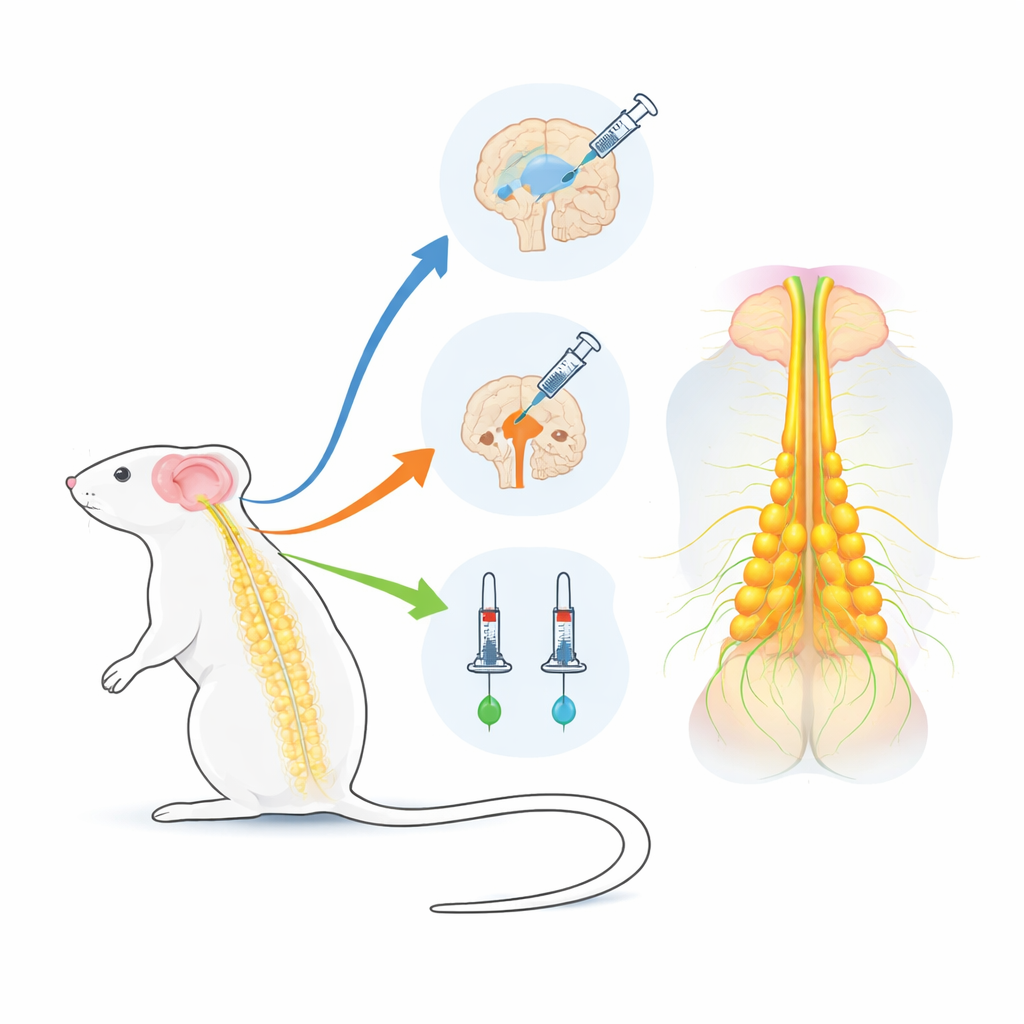
Different paths into the brain and spine
The team focused on a viral shell called AAV9, already used in approved treatments for children with spinal muscular atrophy because it naturally seeks out motor neurons, the cells that send signals from the spinal cord to muscles. Instead of delivering the virus through the bloodstream, which can spread it throughout the body and trigger unwanted immune reactions, the researchers injected it directly into the clear fluid that surrounds the brain and spinal cord in newborn mice. They compared three approaches: injection into a fluid-filled space at the base of the skull (cisterna magna), a single injection into one of the brain’s ventricles, and two injections into the ventricles on successive days, one on each side of the brain.
Lighting up movement-controlling cells
To track where the virus went, the scientists used AAV9 to carry the gene for a fluorescent green protein, which glows in cells the virus successfully enters. Four weeks after treatment, they examined the spinal cord and brain tissue under the microscope, counting how many motor neurons glowed green and measuring how much viral genetic material was present. All three methods were impressively effective in the lower spinal cord, with more than two thirds of lumbar motor neurons taking up the gene, and a particularly strong and consistent effect from a single ventricular injection on one side of the brain. Motor neurons in the brainstem, which help control functions like breathing and swallowing, were also well targeted by all methods.
Who else gets hit: support cells and other organs
The virus did not appear to enter nerve cells in the motor areas of the cortex, the brain regions that send commands down to the spinal cord. Instead, in the cortex it mainly reached astrocytes, star-shaped support cells that help maintain a healthy environment around neurons. Astrocyte targeting was especially high when the virus was given twice into both ventricles. The researchers also measured how much virus reached the liver and heart, two organs of concern for potential toxicity. Here, the single ventricular injection stood out as the cleanest option, with very low viral levels outside the brain and spinal cord. By contrast, the repeated two-day ventricular dosing substantially increased viral load in both the central nervous system and peripheral organs, without further boosting motor neuron targeting.
Balancing precision and safety
Putting these pieces together, the study suggests that a single, carefully placed ventricular injection of AAV9 in young mice offers the best compromise: it strongly and reliably targets the lower motor neurons that drive muscle contractions while keeping spillover to other organs relatively low. Injection into the cisterna magna also worked well but was technically more difficult and resulted in highly variable outcomes between animals, though it largely spared astrocytes. If a therapy is designed to act through support cells as well as neurons, a ventricular route might be advantageous; if the goal is to avoid astrocytes, the cisterna magna may be preferable. The lack of detectable gene delivery to upper motor neurons in the cortex highlights a gap that future vector designs and delivery strategies will need to solve, especially for diseases like ALS that affect both levels of the motor system.
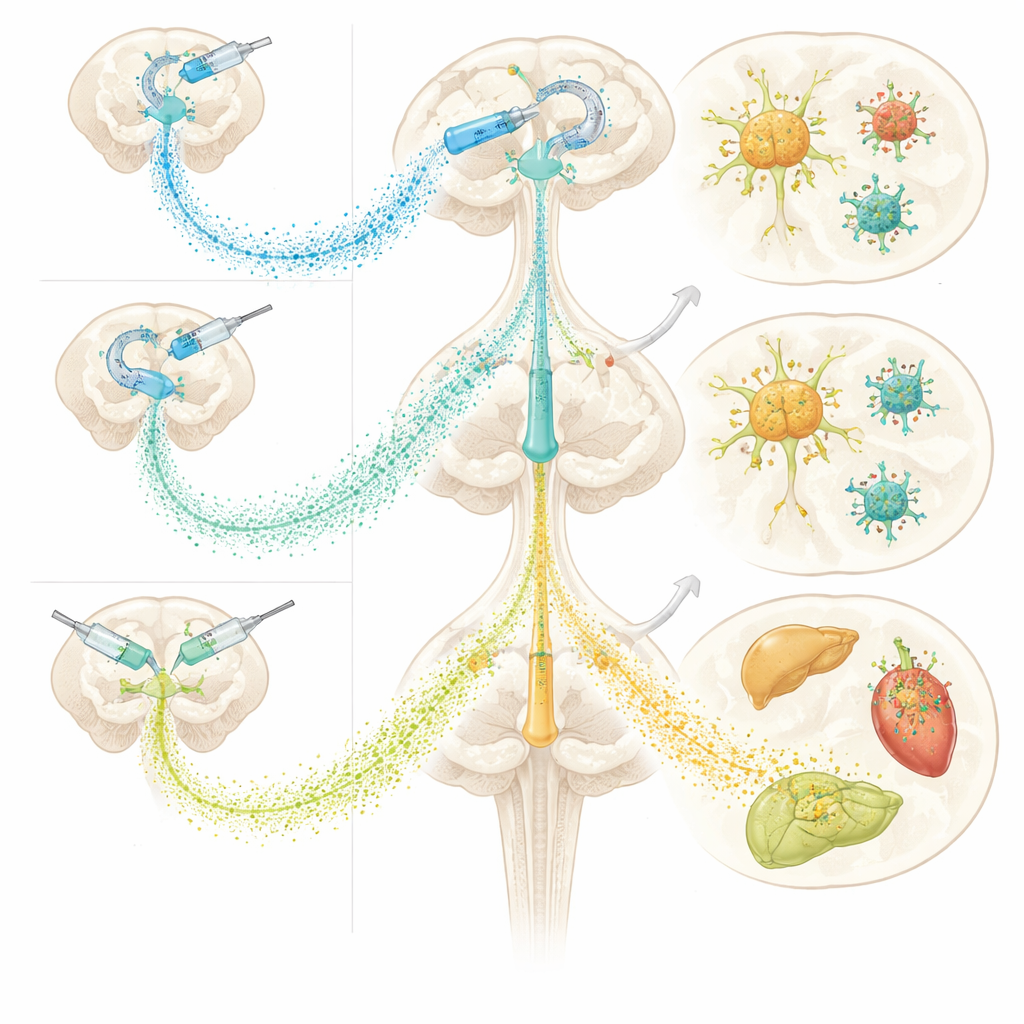
What this means for future gene therapies
For non-specialists, the bottom line is that not all direct-to-brain injections are equal. In this mouse study, delivering AAV9 into the brain’s fluid spaces, rather than through the bloodstream, allowed high levels of gene transfer to key spinal and brainstem motor neurons while limiting exposure of other organs. A single ventricular injection emerged as a practical front-runner, combining strong targeting with relatively low off-target spread. These results do not yet translate directly into treatments for adult human patients, but they provide a roadmap for designing safer, more precise gene therapies for motor neuron diseases and underline how carefully the route and dosing of such therapies must be chosen.
Citation: Mortimer, A.J., Sander, C.F., Parmar, A.R. et al. Comparison of AAV9-driven motor neuron transduction following different CNS-directed delivery methods in mice. Sci Rep 16, 12107 (2026). https://doi.org/10.1038/s41598-026-38039-z
Keywords: gene therapy, motor neuron disease, AAV9, central nervous system delivery, ALS