Clear Sky Science · en
Exploring the impact of cultural opportunities and cultural perception on spatial equity of pocket parks in Guangzhou Liwan old town
Small Parks with Big Neighborhood Impact
In many older city districts, squeezing in new large parks is nearly impossible. Yet residents still need nearby places to relax, meet neighbors, and feel connected to local traditions. This study looks at how tiny "pocket parks" in Liwan Old Town, the historic heart of Guangzhou, can carry local Lingnan culture while also sharing green space more fairly among residents—especially children and older people who rely on walking.
Why Pocket Parks Matter in Crowded Cities
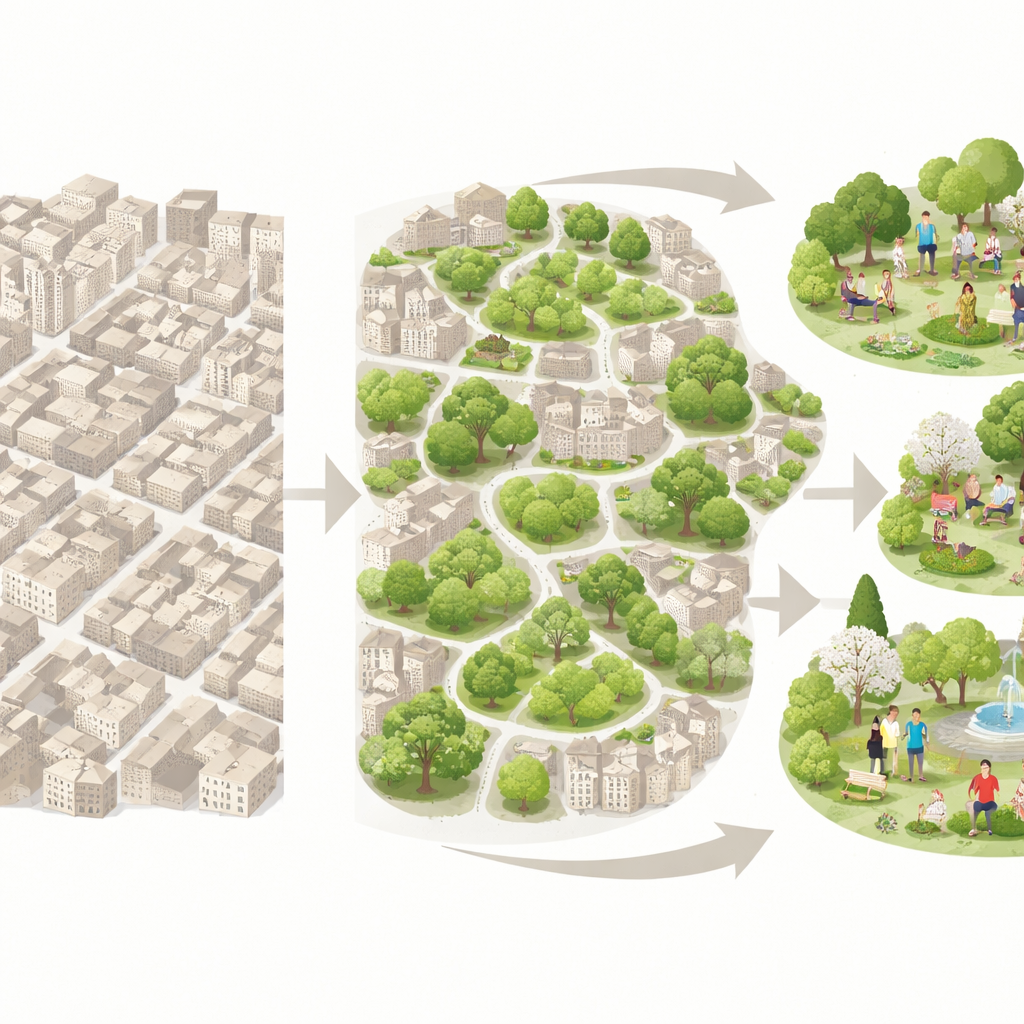
Liwan Old Town is dense, historic, and short on green space: it currently offers less than half the park area per person recommended by national standards. Because there is almost no room for new large parks, the city has turned to pocket parks—small patches of public greenery tucked into leftover spaces such as corners, alleys, and vacant lots. These small parks are cheaper to build and maintain, and they sit closer to where people actually live. The authors argue that in places like Liwan, pocket parks are not just a “nice to have” amenity, but one of the few realistic tools for improving both environmental quality and everyday cultural life.
From Cultural Supply to Cultural Experience
The research makes a sharp distinction between “cultural opportunity” and “cultural perception.” Cultural opportunity describes what the parks offer on paper: the number and variety of facilities and activities with local character, and how close they are to the surrounding population. Cultural perception captures how residents actually feel and behave in these spaces: Do they sense local history? Are they comfortable, safe, and willing to spend time there? To measure these two sides, the team combined field observations, resident surveys, expert scoring, and spatial data such as population grids and walking routes. They then mapped 104 pocket parks across 12 subdistricts, focusing on a 250‑meter walking range—roughly a five‑minute walk for older adults.
Uneven Chances, Uneven Feelings
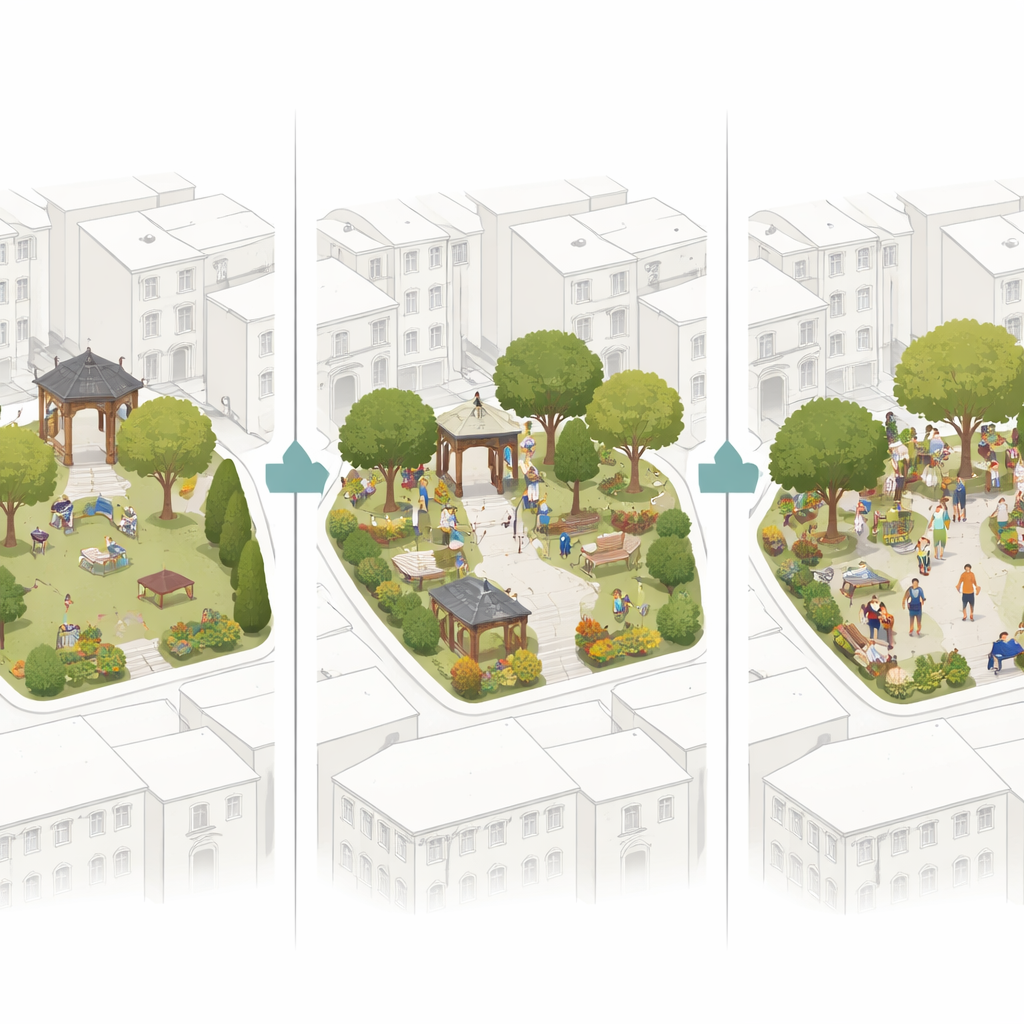
The results show a clear mismatch. Statistically, cultural opportunities are distributed very unevenly: a small share of residents enjoy a large share of the parks’ cultural resources, while more than half the local population lives outside any effective pocket‑park walking zone. Cultural perception is also unequal, but less so; in many places, people report a decent cultural experience even with modest formal facilities. The study finds clusters of “high opportunity–low perception” areas in central Liwan, where parks are numerous and full of cultural features but often underused or bypassed. Residents instead gather in cramped side yards or along streets, suggesting that worn paving, lack of shade, poor maintenance, and uninviting layouts can blunt the value of even well‑located parks.
Reading the City’s Cultural Landscape
By layering different kinds of analysis—Lorenz curves and Gini coefficients for equity, location entropy for concentration, and spatial autocorrelation for clustering—the authors reveal patterns that city maps alone would miss. Some subdistricts with many parks and strong Lingnan heritage achieve both high cultural opportunity and high perception: they combine fine‑grained historic street grids, continuous walking networks, and recently renewed housing blocks. Others, hemmed in by factories, rail lines, or wholesale markets, have few accessible parks and weak cultural presence. In these “cold spots,” simply adding more parks in the wrong places would waste scarce land without helping the people who need them most. The study therefore simulates new pocket‑park locations that would most efficiently expand five‑minute walking coverage in densely populated, underserved areas.
Turning Tiny Parks into Cultural Anchors
The authors conclude that in historic, space‑starved districts, pocket parks can become vital anchors of both green equity and cultural life—if they are designed and managed with care. Planners should first close the basic coverage gap by adding parks where walking access is poor, then lift cultural perception through shade, seating, cleanliness, and activities that reflect local customs. The work suggests moving from a “build once” mindset to ongoing, community‑guided stewardship, and weaving pocket parks into wider walking networks and heritage plans. Done well, even very small green spaces can help older neighborhoods stay livable, socially connected, and proud of their distinctive culture.
Citation: Xu, C., Zhu, S. & Sun, Q. Exploring the impact of cultural opportunities and cultural perception on spatial equity of pocket parks in Guangzhou Liwan old town. Sci Rep 16, 10194 (2026). https://doi.org/10.1038/s41598-026-38024-6
Keywords: pocket parks, urban green equity, cultural perception, Lingnan culture, historic old town