Clear Sky Science · en
Investigating distributed generator high penetration in improving technical, emission and economic constraints of distribution network
Why spreading out power plants matters
As homes and businesses plug in more devices and add electric cars and heat pumps, our power grids are being pushed harder than ever. At the same time, we want to cut pollution and make room for more clean energy like wind and solar. This paper looks at what happens when we place many small power plants—such as rooftop solar, wind turbines, and tiny gas turbines—deep inside local power lines instead of relying mostly on big distant stations. It also proposes a new smart-planning method to decide where and how large those small plants should be so that the grid runs cheaper, cleaner, and more reliably.
From big stations to many small helpers
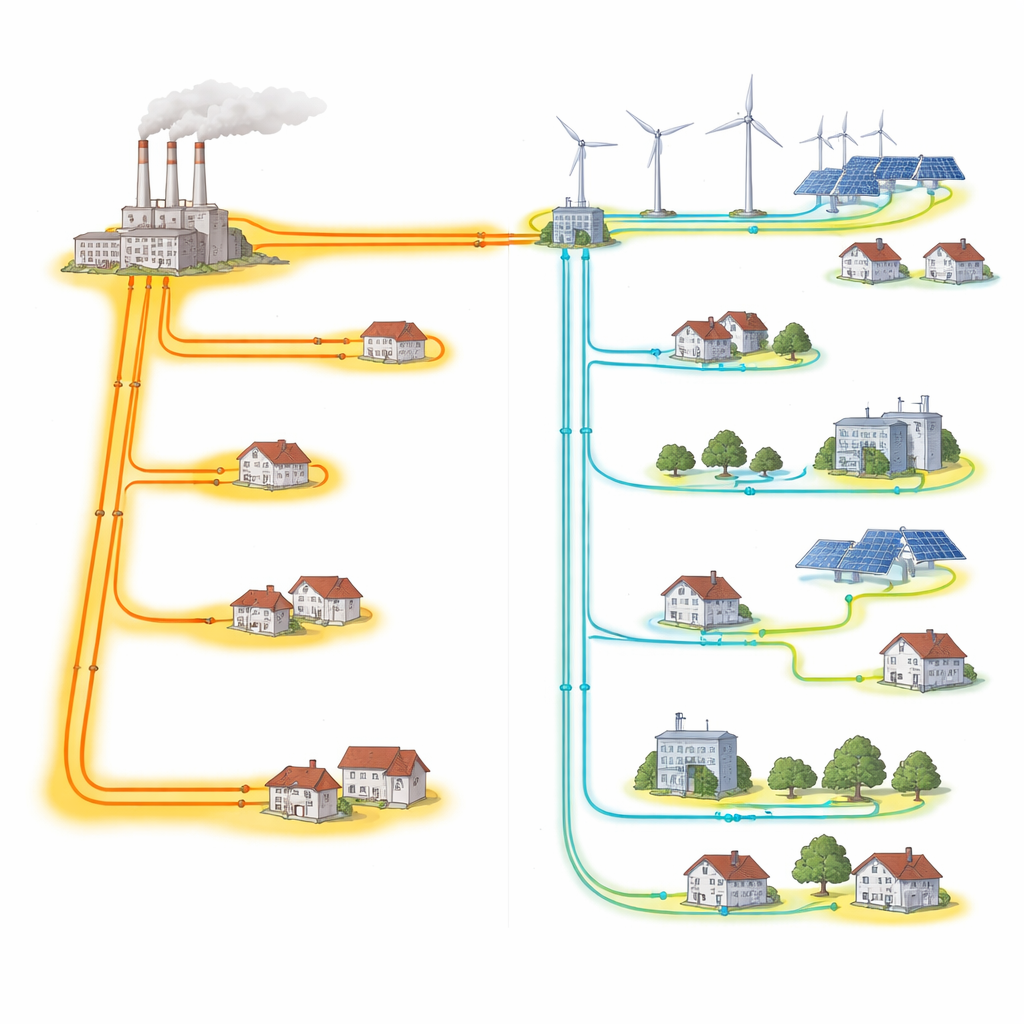
Traditional electricity networks were built around a few large power stations sending energy outward through long lines to customers. Today, more and more "distributed" generators—solar panels on roofs or nearby fields, wind turbines at the edge of town, and compact micro-turbines—are being connected directly to local distribution networks. These small plants can cut the distance electricity must travel, which reduces energy lost as heat and can support local voltages when demand is high. But the benefits depend strongly on how many units are added, how powerful they are, and which specific lines and nodes they connect to. Poorly placed generators can actually worsen voltages, overload lines, or fail to deliver promised savings.
A smart search for the best locations
The authors introduce a planning method that combines an algorithm called the Energy Valley Optimizer with fuzzy logic. Fuzzy logic first scans the network to flag parts of the system where voltages sag and losses are high. It then narrows the list of candidate connection points to the most promising areas, shrinking the search space. On this reduced map, the Energy Valley Optimizer explores many combinations of generator sizes and locations. It evaluates each candidate plan using several goals at once: reducing energy losses in the lines, keeping voltages close to their ideal values, cutting the cost of buying electricity from the main grid, and lowering emissions of carbon dioxide and other pollutants. By weighting these goals, the method searches for a balanced solution rather than optimizing just one factor.
Testing the idea on a virtual power network
To see how well this planning strategy works, the researchers test it on a standard benchmark network with 69 connection points, widely used in power-engineering studies. They examine three main situations. First, they look at a simple case in which three distributed plants with fixed output are added with the sole goal of reducing energy losses. Second, they consider a mixed goal that also includes cost, voltages, and emissions, again assuming fixed demand and generation. Third, they move closer to real life by allowing demand and renewable output to change over the day and across the four seasons, combining wind farms, solar plants, and micro-turbines at the same time. In each case, the new method is compared with several other optimization techniques that are popular in the field.
How much cleaner and cheaper can the grid get?
Across the different test cases, the combined Energy Valley Optimizer with fuzzy logic finds solutions that beat or match all competing methods. With only loss reduction as the target, it cuts power losses by about 69 percent—slightly better than thirteen other published approaches. When all goals are considered together, it still reduces losses by roughly two-thirds, sharply improves the lowest voltages in the network, and slashes the hourly cost of imported electricity and emissions by almost 99 and 98 percent, respectively, under the fixed-demand scenario. In the most realistic seasonal scenario, the method suggests a mix of wind, solar, and micro-turbines that supplies about two-thirds of the local needs. This configuration lowers annual electricity purchase costs by about 1.36 million dollars, trims network losses by nearly 85 percent, improves voltage levels into a more comfortable range, and cuts harmful emissions by about 69 percent.
What the results mean for everyday life
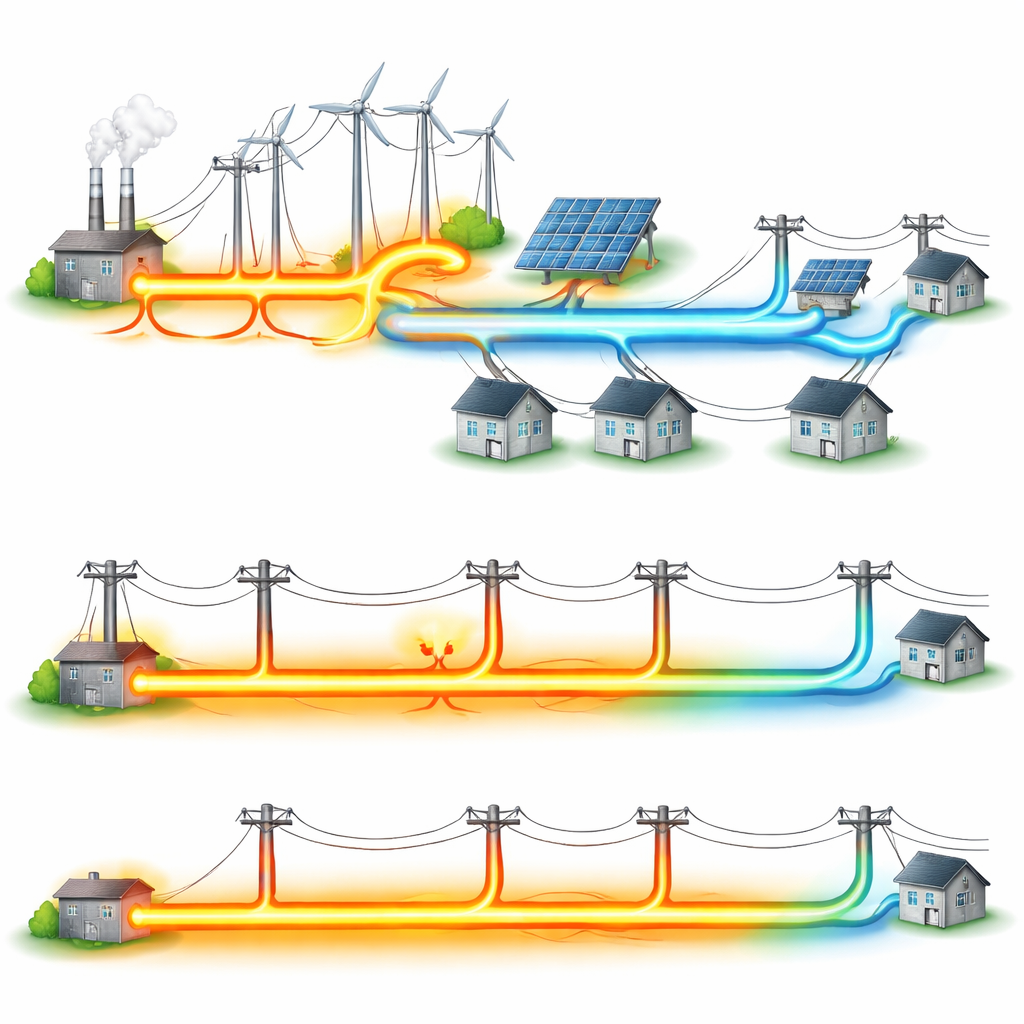
For non-specialists, the message is straightforward: placing many small generators smartly inside local grids can make electricity delivery cleaner, cheaper, and more reliable, but only if the planning is done carefully. The study shows that advanced search methods, helped by fuzzy logic to focus on troubled parts of the network, can guide utilities toward layouts that dramatically cut waste and pollution while keeping lights on and equipment safe. As communities add more rooftop solar, local wind, and other distributed sources, tools like this could help turn a patchwork of small projects into a well-coordinated system that benefits both the environment and the electric bill.
Citation: alromithy, F.s., Hosseinnia, H., Rostami, R. et al. Investigating distributed generator high penetration in improving technical, emission and economic constraints of distribution network. Sci Rep 16, 11430 (2026). https://doi.org/10.1038/s41598-026-37797-0
Keywords: distributed generation, renewable energy planning, power distribution networks, grid optimization, emissions reduction