Clear Sky Science · en
Effect of nano-NPK fertilizer and BAP on growth and flowering of Viola tricolor
Brighter Blooms from Smarter Plant Feeding
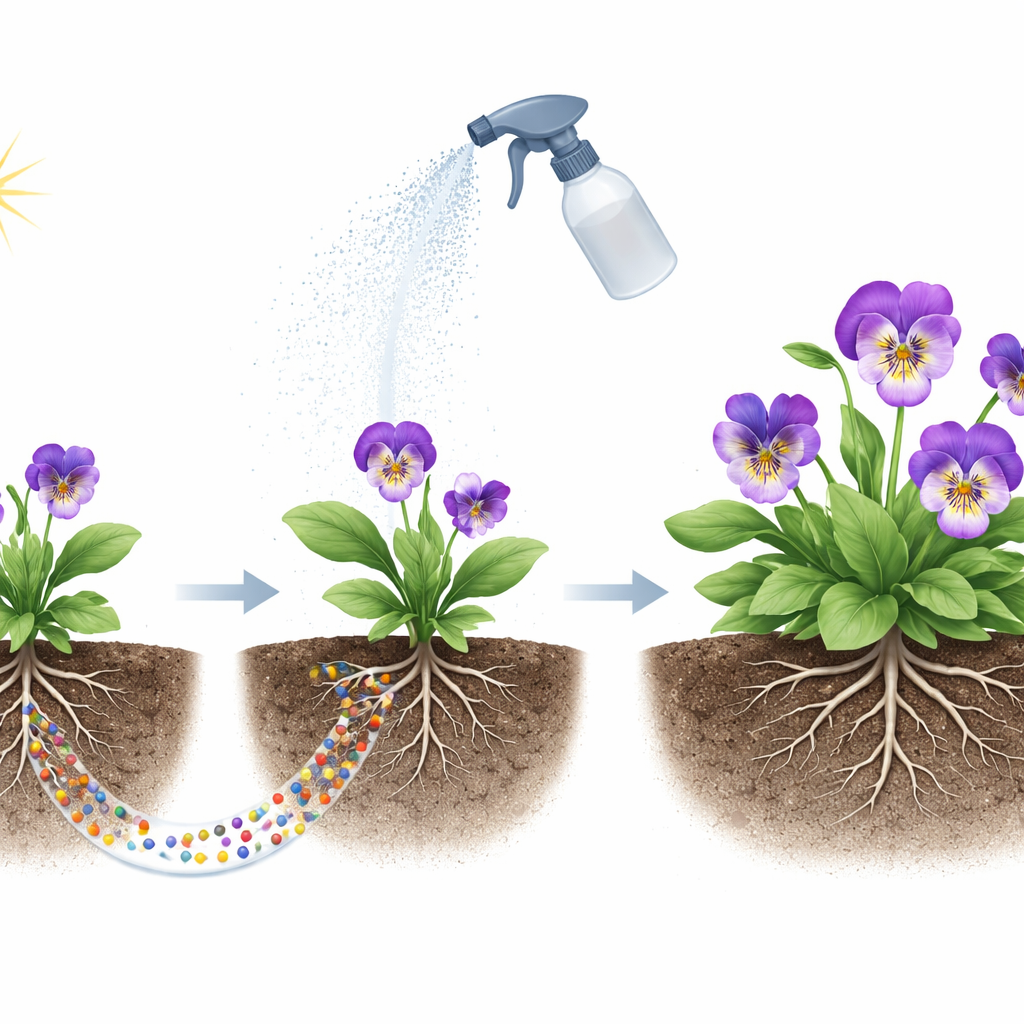
Gardeners and flower lovers are always looking for ways to grow healthier plants with more blooms while using fewer chemicals. This study explores a new combination of plant food and a growth-boosting spray to improve the performance of pansies (Viola tricolor), a popular ornamental and medicinal flower. By using nutrients in ultra-small “nano” form together with a plant hormone regulator, the researchers tested whether they could get stronger plants, more flowers, and better use of nutrients from the soil—all with the goal of more efficient and sustainable production.
Why Tiny Nutrients and Gentle Sprays Matter
Pansies are widely used in gardens and also valued in herbal remedies, but they are sensitive to temperature and need careful care to thrive. The team focused on two tools growers already use, but rarely together. The first is NPK fertilizer, which provides the three main nutrients plants need: nitrogen for leafy growth, phosphorus for energy and roots, and potassium for water balance and general health. Here it was delivered as nano-sized particles, which have a larger surface area and can move more easily into plant tissues. The second tool is BAP, a synthetic version of a natural plant hormone that encourages cell division and branching. The idea was simple: if nano nutrients feed the plant more efficiently and BAP shapes its growth, perhaps the combination would give pansies a powerful yet controlled boost.
How the Experiment Was Set Up
The study took place in a shaded hot-house in Mosul, Iraq, during spring, using rooted cuttings of Viola tricolor grown in pots. The researchers tested four levels of nano NPK fertilizer (including no fertilizer) and three levels of BAP spray (including no spray), creating twelve different treatment combinations. The nano fertilizer was delivered through drip irrigation at monthly intervals, while BAP was sprayed on the leaves. Over the season, the team measured plant height, number of leaves and branches, fresh and dry weight of shoots and roots, the rate of photosynthesis, chlorophyll content, timing and number of flowers, flower size, and the final amounts of nitrogen, phosphorus, and potassium stored in the plants.
Stronger Plants, Faster Growth, More Flowers
The standout treatment combined the highest nano NPK dose (1 gram per pot) with the highest BAP dose (75 parts per million). Plants receiving this mix grew much taller and fuller than untreated ones: height increased by about two-thirds, leaf number nearly doubled, and branch number also rose. These plants produced the most biomass, with clearly heavier shoots and roots. Their photosynthesis rate jumped by around 70 percent, and chlorophyll—the green pigment that captures light—more than doubled in some combinations. Flowering also changed: buds appeared earlier, flowers were larger, and the best-performing mixtures produced far more blooms throughout the flowering period than the control plants. Overall, the data showed that nano NPK alone helped, BAP alone helped somewhat, but together they produced a clear synergy.
Plants That Use Nutrients Far More Efficiently
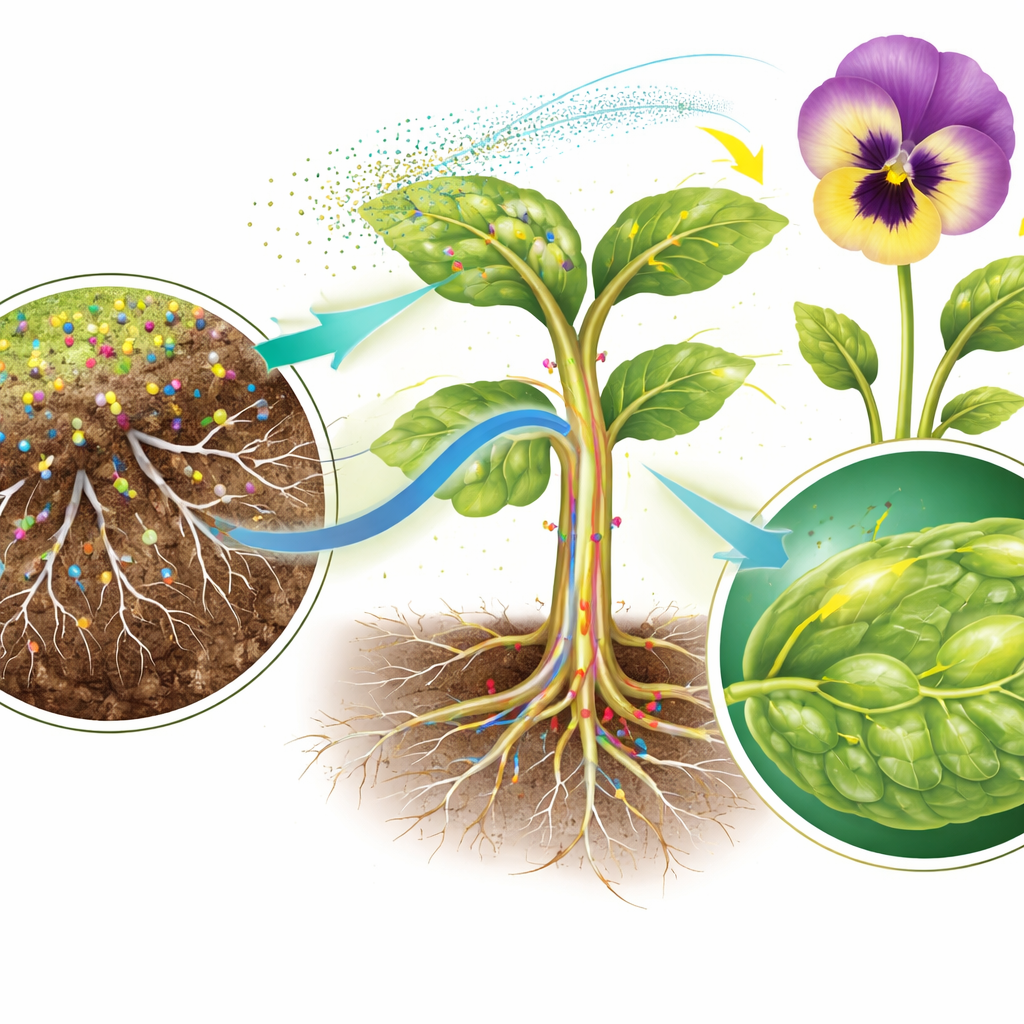
Beyond visible growth, the combined treatment dramatically increased how much nutrition each pansy plant stored. In the best-performing mix, nitrogen in the plant more than tripled compared with unfertilized plants, phosphorus more than quadrupled, and potassium rose more than twelve-fold. This indicates that nano-sized fertilizer particles were taken up and moved through the plant far more efficiently than standard forms, and that BAP further encouraged the plant to move and retain these nutrients where they were needed for growth and flowering. Statistical analyses confirmed that treatments with both nano NPK and BAP clustered with better performance across many traits, from biomass and photosynthesis to flower number and nutrient levels.
What This Means for Gardeners and Growers
For non-specialists, the takeaway is that pansies responded very strongly when fed with nano-form NPK and supported with a gentle growth-regulating spray. The plants not only grew larger and produced more flowers, they also used nutrients much more effectively. This suggests that, if similar results hold in outdoor fields and home gardens, growers could achieve showier displays and higher quality plants while potentially using fertilizers more efficiently and reducing waste. The study points toward a future where careful combinations of smarter fertilizers and mild growth regulators help produce healthier ornamentals with less environmental impact.
Citation: Al-Hashemi, F.H., Abdaljabar, Z.F., Al Nooh, K.M. et al. Effect of nano-NPK fertilizer and BAP on growth and flowering of Viola tricolor. Sci Rep 16, 10749 (2026). https://doi.org/10.1038/s41598-026-37747-w
Keywords: nano fertilizer, pansy flowers, plant growth regulator, nutrient uptake, ornamental horticulture