Clear Sky Science · en
Repellent activity against Aedes aegypti and metabolomic profiling of Myrica gale L. essential oils from Irish boglands
Why a Wild Shrub Matters for Mosquito Bites
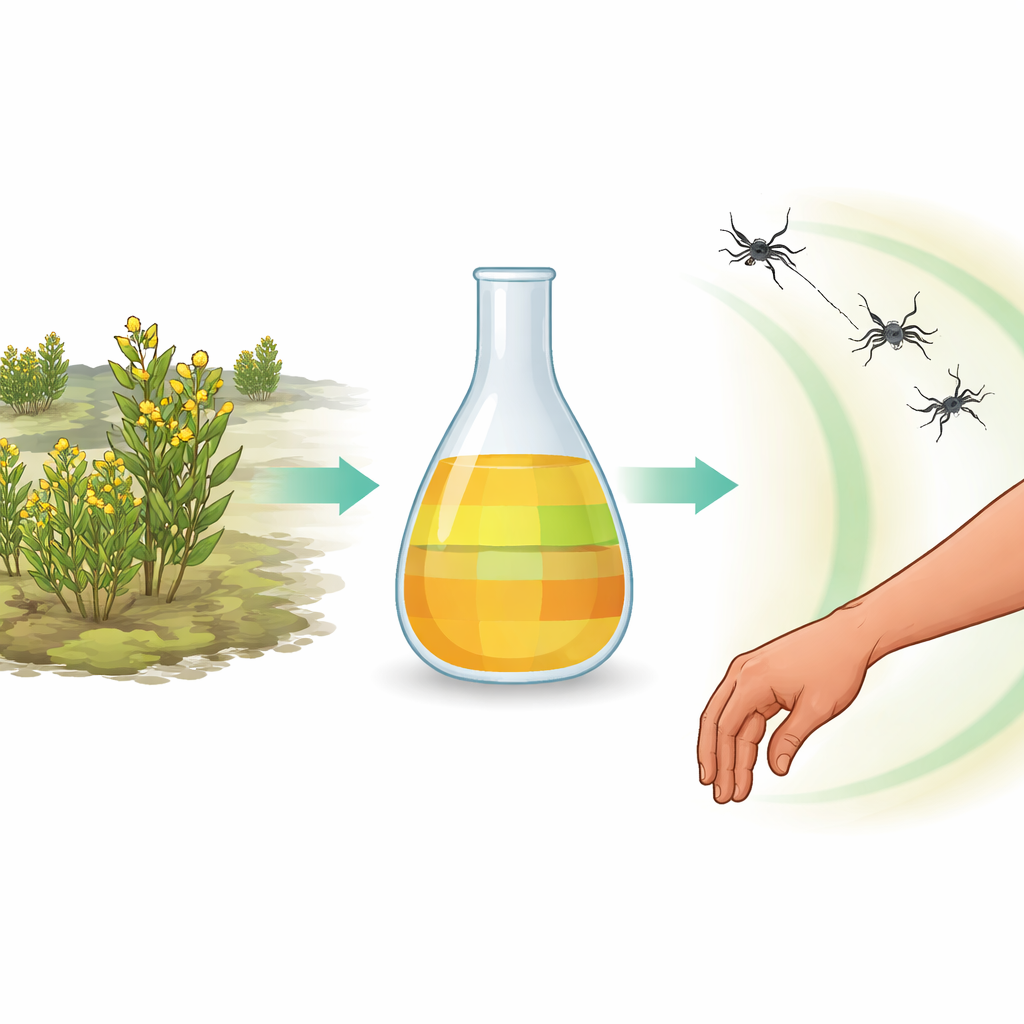
Bog myrtle is a low, aromatic shrub that thrives in wet Irish bogs and has long been used in folk traditions to keep biting insects at bay. This study asks a modern question about that old wisdom: can the plant’s fragrant essential oils really protect people from mosquitoes, and if so, which ingredients are doing the work? By blending field botany, chemistry, and mosquito behavior tests, the researchers look for cleaner, plant-based alternatives to common synthetic repellents such as DEET.
From Irish Bogs to Bottled Scents
The team collected bog myrtle leaves and fruits from four locations across Ireland in different months, then carefully confirmed that all samples were truly the same species using DNA sequencing. They distilled essential oils from either leaves or fruits using two methods: a classic glass still (Clevenger hydrodistillation) and a faster microwave-assisted technique. For comparison, they also included commercial oils from bog myrtle grown in Canada, from common myrtle, and from clove buds. Each oil was then analysed by gas chromatography–mass spectrometry, a technique that separates the many volatile molecules and measures their abundance. This created a detailed chemical “fingerprint” for every sample, highlighting families of compounds called monoterpenes and sesquiterpenes, as well as distinctive ingredients such as eugenol in clove oil.
Putting the Oils to the Mosquito Test
To find out whether these fragrances actually protect people, the scientists ran two kinds of mosquito assays with female Aedes aegypti, the yellow fever mosquito and a major disease vector. In a contact test called the arm-in-cage assay, volunteers applied a lotion containing 10% of an essential oil to their forearm and placed it into a cage of mosquitoes. The researchers recorded the “complete protection time,” the minutes until the first bite. In a second test, a Y-shaped glass tube system was used to measure spatial repellence: mosquitoes in a holding chamber chose between air streams that carried either a human hand alone or a hand plus an essential oil on a piece of paper. By counting the insects in each arm, the team calculated how strongly the vapor from each oil discouraged mosquitoes from approaching in the first place.
Fruit Oils Stand Out
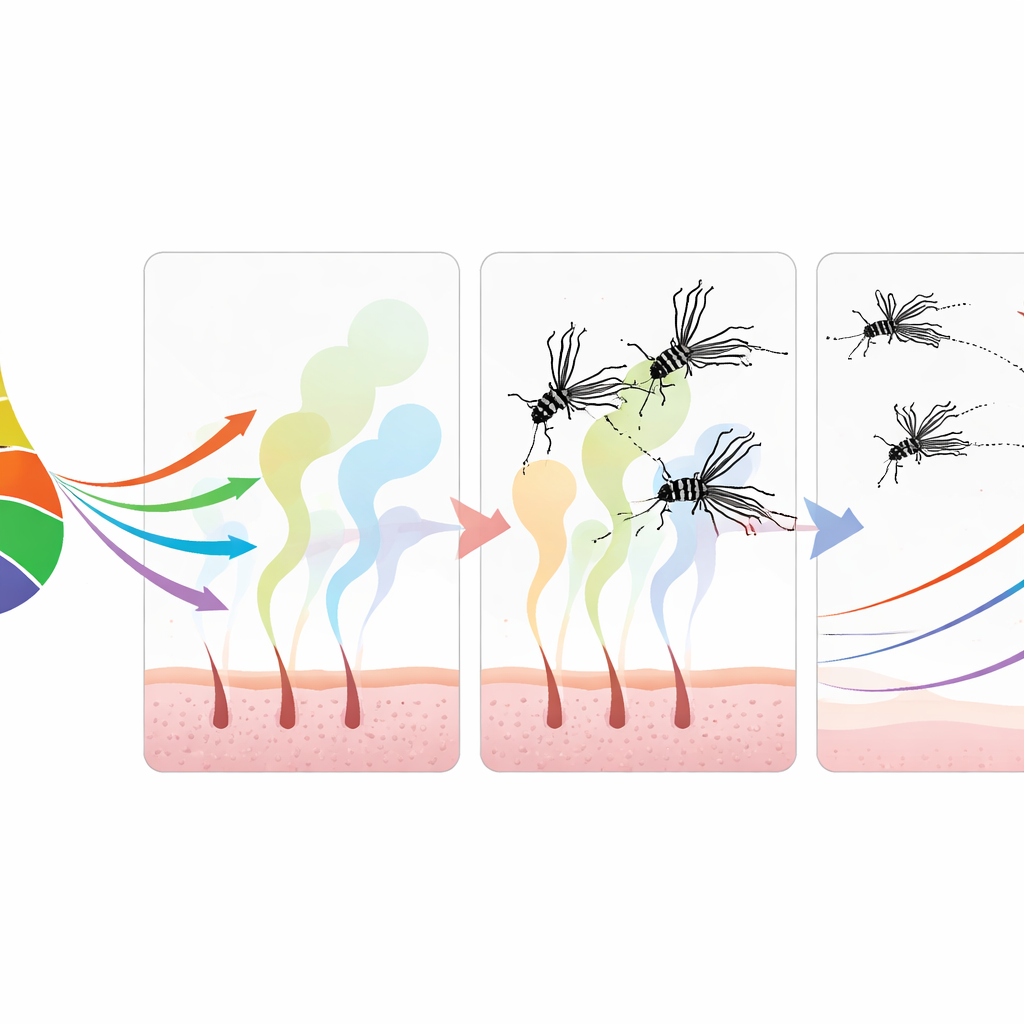
The results showed that not all bog myrtle oils are equal. Oils distilled from fruits were clearly more protective than those from leaves. One fruit oil, labeled MG4C and produced with the classic Clevenger still, gave volunteers an average of about 18 minutes of bite-free protection, while most leaf oils offered little more protection than the plain lotion. Clove bud oil performed even better in this direct-contact test, delaying bites for over an hour, thanks to its very high content of the compound eugenol. In the Y-tube spatial tests, the same bog myrtle fruit oils that worked best on skin also repelled mosquitoes in the air, with MG4C deterring them for up to 150 minutes. This pattern suggests that certain highly volatile components in the fruit oils are especially effective at interfering with the insects’ long-range smell-based search for a host.
Uncovering the Active Ingredients
Using advanced statistical tools, the researchers linked patterns in the chemical fingerprints of the oils to their repellence. Their analysis highlighted that bog myrtle samples with a higher ratio of monoterpenes to sesquiterpenes tended to perform better, likely because monoterpenes evaporate more readily and form a more noticeable scent cloud around skin. Two monoterpenes—myrcene and α-phellandrene—were strongly associated with good spatial repellence in the Y-tube experiments. Other components, including delta-3-carene, β-pinene, γ-terpinene and camphene, were present in higher amounts in the more effective oils and have previously been reported to deter or harm mosquitoes in other studies. By contrast, clove’s strong contact protection was tied to eugenol, which lingers well on the skin but is less suited to long-range vapor action.
What This Means for Everyday Protection
For non-specialists, the takeaway is that the old belief in bog myrtle as a “midge-beater” has a solid scientific basis—but the details matter. Oils made from the plant’s fruits, and extracted in ways that favor light, easily evaporated molecules, create a protective scent barrier that can keep mosquitoes from landing and biting for meaningful periods, especially at a distance. While none of these natural oils match DEET’s hours-long protection on their own, combining bog myrtle with powerful partners like clove oil and designing lotions that release these vapors more slowly could produce greener, locally sourced repellents. The study also shows that different ingredients are responsible for close-range versus long-range protection, guiding future efforts to blend plant oils into safer, smarter mosquito-fighting products.
Citation: Whyms, S.E., Nagar, S., Luker, H.A. et al. Repellent activity against Aedes aegypti and metabolomic profiling of Myrica gale L. essential oils from Irish boglands. Sci Rep 16, 12943 (2026). https://doi.org/10.1038/s41598-026-37275-7
Keywords: mosquito repellent, bog myrtle, essential oils, Aedes aegypti, plant-based insect control