Clear Sky Science · en
Influence of mimosa (Acacia mearnsii) tannin encapsulated with sunflower oil on rumen fermentation, methane and in vitro organic matter digestibility
Cleaner Cows, Healthier Planet
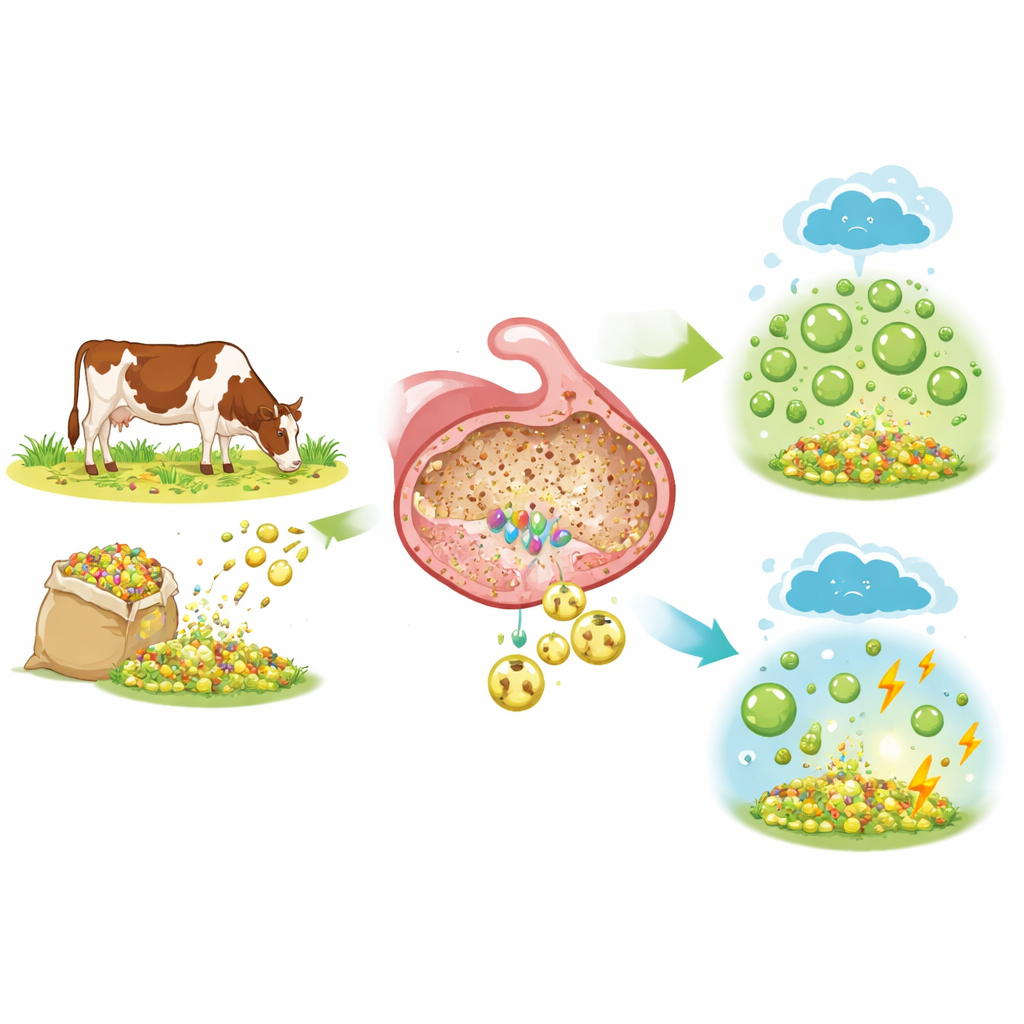
Beef and dairy cattle quietly contribute to climate change: the microbes in their stomachs produce methane, a powerful greenhouse gas. At the same time, farmers need animals to digest their feed efficiently so that food, not waste, is the main output. This study explores a way to use natural plant compounds, wrapped in sunflower oil, to help cattle produce less methane without sacrificing how well they use their feed.
Plant Power Hidden in a Coating
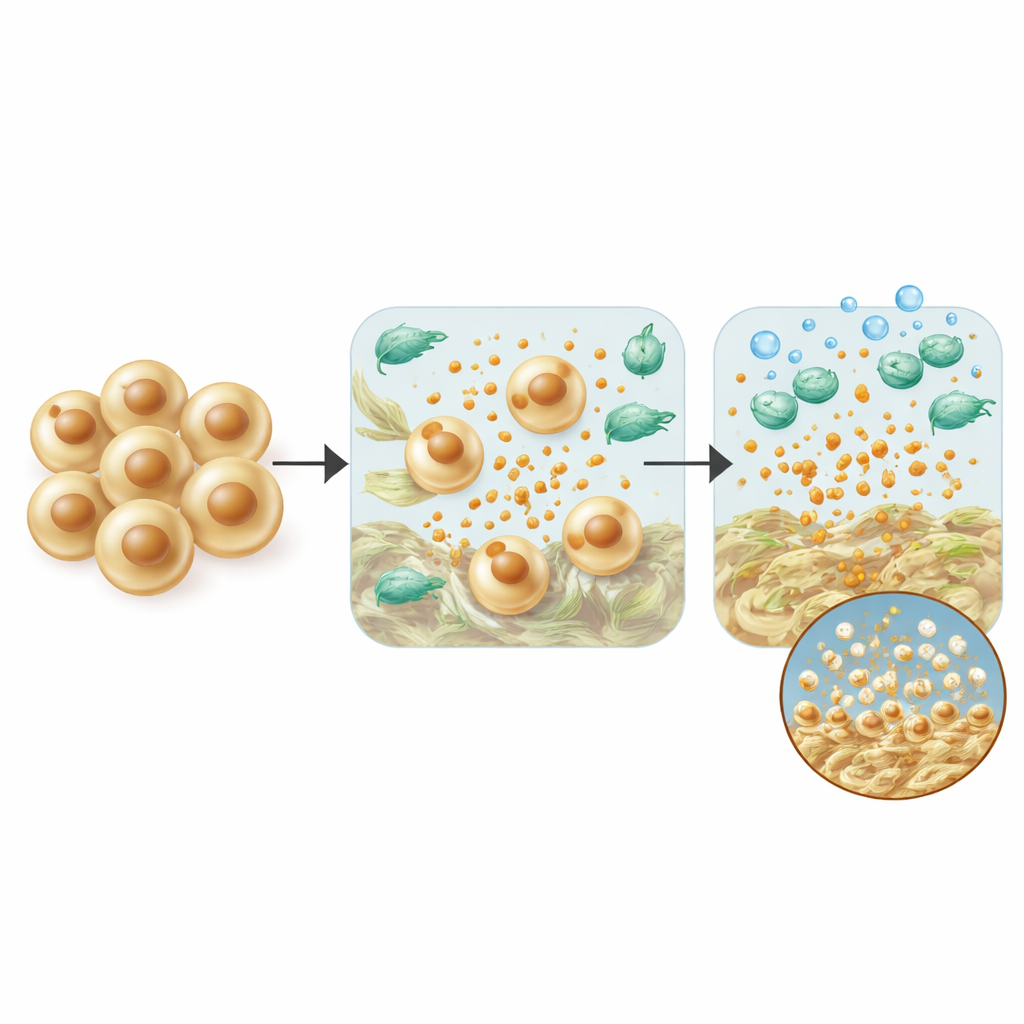
The researchers focused on tannins, bitter compounds found in many plants. A particular source, the black wattle tree (also called mimosa), produces an extract rich in tannins that can lower methane formation in the rumen, the first stomach of cattle and sheep. The problem is that at useful doses tannins can taste bad and can latch onto nutrients, reducing feed intake and digestion. To get around this, the team tested a version of mimosa tannin that had been encapsulated—sealed inside tiny droplets of sunflower oil using a double-emulsion process. The idea was that the oil shell would mask the taste and slow the release of tannin, softening its negative effects while preserving its methane-cutting power.
Testing Feed in a Simulated Stomach
To see how this worked, the scientists ran in vitro (lab-based) fermentations using rumen fluid collected from steers. They incubated two kinds of cattle feed: a fibrous grass hay with relatively low digestibility and a richer total mixed ration that included hay, lucerne and concentrate. Each feed was tested alone, with plain mimosa tannin, and with three levels of encapsulated tannin that matched or exceeded the plain dose. Over 48 hours, they measured total gas, methane, how much of the feed’s organic matter was digested, and key fermentation by-products such as ammonia and volatile fatty acids, which provide energy to the animal.
Less Methane, Little Cost at Moderate Doses
Both plain and encapsulated tannin reduced total gas and methane compared with unsupplemented feed, confirming that mimosa tannin can curb methane formation. At doses equivalent to 20 grams per kilogram of feed, this drop in methane did not come with a meaningful reduction in how much of the feed’s organic matter was digested. In other words, at moderate levels, the animals (as modeled in the lab) could in principle produce less methane without losing much nutritional value. Only the highest dose of encapsulated tannin, at 30 grams per kilogram, clearly pushed digestibility down further, showing that there is a threshold beyond which the protective effect of encapsulation is not enough.
How the Coating Changes Fermentation
The encapsulated tannin behaved similarly to the plain extract in lowering methane and gas, indicating that wrapping the tannin in sunflower oil did not weaken its core effect. However, there were signs that the coating subtly reshaped the pattern of fermentation. The overall pool of volatile fatty acids, which represent usable energy for the animal, did not drop, and shifts in their proportions were modest. At the medium encapsulated dose, the reduction in certain fermentation end-products was slightly less severe than with plain tannin, suggesting that the slower, controlled release helped protect some of the fiber-digesting microbes. Differences between the hay and the richer ration highlighted that high-fiber, low-protein diets are more sensitive to tannin, whereas protein-rich rations can buffer some of its impact.
What This Means for Future Farms
For a lay reader, the takeaway is straightforward: this work shows that a natural tree extract, packaged inside droplets of sunflower oil, can lower methane produced by cattle’s stomach microbes in laboratory tests, and at moderate doses it does so without clearly harming how well the feed is used. At higher doses, even the coated tannin begins to cut into digestibility, so careful balancing is needed. The authors conclude that encapsulating tannins is a promising tool for designing future livestock diets that are both climate-friendlier and nutritionally sound, and they recommend testing this delivery method more broadly in real animals and in other ruminant nutrition applications.
Citation: Ibrahim, S.L., Adejoro, F.A. & Hassen, A. Influence of mimosa (Acacia mearnsii) tannin encapsulated with sunflower oil on rumen fermentation, methane and in vitro organic matter digestibility. Sci Rep 16, 11054 (2026). https://doi.org/10.1038/s41598-026-37214-6
Keywords: enteric methane, tannins, ruminant nutrition, encapsulation, cattle feed