Clear Sky Science · en
Effects of static and dynamic canine-assisted intervention in young adults: sex differences in hormonal, EEG, HRV, and emotional responses
Dogs, Stress, and the Science of Feeling Better
Many people say that spending time with a friendly dog makes them feel calmer and happier. But what actually happens inside the body and brain when we play with or cuddle a dog? This study looked under the hood, using brainwave recordings, heart measurements, and saliva tests to explore how different kinds of dog activities might ease stress in young adults—and whether women and men respond in the same way.
Three Ways to Unwind
To tease apart the effects of dog time, the researchers asked 13 university students to take part in three 10-minute sessions on different days. In one session, they simply sat quietly in a classroom with their eyes closed, a basic form of meditation with no animals present. In the second, they took part in a “static” dog activity: relaxed, low‑effort contact such as gentle petting, feeding snacks, and walking slowly with the dog outdoors. In the third, they tried a “dynamic” session that looked more like a dog sport, running with the dog through agility obstacles and playing disc games. All activities were carefully timed and supervised, and all participants experienced every condition.
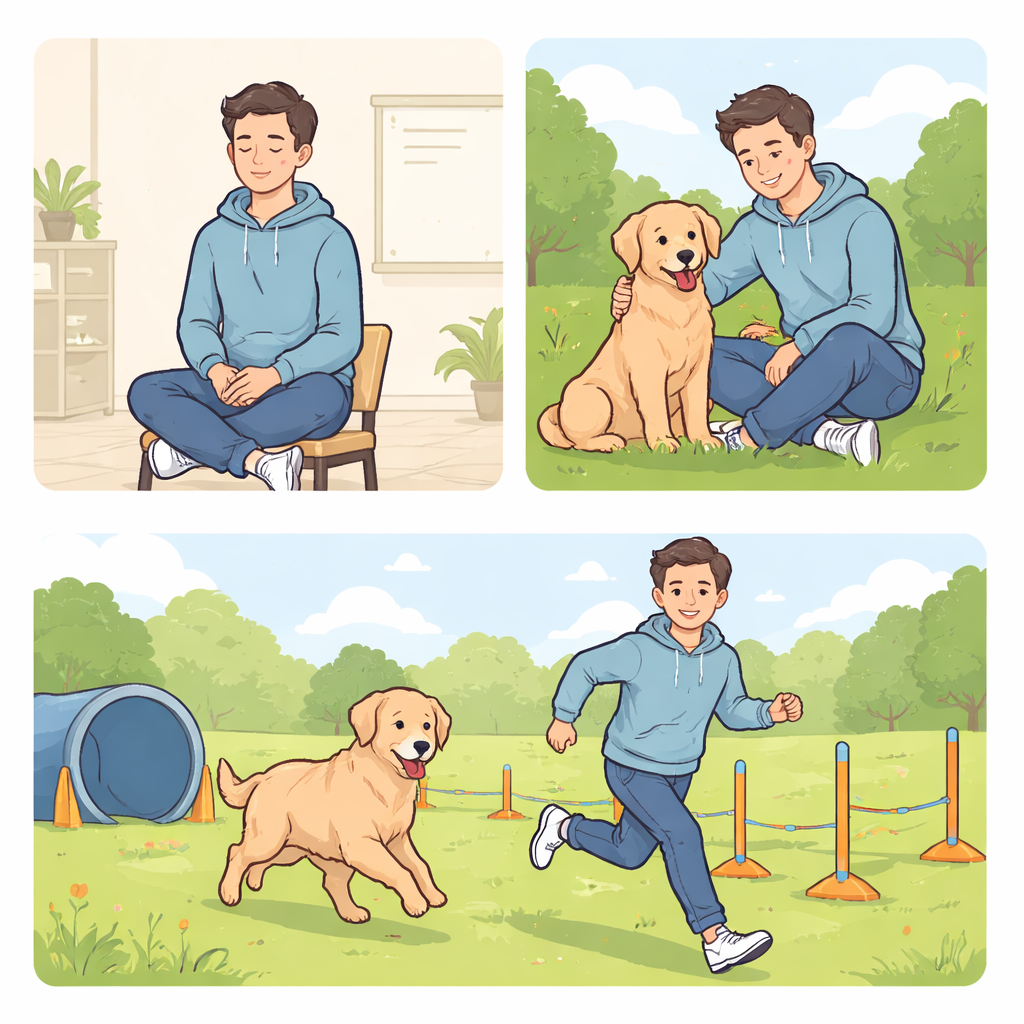
Measuring More Than Just a Good Mood
Instead of relying only on “How do you feel?” questionnaires, the team added several biological measures. Before and after each activity, they collected saliva to measure two key hormones: oxytocin, often linked with bonding and warm feelings, and cortisol, a major stress hormone. They also recorded brainwaves using a cap with sensors placed over the forehead, sides, and back of the head, focusing on “alpha” waves associated with relaxed alertness and “beta” waves linked to concentration and tension. In addition, they tracked the tiny beat‑to‑beat changes in heart rhythm—called heart rate variability—which can hint at how strongly the body’s stress‑response systems are activated.
How People Felt and What Their Brains Showed
Participants reported that both types of dog sessions—static and dynamic—left them feeling more cheerful, energetic, and at ease than before. The boost in “vitality” was clearest after the dog activities, while simple meditation did not produce the same jump. The brain data lined up with these reports. After interacting with dogs, especially during the more active sessions, students showed higher levels of alpha waves in several brain regions. This pattern is often seen when people are calm but engaged, rather than bored or stressed. In other words, being with the dogs seemed to put their brains into a comfortably focused state instead of a tense or overloaded one.
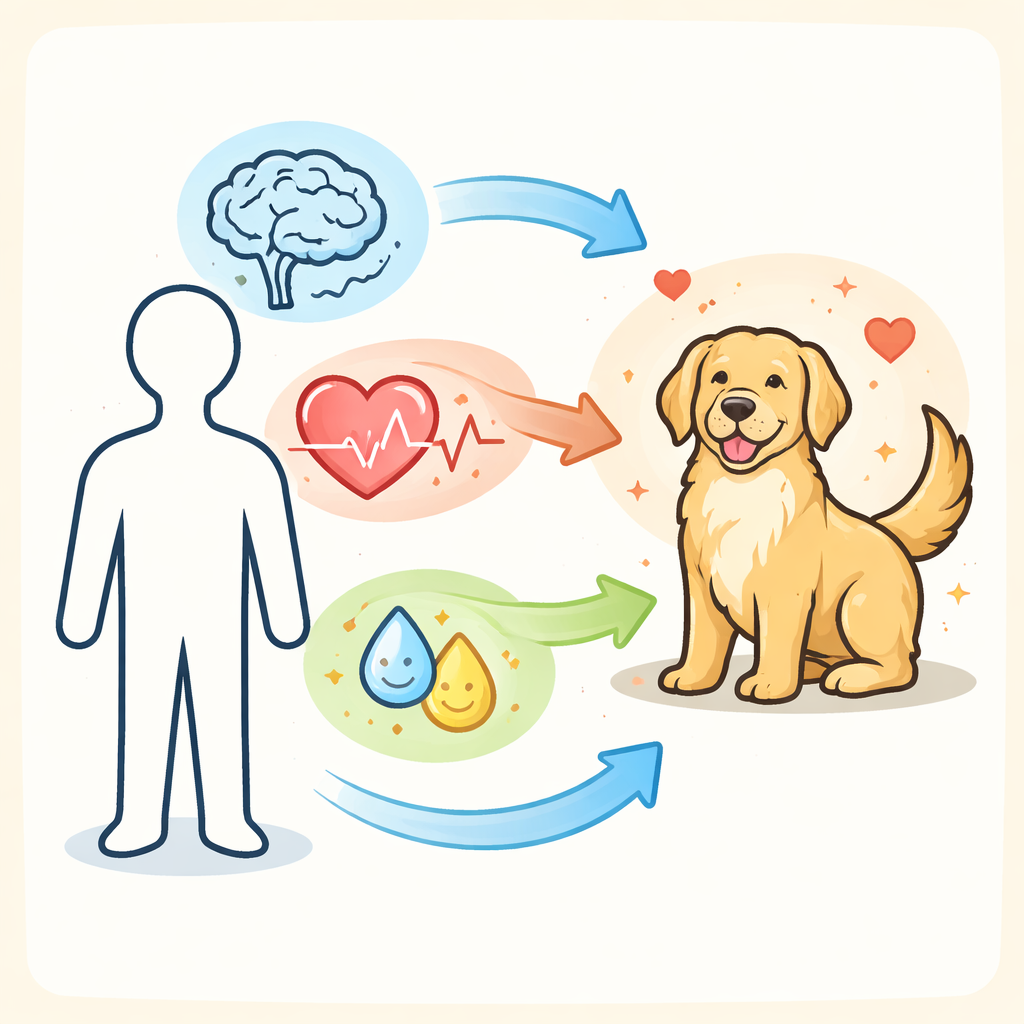
Hormones, Heartbeats, and Subtle Sex Differences
The hormone results were more cautious. Overall, oxytocin levels did not show strong, clear‑cut changes tied to any specific activity once strict statistics were applied, even though there were hints of increases at certain times—especially in women after relaxed contact with dogs. Cortisol levels tended to drift downward over time across all sessions, suggesting a general calming trend but not one that could be confidently pinned on dog interaction alone. Heart‑rhythm measures told a mixed story: many indicators of relaxation barely changed, but a composite “sympathetic” index—which reflects alertness and arousal—rose after the energetic dog‑sport session compared with meditation. That suggests that running and guiding the dog was exciting and activating, rather than purely soothing. When the researchers looked separately at women and men, they found that women often showed clearer emotional benefits from quiet, contact‑focused dog time, while men seemed especially engaged by the dynamic, sporty activities. However, the small sample size means these sex differences should be treated as early clues, not firm conclusions.
What This Means for Everyday Life
For people considering dogs as part of mental health support, this study offers a nuanced message. Short sessions with dogs—whether calm and cuddly or lively and athletic—tend to leave young adults feeling better, and their brainwaves look more relaxed yet alert afterward. At the same time, the body’s deeper hormone and heart‑rate responses are complex and do not boil down to a simple “dogs always lower stress chemicals” story. The authors suggest that future, larger studies could help design tailored programs, where some people might benefit more from quiet, hands‑on dog time and others from energetic play. For now, the take‑home for non‑scientists is straightforward: thoughtful, well‑designed time with dogs can lift mood and foster a gentle sense of calm engagement, even if the exact biological mechanisms are still being worked out.
Citation: Song, Y., Jung, Y., Yang, K. et al. Effects of static and dynamic canine-assisted intervention in young adults: sex differences in hormonal, EEG, HRV, and emotional responses. Sci Rep 16, 4943 (2026). https://doi.org/10.1038/s41598-026-37142-5
Keywords: animal-assisted intervention, therapy dogs, stress and mood, young adults, brain and heart responses