Clear Sky Science · en
Alkaloids from Evodia rutaecarpa inhibit the occurrence and development of gallbladder cancer in vivo and in vitro
Why a spice-like plant could matter for gallbladder cancer
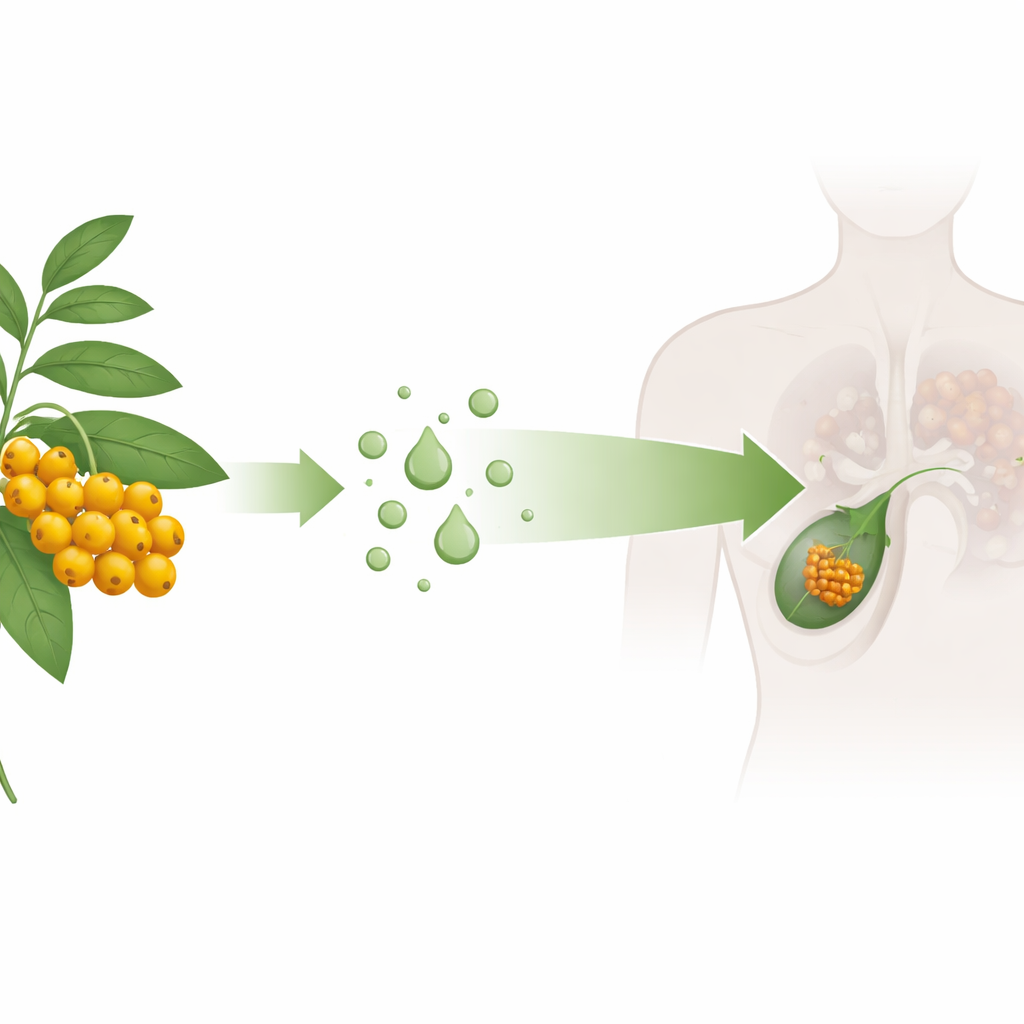
Gallbladder cancer is rare but often deadly, largely because it is usually discovered only after it has spread. This study explores whether a natural molecule called evodiamine, extracted from the fruits of a traditional Chinese medicinal plant (Evodia rutaecarpa), can slow or stop gallbladder cancer in laboratory dishes and in mice. The work offers an early look at how a plant compound might one day complement modern cancer treatments by targeting the disease’s ability to grow and spread.
A deadly cancer that needs new options
Gallbladder cancer is the most common cancer of the bile ducts and carries a very low five‑year survival rate. Because early symptoms are vague, many patients are diagnosed at an advanced stage, when surgery is no longer possible and chemotherapy is the main option—often with limited success. That has spurred scientists to search for new drugs and biological markers that could slow tumor growth, block metastasis and eventually improve outcomes. Natural products from medicinal plants are attractive candidates because they can have multiple biological effects while often being easier for the body to tolerate.
A plant alkaloid puts cancer cells under pressure
Evodiamine is a type of alkaloid, a nitrogen‑containing compound long used in traditional remedies. In this study, researchers exposed two human gallbladder cancer cell lines to different doses of evodiamine. They found that the compound sharply reduced cell viability over time, meaning fewer cancer cells survived. By examining the internal machinery of these cells, they saw that evodiamine increased levels of two key gatekeeper proteins, p53 and p21, which help decide whether cells should divide or pause. Flow‑cytometry experiments revealed that treated cancer cells became stuck at a checkpoint just before dividing, and protein analyses showed activation of molecular “executioners” that trigger programmed cell death. Together, these results indicate that evodiamine both halts the cancer cell cycle and pushes damaged cells to self‑destruct.
Clipping cancer’s wings by blocking movement
Cancer becomes life‑threatening when cells break away from the original tumor and colonize distant organs. Using wound‑healing and Transwell migration tests, the team showed that evodiamine greatly reduced the ability of gallbladder cancer cells to move. They then looked at markers linked to a biological shift called epithelial‑to‑mesenchymal transition, in which stationary cells acquire a more mobile, invasive identity. After treatment, cells had higher levels of E‑cadherin, a protein associated with tightly packed, less mobile cells, and lower levels of N‑cadherin, vimentin, Snail and MMP2, which are tied to invasiveness and tissue breakdown. These changes suggest that evodiamine makes cancer cells less able to detach, migrate and invade new tissues.
Zeroing in on a control switch and its signaling route
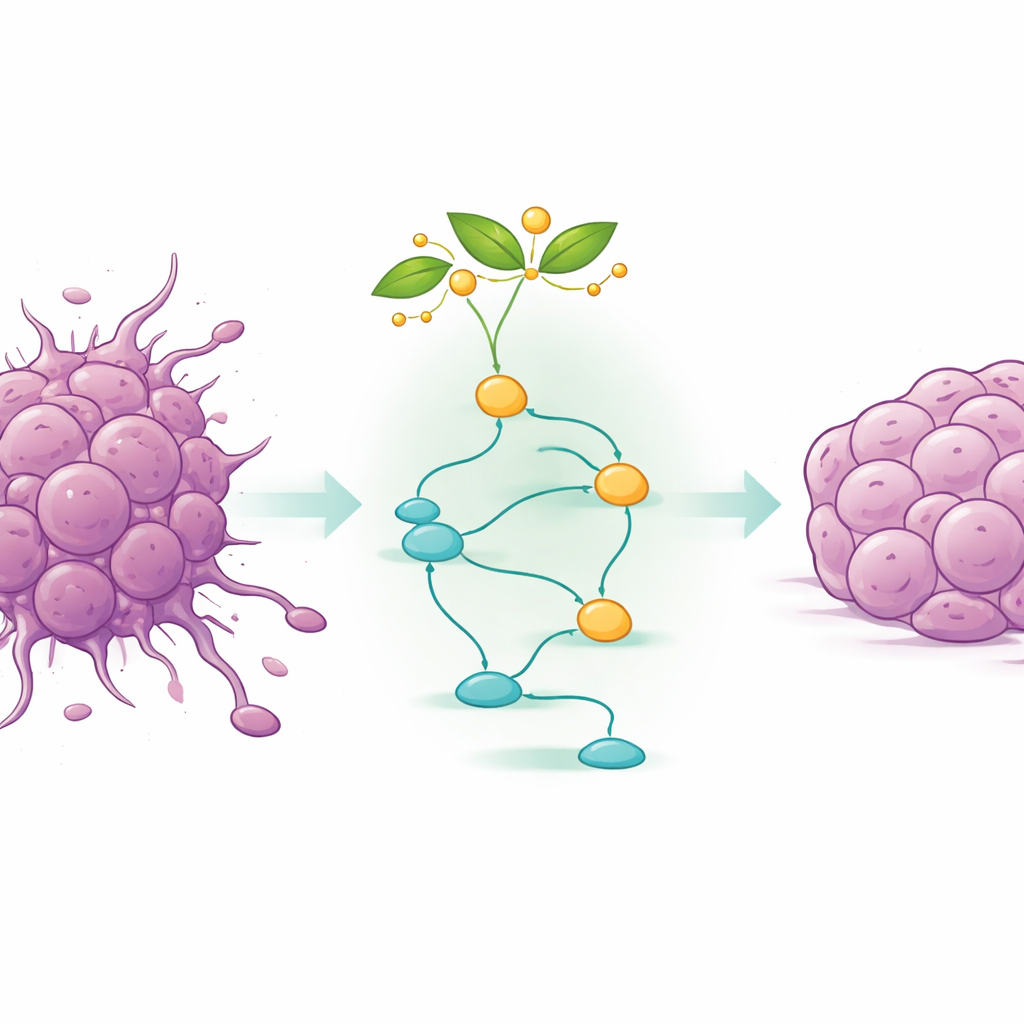
To probe how evodiamine exerts these effects, the researchers compared gene activity in treated and untreated cancer cells using RNA sequencing. One standout target was ZEB1, a transcription factor known to promote cell plasticity and metastasis in several cancers. The team confirmed that ZEB1 is more abundant in gallbladder cancer cells than in normal gallbladder cells and that evodiamine lowers both its RNA and protein levels. At the same time, the compound reduced the activated forms of PI3K and Akt, two central components of a growth‑promoting signaling pathway often overactive in tumors. When the scientists artificially forced cells to overproduce ZEB1, they partially rescued the cells’ ability to migrate and reversed many of the beneficial protein changes induced by evodiamine. This positions ZEB1 as a key control switch through which evodiamine dampens both aggressive behavior and PI3K‑Akt signaling.
Testing the compound in living animals
The team next moved into mouse models. They implanted gallbladder cancer cells under the skin of nude mice and treated them with different doses of evodiamine. Compared with untreated animals, mice receiving the compound developed much smaller tumors, without notable changes in body weight or obvious damage to major organs on tissue examination. In a separate model, cancer cells were introduced into the spleen so they could spread to the liver. Here, imaging and tissue analysis showed that evodiamine‑treated mice had far fewer liver metastases. Tumor samples from treated animals also displayed reduced levels of Ki67 (a marker of cell proliferation), vimentin and ZEB1, mirroring the cell‑culture findings.
What this could mean for future treatments
Taken together, the study suggests that evodiamine can slow gallbladder cancer growth and curb its spread in preclinical models by turning down ZEB1 and the PI3K‑Akt signaling pathway, restraining both cell division and invasive behavior. For a lay reader, this means the compound appears to push cancer cells toward dormancy and self‑destruction while making them less able to travel. However, these results come from cell lines and mice, not patients. Much more work is needed to verify safety, dosing and effectiveness in humans, and to understand whether evodiamine or related molecules could be combined with existing therapies. Still, the findings highlight how a molecule from a medicinal plant might inspire new strategies against a notoriously difficult‑to‑treat cancer.
Citation: Li, Y., Zhou, S., Xu, H. et al. Alkaloids from Evodia rutaecarpa inhibit the occurrence and development of gallbladder cancer in vivo and in vitro. Sci Rep 16, 13333 (2026). https://doi.org/10.1038/s41598-026-35563-w
Keywords: gallbladder cancer, evodiamine, natural anticancer compounds, tumor metastasis, PI3K-Akt signaling