Clear Sky Science · en
Tobacco-derived particulates and the periodontal axis: Distinct cytotoxic and stress-related mechanisms in human gingival fibroblasts
Why your gums care how you smoke
People often think of smoking as a threat mainly to the lungs and heart, but your gums are on the front line every time you inhale. This study looks at how tiny particles from traditional cigarettes and newer heated tobacco products directly affect the cells that help keep your gums firm and your teeth in place. Understanding this hidden damage can shed light on why smokers face more tooth loss, slower healing after dental work, and stubborn gum disease—and why “reduced-risk” products may not be as gentle on your mouth as advertised.
Two types of tobacco, one vulnerable mouth
The researchers focused on human gingival fibroblasts, the workhorse cells in the connective tissue of the gums. They exposed these cells in the lab to total particulate matter—essentially the condensed tiny solid and oily droplets—from a conventional reference cigarette and from a heated tobacco stick. To make the comparison fair, the doses were adjusted so that the nicotine levels were the same for both products. The team then examined not only whether the cells survived, but also how well they functioned: Did they show signs of stress and inflammation? Did they attempt self-repair? And could they still move to close a “wound” in a scratch test that mimics healing in the mouth? 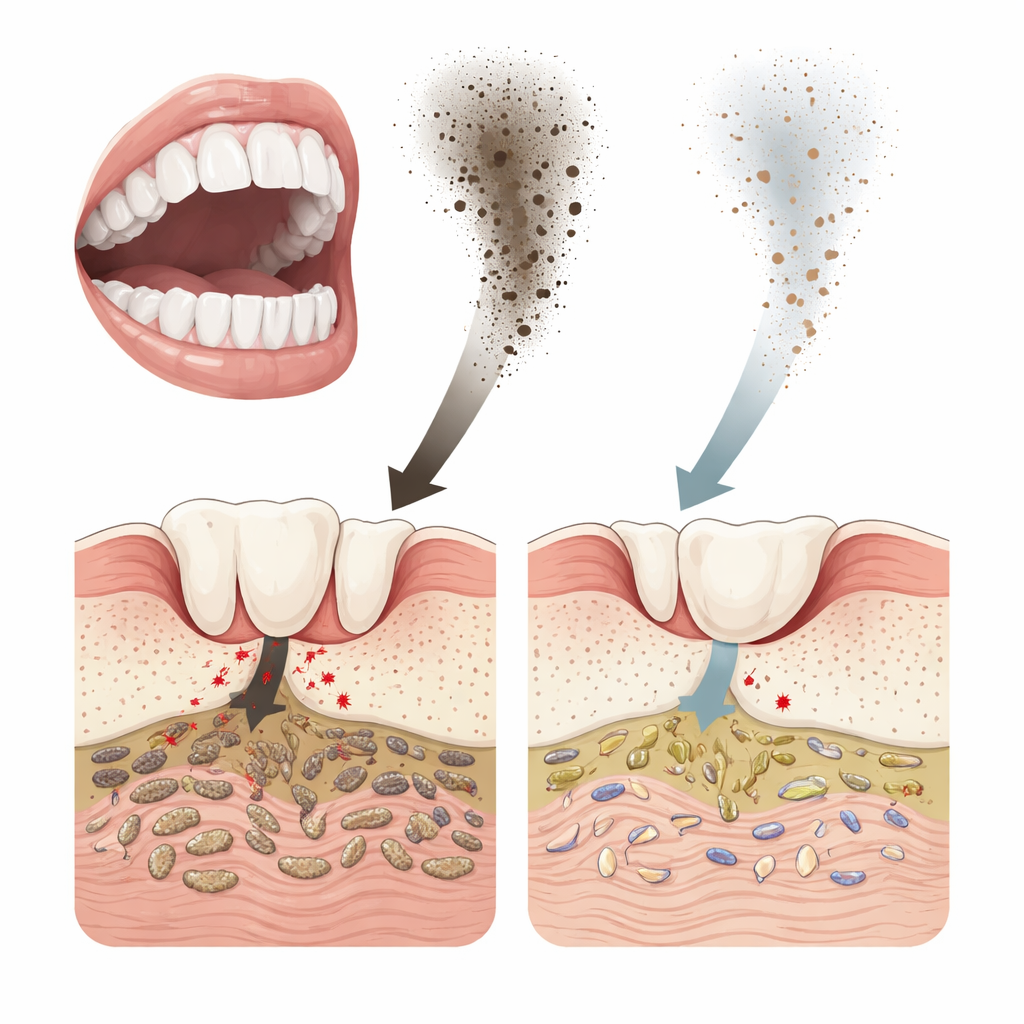
Heavier metal load, harsher damage
Chemical analysis revealed that particulate matter from the conventional cigarette carried substantially more toxic metals than that from the heated product. Levels of cadmium, lead, zinc, lithium, and rubidium were all markedly higher in the cigarette particles. When these mixtures hit the gum cells, the differences were stark. At comparable nicotine doses, particles from the traditional cigarette caused far greater loss of cell viability, with most cells dying through late-stage programmed death or outright rupture. In contrast, heated-tobacco particles still reduced cell survival, but to a lesser extent and mainly through earlier, more controlled forms of cell death. This suggests that the extra chemical burden created by burning tobacco, rather than nicotine alone, plays a major role in how severely gum tissue is injured.
Cell stress, quiet inflammation, and stalled self-cleaning
Both types of particulate matter put the gum cells under stress, but they did so in different ways. Heated-tobacco particles triggered clear signs of oxidative damage—chemical wear-and-tear driven by reactive oxygen species—and stimulated a cellular “self-cleaning” program called autophagy, visible as increased formation of autophagosome structures. They also tended to boost release of the inflammatory messenger IL‑6 more than the cigarette particles did, hinting at stronger immune activation despite lower outright toxicity. Particles from conventional cigarettes, on the other hand, strongly increased levels of VEGF‑A, a signal that encourages new blood vessel growth and is often ramped up when tissues are under chronic stress. Interestingly, a common tissue-remodeling enzyme, MMP‑9, did not change within the first 24 hours, implying that some slow-moving aspects of gum breakdown might only emerge with longer or repeated exposure. 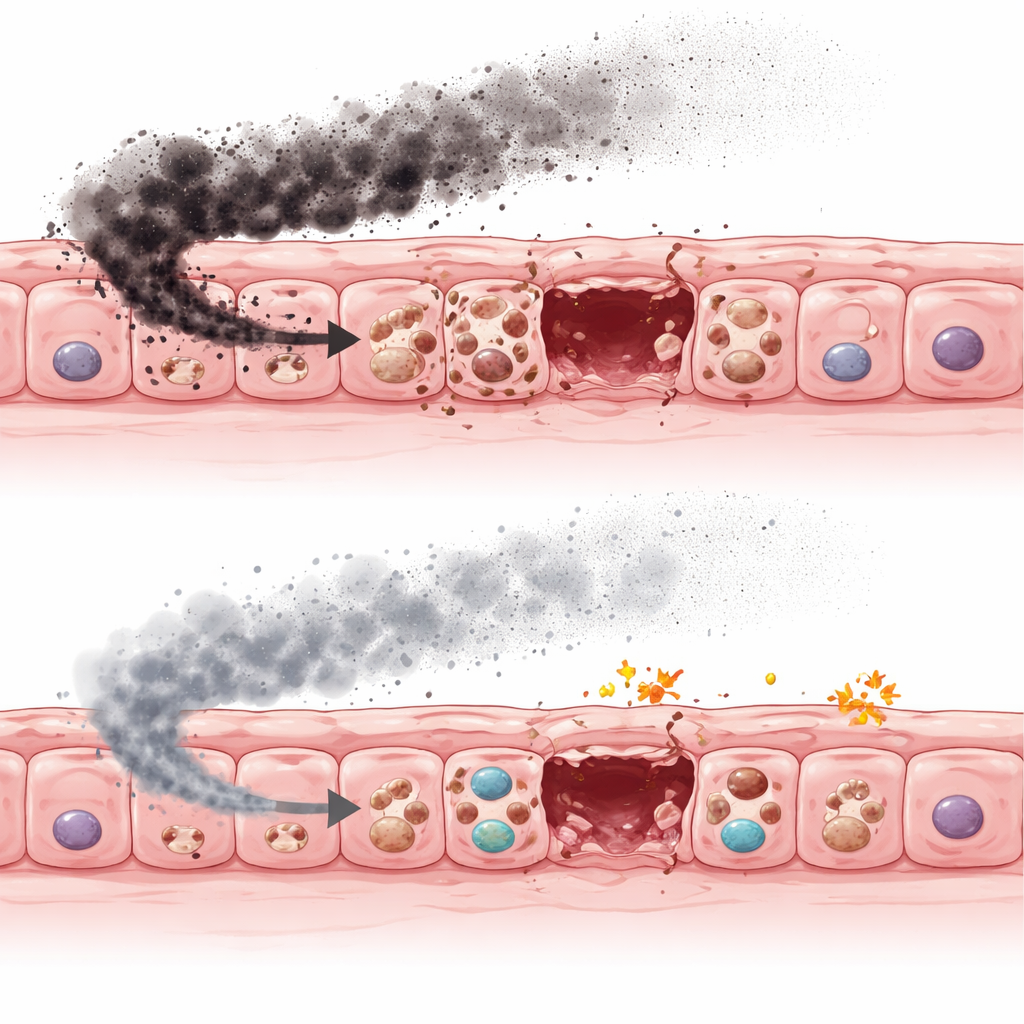
Slower healing where it matters most
To connect cellular damage with practical consequences, the scientists ran a wound-healing assay. They created a narrow gap in a layer of gum fibroblasts and watched how quickly the cells migrated to close it. Under normal conditions, the scratch was largely filled in within a day. With exposure to either type of tobacco particles, healing was significantly delayed: cells moved more sluggishly and the gap remained wider. The effect was most dramatic with particles from conventional cigarettes, which almost halted closure at higher doses. Heated-tobacco particles also impaired healing, though somewhat less severely, indicating that even without open flames, the aerosols can undermine the gum’s ability to recover from everyday micro-injuries or dental procedures.
What this means for your oral health
In plain terms, the study shows that particulate matter from regular cigarettes is more poisonous to gum-supporting cells than that from heated tobacco products, largely because burning produces a heavier load of harmful chemicals and metals. Yet the supposedly milder heated products are far from harmless: they still kill gum cells, stir up low-level inflammation and stress responses, and slow the healing needed to maintain healthy tissues around teeth. The work reinforces a key message for dental and public health: switching from conventional cigarettes to heated tobacco may reduce some types of damage, but it does not eliminate the risk to your gums or the progression of periodontal disease. From the perspective of the cells that hold your teeth in place, the safest choice remains avoiding tobacco altogether.
Citation: Kolci, K., Oz, E., Yildirim, S. et al. Tobacco-derived particulates and the periodontal axis: Distinct cytotoxic and stress-related mechanisms in human gingival fibroblasts. Sci Rep 16, 10387 (2026). https://doi.org/10.1038/s41598-026-35317-8
Keywords: tobacco smoke, heated tobacco products, gum disease, oral cell toxicity, wound healing