Clear Sky Science · en
Green nanotechnology: Adenanthera pavonina-derived silver nanoparticles with antibacterial and photocatalytic properties
Turning a Common Tree into a Tiny Tool
Antibiotic-resistant germs and polluted water are two of the biggest health and environmental worries of our time. This study explores an elegant idea: using leaves from a widely available tropical tree, Adenanthera pavonina, to create ultra-small particles of silver that can both kill harmful bacteria and help break down toxic dyes in water. By replacing harsh industrial chemicals with plant extracts, the researchers show how “green nanotechnology” could turn everyday plants into powerful allies for medicine and environmental clean-up. 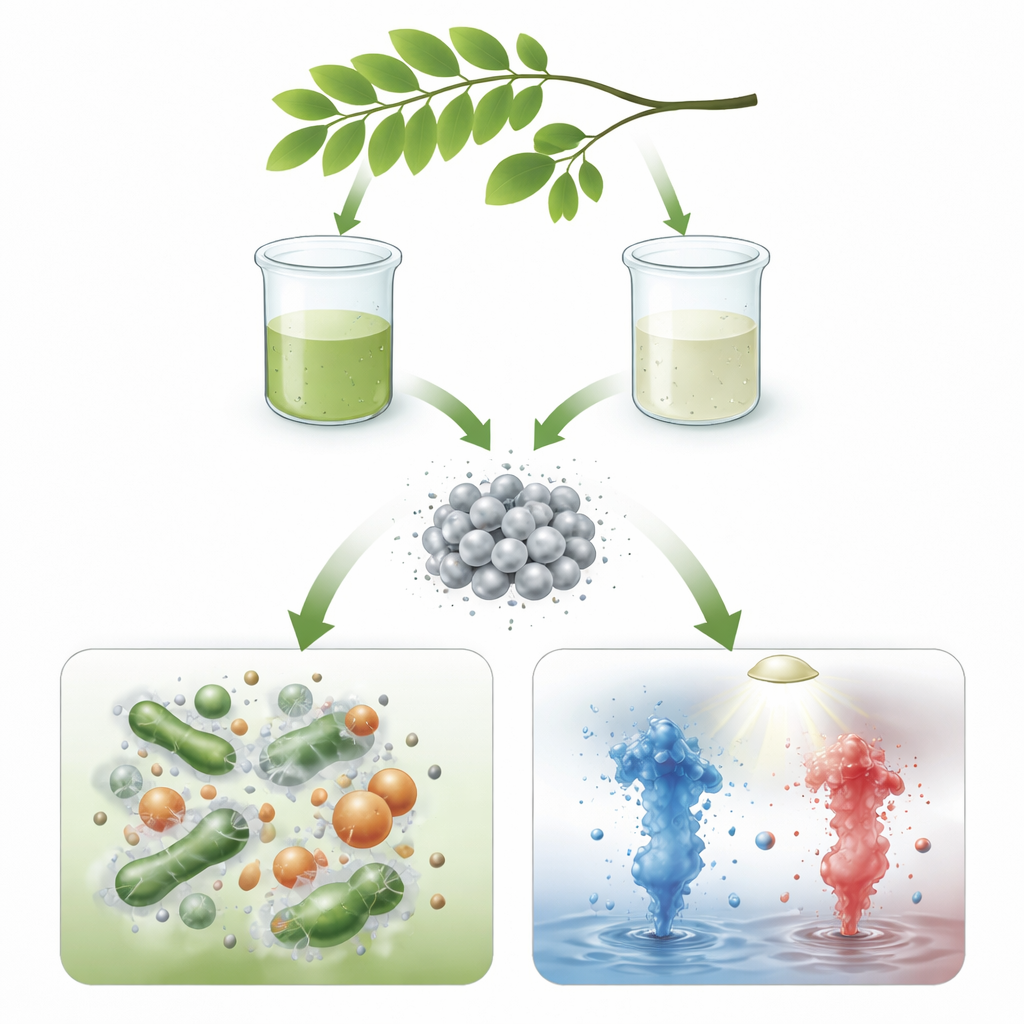
Why Tiny Silver Matters
Silver has been used to fight infections for centuries, but when it is broken down into particles thousands of times smaller than the width of a human hair, its behavior changes dramatically. These silver nanoparticles have a huge surface area for their size, which lets them interact closely with bacteria and pollutants. They can also respond to light by generating energetic particles and short-lived reactive molecules that damage nearby germs and chemicals. The challenge has been making such nanoparticles in ways that are safe, cost-effective, and kind to the environment. Traditional methods rely on strong reducing agents, high energy use, and toxic solvents. Plant-based “green” methods offer a route to the same particles using water-based extracts rich in natural compounds.
How Leaves Shape the Nanoparticles
The team collected healthy Adenanthera pavonina leaves from a university campus in Bangladesh, washed and dried them, and prepared a water extract. This dark, plant-rich liquid contains a cocktail of natural substances, including flavonoids, phenolic acids, terpenoids, alkaloids, saponins, sugars, and proteins. When the extract was mixed with a silver salt solution under warm, mildly alkaline conditions, the liquid gradually turned brown as tiny silver particles formed. The plant molecules acted like both chefs and bodyguards: some donated electrons to convert silver ions into metallic silver, while others wrapped around the freshly formed particles, keeping them from clumping too much. Careful measurements showed that the resulting silver nanoparticles were mostly spherical, about a few dozen nanometers across, with a well-ordered crystal structure and good thermal stability. Optical tests revealed distinctive light-absorption peaks and an energy gap that are favorable for light-driven chemical reactions.
Fighting Germs on Multiple Fronts
To test these plant-made silver nanoparticles as antibacterial agents, the researchers exposed six disease-causing bacteria—both of the Gram-positive and Gram-negative types—to different doses of the particles. The nanoparticles clearly slowed or stopped bacterial growth in a dose-dependent way, forming visible clear zones around treated spots on culture plates. One strain, Serratia marcescens, was especially sensitive. Although a standard antibiotic still worked at lower doses, the nanoparticles showed broad activity against all tested strains. The study explains that the particles likely stick to bacterial surfaces, disturb the cell wall and membrane, leak silver ions into the cell, and trigger bursts of reactive oxygen molecules. These combined hits damage vital components like DNA, proteins, and enzymes. The natural plant coating on the particles may add its own mild antimicrobial effects and help the particles attach more effectively to microbial cells.
Cleaning Up Colorful Pollutants
Beyond medicine, the same nanoparticles were tested as miniature catalysts for cleaning dye-contaminated water, a common problem from textile and related industries. The researchers chose two widely used dyes as stand-ins for real wastewater: Methylene Blue, which carries a positive charge, and Congo Red, which carries a negative charge. Mixed into dye solutions and exposed to ultraviolet light, the silver particles helped break down both dyes over time. Methylene Blue was degraded by nearly two-thirds after 90 minutes, while Congo Red broke down more slowly, to roughly one-third in the same period. The negatively charged surfaces of the nanoparticles attracted the positively charged Methylene Blue, bringing it closer to reactive sites, while repelling Congo Red, which partly explains the difference. Under light, the particles generated energetic electrons and “holes” that, in turn, formed highly reactive oxygen species capable of shredding the dye molecules into simpler, less harmful compounds. 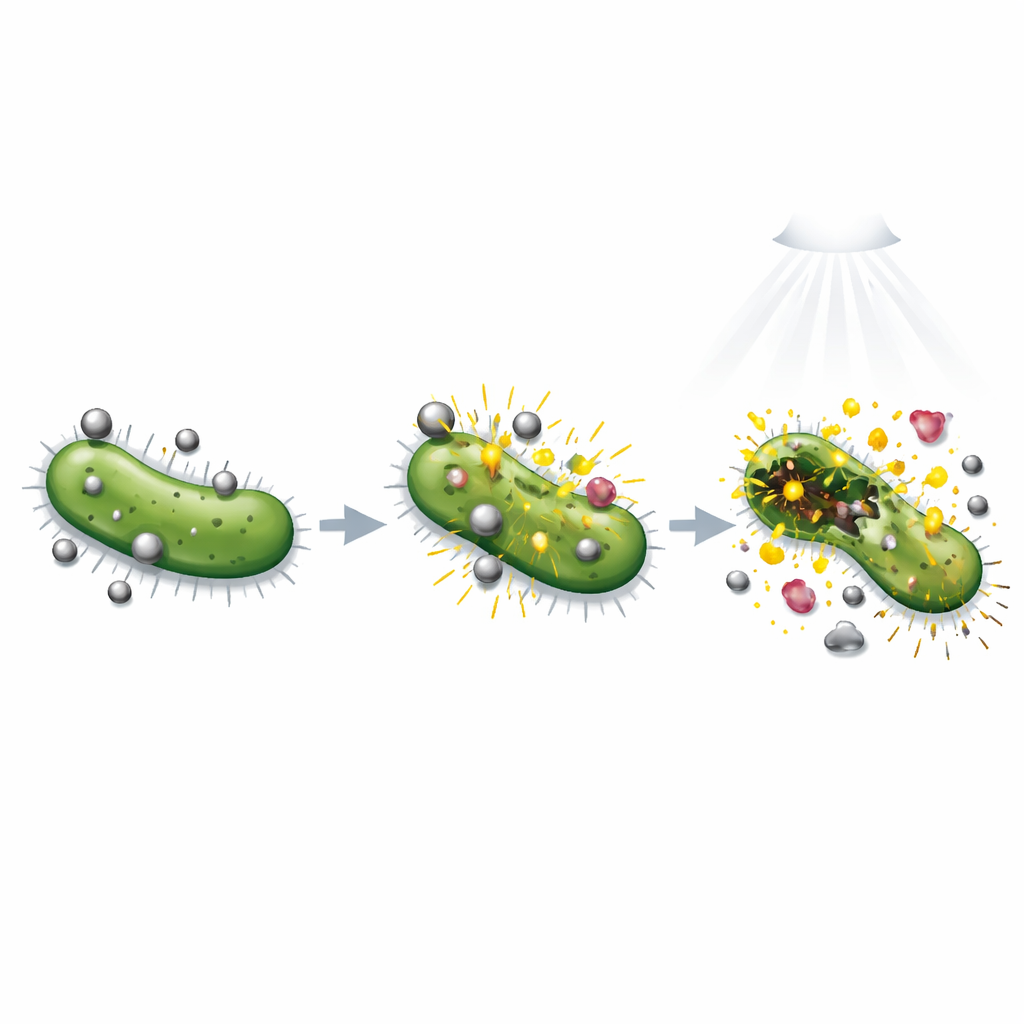
What This Could Mean for Everyday Life
In simple terms, this work turns a common tree leaf into a small, environmentally friendly factory for useful silver nanomaterials. The resulting particles can both slow the growth of harmful bacteria and help break down stubborn dyes in water, hinting at future wound dressings, coatings for medical devices, and low-cost water treatment systems that rely less on traditional chemicals. The authors emphasize that more work is needed to fine-tune performance, fully understand how these particles behave in real-world settings, and ensure they are safe for human cells and ecosystems. Still, the study offers a clear proof of concept: nature’s own chemistry can be harnessed to build smart, multifunctional materials that help tackle health threats and pollution at the same time.
Citation: Anzum, M., Molla, A., Islam, A. et al. Green nanotechnology: Adenanthera pavonina-derived silver nanoparticles with antibacterial and photocatalytic properties. Sci Rep 16, 13267 (2026). https://doi.org/10.1038/s41598-026-35109-0
Keywords: green nanotechnology, silver nanoparticles, plant-based synthesis, antibacterial materials, photocatalytic water treatment