Clear Sky Science · en
210Pb and 137Cs dating models as tracers of recent sedimentary processes of the shallow lake under anthropogenic activity
Why Mud at the Bottom of a Lake Matters
Along Egypt’s Mediterranean coast, Lake Edku looks, at first glance, like any other shallow lagoon. Yet its muddy bottom quietly stores a century-long diary of how dams, farms, factories, and cities have reshaped both the lake and the wider Nile Delta. By reading this diary layer by layer, scientists can trace when pollution surged, how fast the lake is filling in, and why its fish and water quality are in trouble. Understanding this story is essential not only for saving Lake Edku, but also for managing many coastal wetlands facing similar pressures around the world.
A Changing Lake in a Crowded Delta
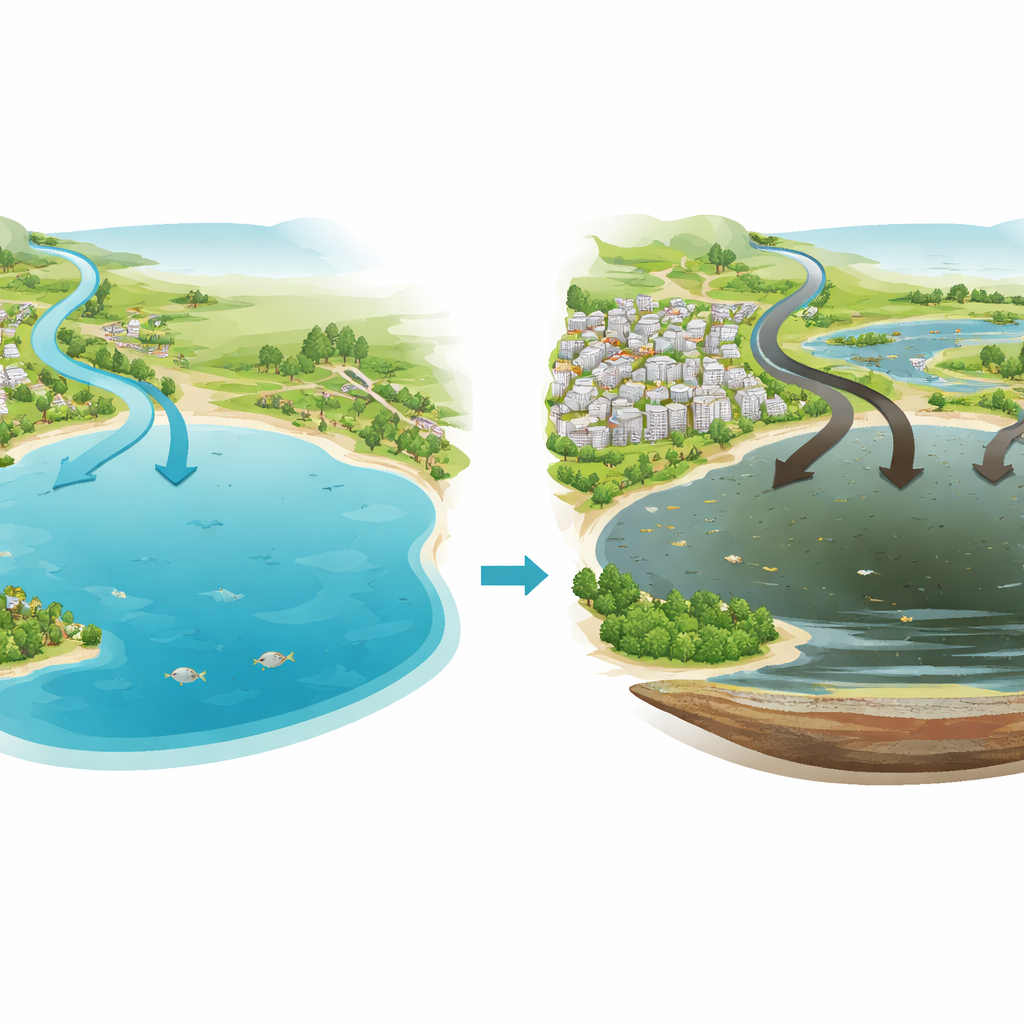
Lake Edku is one of four large coastal lagoons fringing the Nile Delta and supplies an important share of Egypt’s fish. For thousands of years, it was shaped mainly by the Nile’s seasonal floods, which delivered fine, fertile silt and kept the lake in balance with the sea. That changed dramatically after the Aswan High Dam was built in the 1960s. The dam stopped the river’s sediment from reaching the coast, while population growth and rapid expansion of agriculture, industry, and fish farms turned the lake into a catch basin for drainage water. Today, canals pour in huge volumes of nutrient- and metal-rich wastewater from fields, towns, and factories, shrinking the open-water area, speeding up infilling, and driving serious ecological decline.
Turning Radioactive Clocks into a Timeline
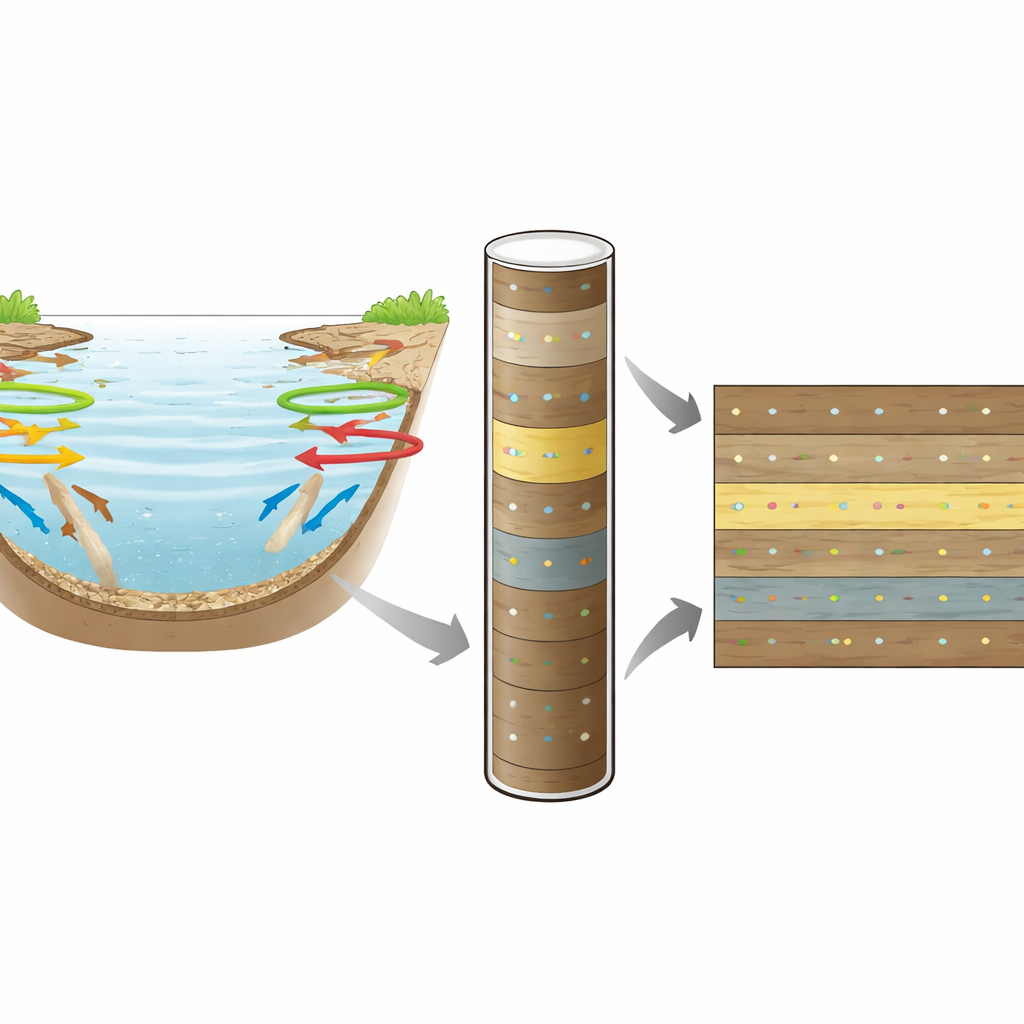
To work out when these changes occurred, the researchers treated the lake’s sediments as a stack of pages in a book. They collected four long cores—tubes of mud—from different parts of the lake and measured tiny amounts of two radioactive substances, lead-210 and cesium-137, along each core. These substances fall from the atmosphere and become locked into the mud when it settles. Because they decay at known rates, and because cesium-137 has distinct peaks linked to nuclear weapons testing and nuclear accidents, their depth profiles can be used like time-stamped markers, allowing scientists to date each layer back roughly 100–150 years.
Choosing the Right Clock for a Disturbed Lake
Dating sediment is not as simple as reading a single dial. The team compared three standard models that interpret how lead-210 decreases with depth, then checked their results against the cesium-137 peaks. In a calm, slowly changing lake, simpler models often work well. But Edku is anything but calm: water levels fluctuate, drains deliver irregular loads of mud, and fishing and aquaculture disturb the bottom. In this unstable setting, two of the models gave impossible results, such as older dates appearing above younger ones. The “constant rate of supply” model—designed for environments where the incoming radioactive fallout is steady but the sedimentation rate changes—best matched the cesium-137 record. This model showed that, since the mid‑20th century and especially after the 1980s, sediment has been piling up much faster than before.
Tracing Metals and Human Fingerprints
The cores hold more than just dates. Using a reactor-based technique called neutron activation analysis, the team measured dozens of elements, from common rock-forming metals like iron and aluminum to potentially harmful ones such as chromium, zinc, and arsenic. In older layers, deposited when Nile floodwaters still fed the lake, most element levels stayed fairly steady and reflected natural erosion of upstream rocks. Higher up, in layers laid down after the dam and during rapid land reclamation, many metals showed sharp increases. Some, like sodium, magnesium, and chlorine, signaled stronger influence of seawater and agricultural salts. Others, including zinc, chromium, vanadium, and bromine, pointed to fertilizers, pesticides, industrial waste, and runoff from expanding urban and fish-farming areas. By combining metal concentrations with the dated sedimentation rates, the researchers calculated how quickly these substances have been building up over time, revealing a marked jump since the 1990s.
What the Lake’s Story Means for People
Taken together, the radioactive clocks and chemical fingerprints show that Lake Edku has shifted from a Nile-fed, relatively balanced ecosystem to a drainage-dominated, heavily stressed basin. Sediment is now accumulating faster than in many comparable wetlands worldwide, carrying with it increasing loads of nutrients and metals. This accelerates the loss of open water, worsens algal blooms, and threatens both wildlife and the people who depend on the lake for food and income. By quantifying when and how these changes unfolded, the study provides a scientific foundation for restoring the lake—pointing to the need to curb polluted inflows, manage fish farming and land reclamation more carefully, and treat the sediments themselves as a warning record that should not be ignored.
Citation: Imam, N., Ghanem, A., Nada, A. et al. 210Pb and 137Cs dating models as tracers of recent sedimentary processes of the shallow lake under anthropogenic activity. Sci Rep 16, 10756 (2026). https://doi.org/10.1038/s41598-025-31649-z
Keywords: Lake Edku, radiometric dating, sediment pollution, Nile Delta lagoons, heavy metals