Clear Sky Science · en
The Danube Fish Database: documenting species distributions across a major European river basin
Why this river story matters
The Danube River Basin stretches across 19 European countries and supports an extraordinary variety of freshwater fish. Yet dams, pollution, overfishing and climate change are putting many of these species at risk. This article presents a new open database that brings together more than a century and a half of fish records from the entire basin, turning scattered notes and hidden reports into a shared resource that can guide efforts to restore rivers, protect native species and manage invasive ones.
One river, many fish
The Danube River Basin holds the highest known fish diversity of any European river, with over 100 species and nearly 30 that live nowhere else. It shelters about one fifth of Europe’s freshwater fish life, from tiny minnows to large sturgeons. At the same time, the basin has received many non native species introduced by people. Since the 19th century, river engineering, industrialization and a dense network of dams and embankments have reshaped the river landscape. These changes, together with unsustainable fishing and a warming climate, have pushed many native fish into decline, leaving roughly a quarter of them globally threatened.
Bringing scattered records together
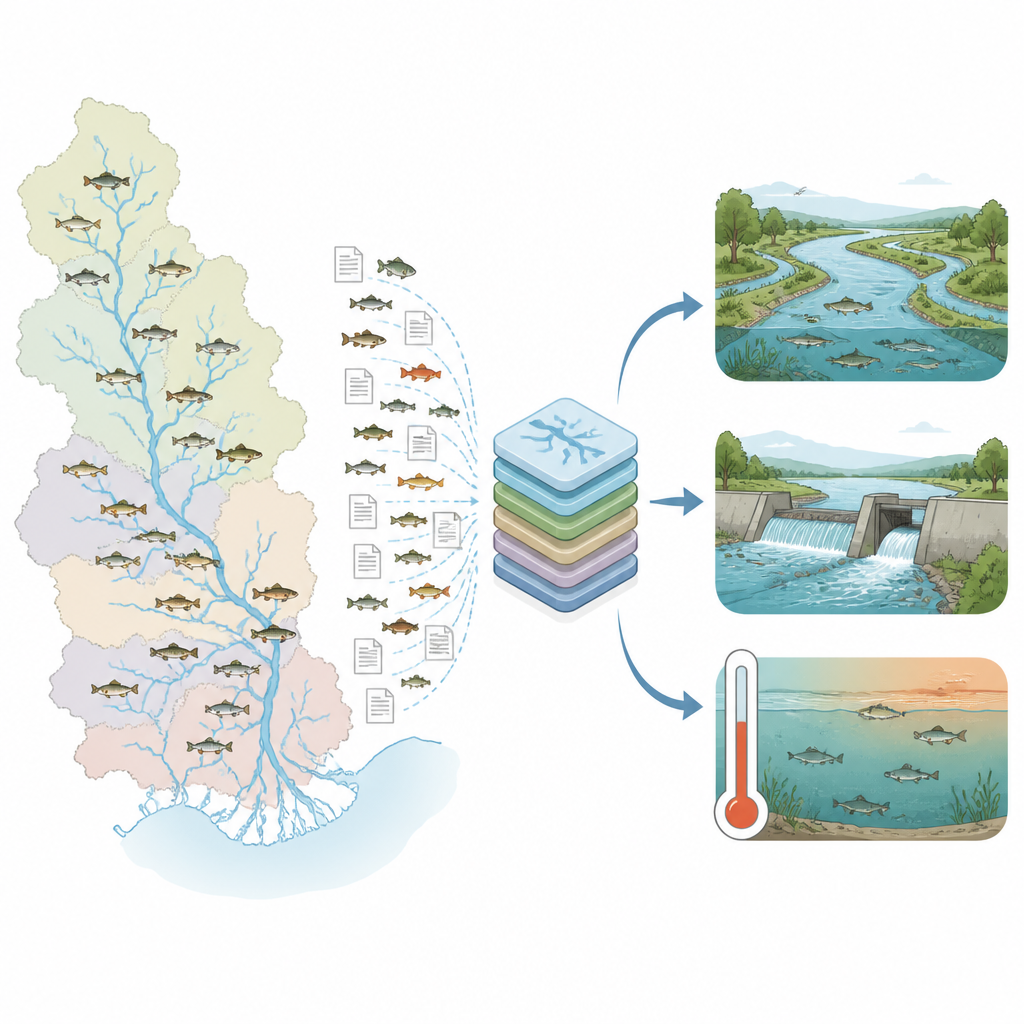
Managing such a vast and shared river system is difficult, because the Danube crosses so many borders and each country has its own rules and monitoring practices. Until now, fish data were locked away in national agencies, research institutes, conservation groups and technical reports written in several languages. The new Danube Fish Database tackles this by assembling fish occurrence records from dozens of partners and from international sources such as the Global Biodiversity Information Facility, the Joint Danube Surveys and the European Fish Index. In total, the collection includes 133,131 records covering 114 species from 1856 to 2024, each linked to where and when a fish was observed.
Cleaning and checking the river’s memory
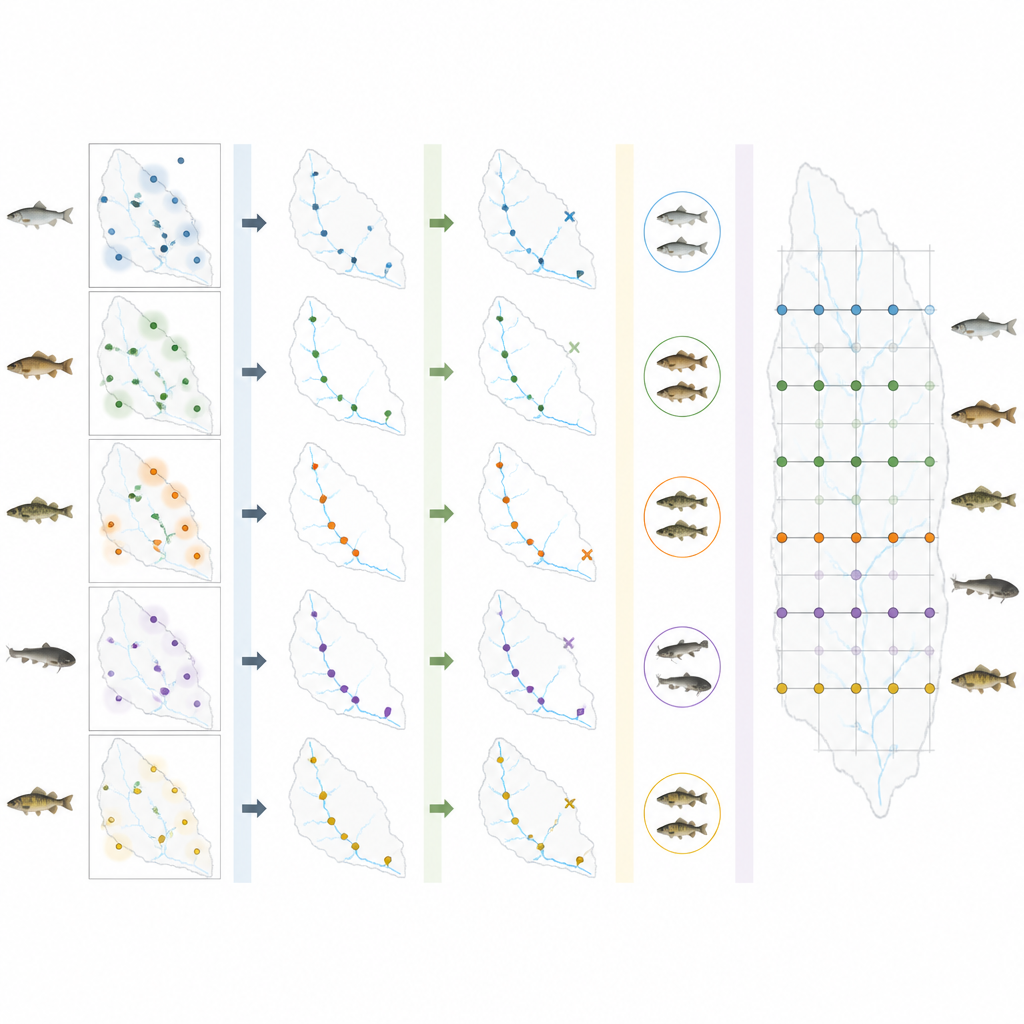
Simply pooling data is not enough, because names, coordinates and dates can all be inconsistent or wrong. The team built a dedicated set of computer tools in the R programming language to standardize and check every entry. They matched species names against global fish catalogues to fix spelling errors and outdated names, converted all locations to the same map system, and assigned each record to specific sub catchments within the basin. Questionable points, such as those falling in unlikely environments or far from the known range of a species, were automatically flagged as possible outliers. The result is a consistent table of 39 fields per record, stored in a public repository together with detailed documentation.
From data table to river action
Because the database is open, scientists, planners and conservationists can reuse it for many kinds of analyses. By overlaying fish records with maps of dams and river barriers, they can identify stretches where reconnecting habitats would benefit native species without helping invaders spread. Linking the data to climate and land use maps makes it possible to study how fish respond to warming waters and changing landscapes, and to highlight species and regions that are especially vulnerable. The records also support early warning of invasive species by revealing new sightings and tracking their spread through the network of rivers and channels.
What this means for the Danube’s future
The Danube Fish Database does not fix damaged rivers on its own, but it gives experts a powerful shared map of where fish live and how that pattern has shifted through time. By turning millions of scattered observations into a single, well documented resource, the project helps countries coordinate restoration plans, evaluate the impacts of dams and climate change, and monitor the success of new policies such as the European Union’s Nature Restoration Law. For anyone who cares about healthy rivers and the wildlife they support, this database is a foundation for smarter, more transparent decisions about the future of the Danube.
Citation: Torres-Cambas, Y., Ambrus, A., Bán, M. et al. The Danube Fish Database: documenting species distributions across a major European river basin. Sci Data 13, 786 (2026). https://doi.org/10.1038/s41597-026-07249-5
Keywords: Danube River fish, freshwater biodiversity, species occurrence data, river restoration, invasive species monitoring